

Craving something hearty but not in the mood to babysit your oven for hours? Moroccan Chickpea Stew is basically a shortcut to a cozy, flavorful meal that’s both easy and filling.
Picture yourself curled up with a bowl full of chickpeas, tomatoes, and a swirl of Moroccan spices as bold as your sense of adventure. That’s the vibe.
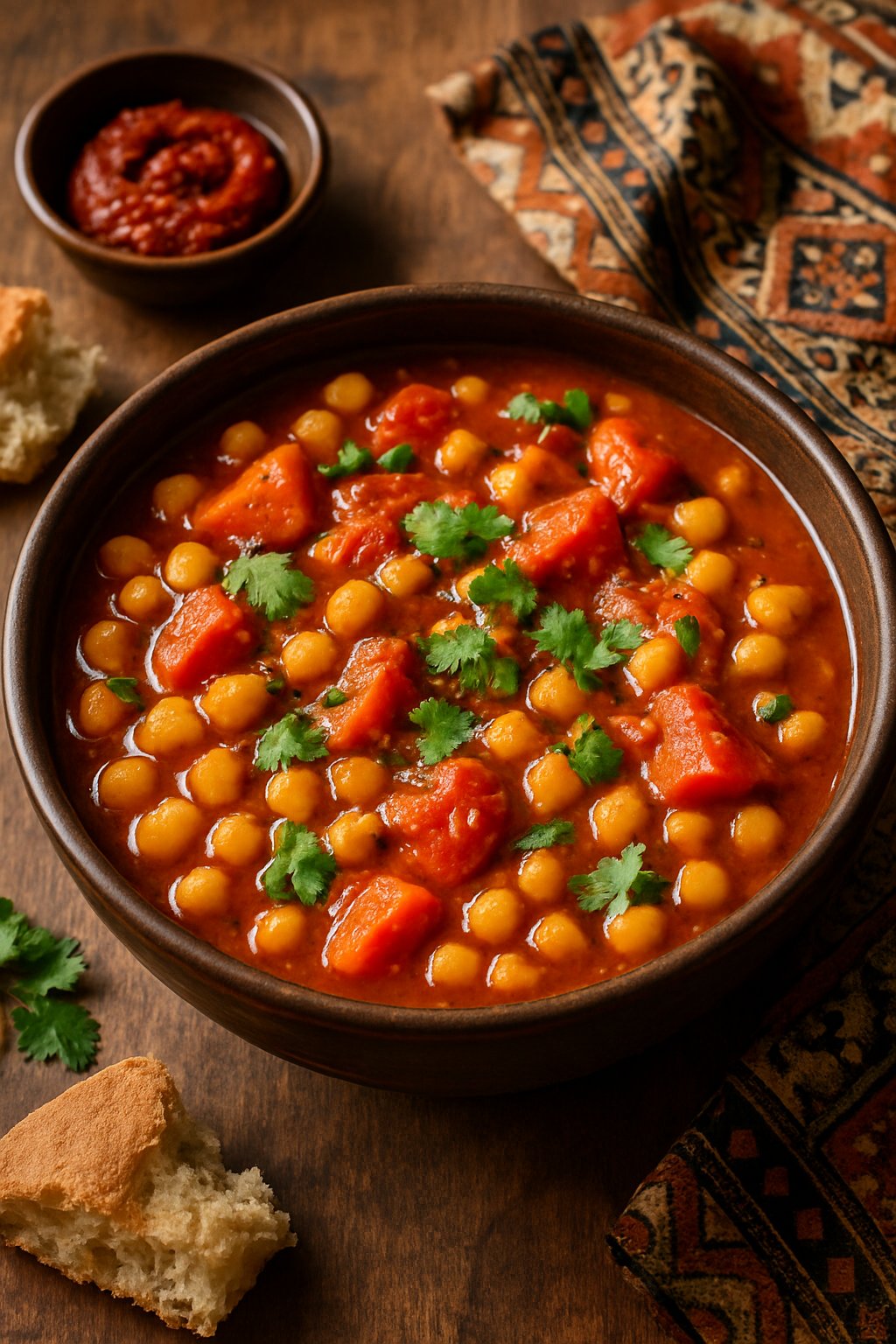
No need for a plane ticket to Morocco or a magic carpet. Just a handful of pantry staples and you’ve got a vegan, gluten-free dinner that even the pickiest eater might enjoy.
If they don’t, well, more for you. Honestly, sometimes that’s a win.
Ready to chop, stir, and let your kitchen smell like a faraway spice market? Stick around—Moroccan Chickpea Stew might just become your new weeknight hero.
Contents
- 1 Equipment
- 2 Ingredients
- 3 Instructions
- 4 What You Need To Know
- 5 Frequently Asked Questions
- 5.1 What’s the secret to getting that slow cooker Moroccan chickpea stew to taste like a hug in a bowl?
- 5.2 How can I whip up a Moroccan chickpea stew so easy that even my cat could do it?
- 5.3 Is the BBC hoarding a top-secret Moroccan chickpea stew recipe that’s better than my grandma’s?
- 5.4 Can you spill the beans on what makes a Moroccan chickpea curry outrageously good?
- 5.5 Got any magical tips for transforming my Moroccan stew from ‘meh’ to ‘more, please’ with a thickening spell?
- 5.6 What’s the deal with Moroccan chickpea tagine, and how’s it different from just plopping chickpeas in a pot?
- 6 Author
Equipment
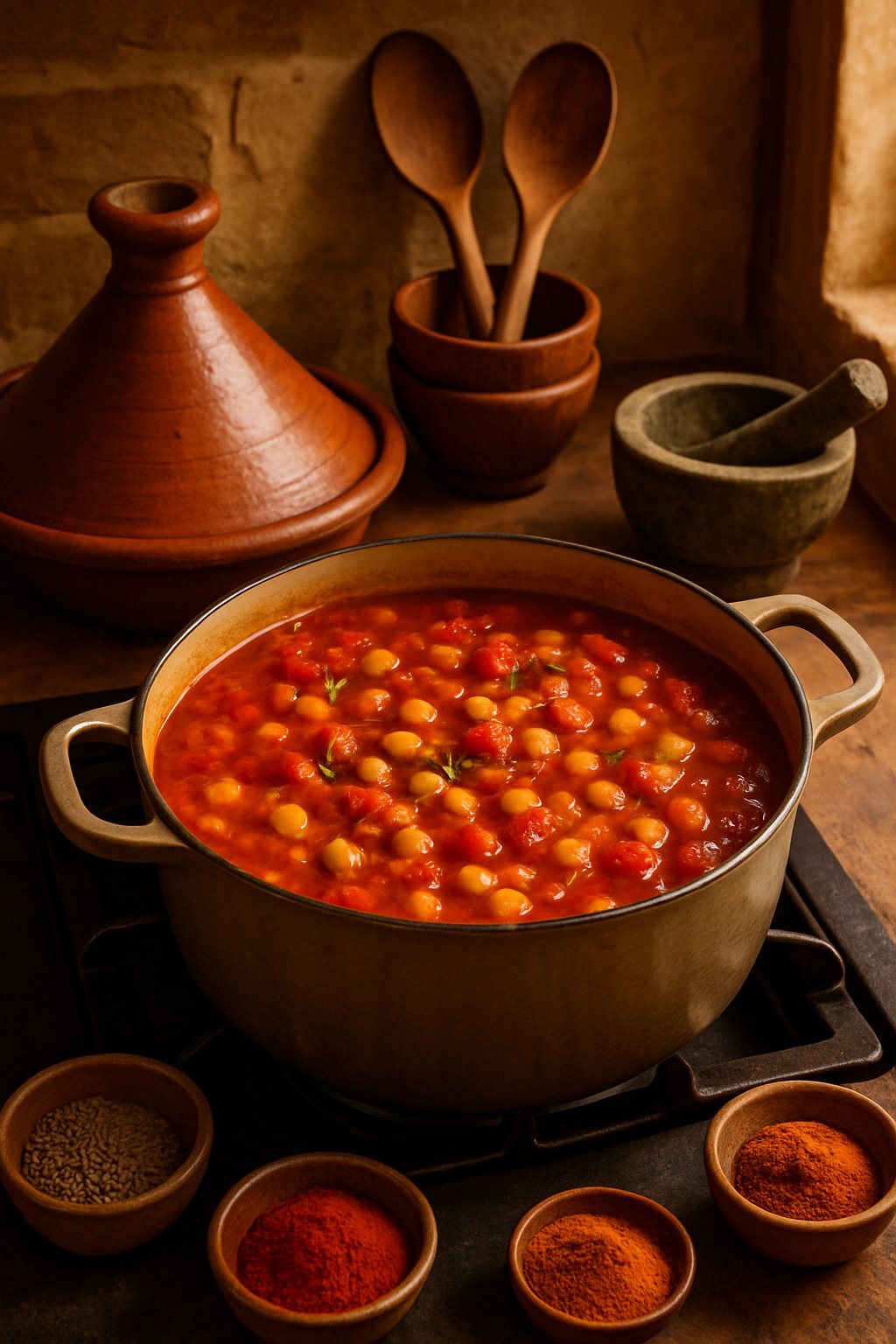
Before you embark on your chickpea adventure, check your kitchen for the right tools. No camel required, promise.
Here’s what you’ll need:
| Tool | Why You Need It |
|---|---|
| Large pot or Dutch oven | To give your stew room to stew! |
| Sharp knife | For boss-level veggie chopping. |
| Cutting board | Unless you want scratches on your table. |
| Wooden spoon | So you can stir like you mean it. |
| Can opener | If you’re not a fan of wrestling chickpea cans. |
| Measuring spoons | Because “a pinch” can mean a lot of things. |
| Ladle | For serving your masterpiece without spills. |
A colander is handy if you want to rinse canned chickpeas—no gym membership required, but you might feel the burn. If you’ve got an apron, wear it. This stew has been known to cause enthusiastic stirring and the occasional splatter.
Ingredients
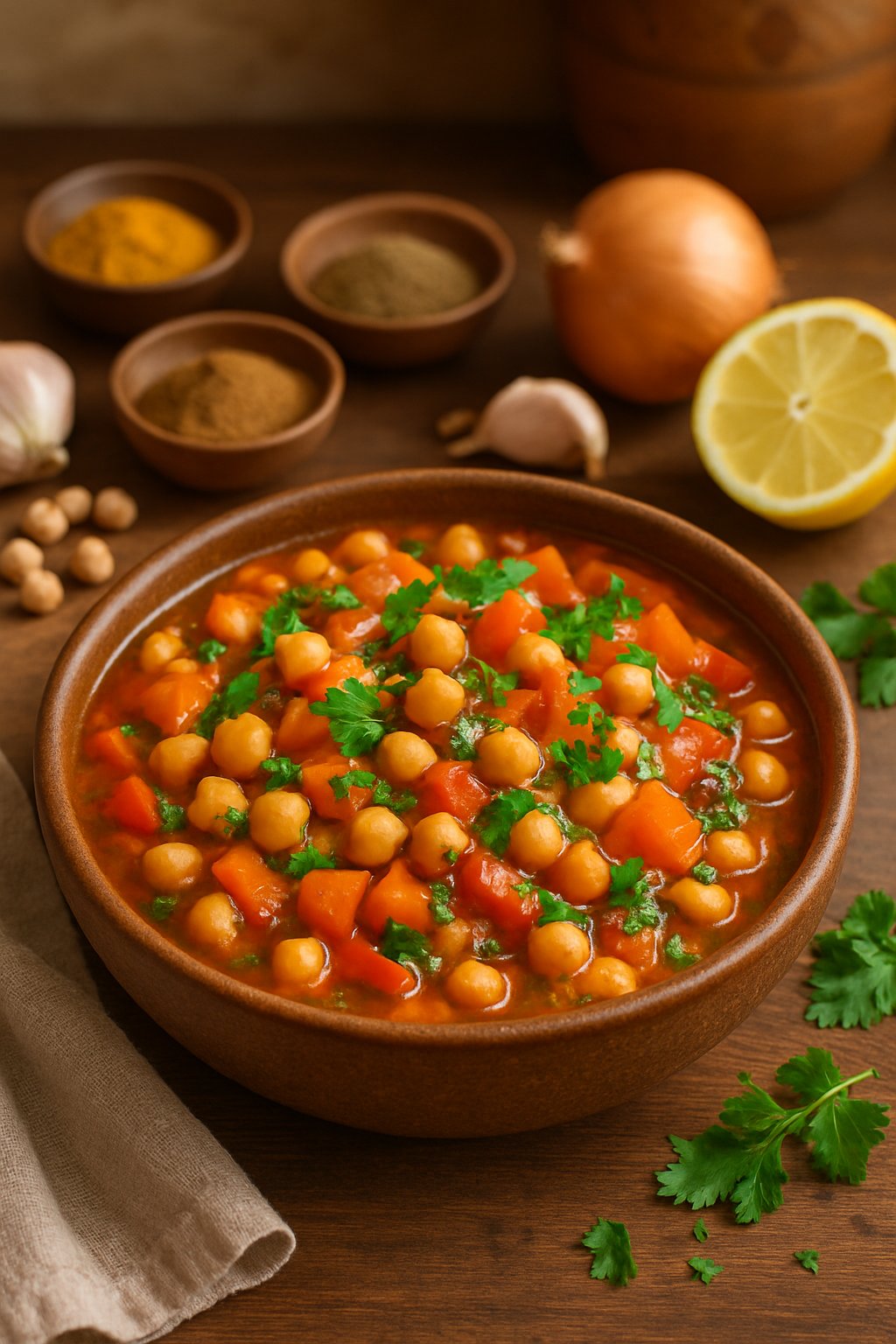
Ready to turn your kitchen into a Moroccan getaway? Here’s your passport: the all-star list of what you need to make the stew that will make your taste buds dance.
You’ll need:
| Ingredient | Amount |
|---|---|
| Olive oil | 2 tbsp |
| Yellow onion | 1, chopped |
| Garlic cloves | 4, minced |
| Carrots | 2, sliced |
| Sweet potato | 1 large, diced |
| Bell pepper | 1, chopped |
| Canned diced tomatoes | 1 (14 oz) can |
| Canned chickpeas | 2 (15 oz each), drained and rinsed |
| Vegetable broth | 3 cups |
| Ground cumin | 1½ tsp |
| Ground coriander | 1 tsp |
| Smoked paprika | 1 tsp |
| Ground cinnamon | ½ tsp |
| Ground turmeric | ½ tsp |
| Cayenne pepper | ¼ tsp |
| Salt | 1 tsp |
| Black pepper | ½ tsp |
| Fresh spinach | 2 cups |
| Lemon juice | 2 tbsp |
Don’t have a sweet potato or bell pepper? Swap in whatever’s hiding in your fridge—this stew won’t mind.
If you want to level up, toss in lentils, butternut squash, or even a stray zucchini. People do it all the time in traditional recipes.
Find a big pot and get ready—your kitchen’s about to smell amazing!
Instructions
- Heat oil in a large pot over medium. Add onion and garlic. Sauté until your kitchen smells so good you want to stay forever.
- Throw in the carrots and potatoes. Stir them around like you’re on a cooking show, no judgment.
- Add the spices: cumin, coriander, paprika, cinnamon, and a dash of cayenne. The aroma might just transport you to Morocco.
- Pour in the tomatoes and broth. Give it a good mix. Maybe take a second to breathe it all in.
- Tip in the chickpeas. Stir and bring everything to a gentle simmer. If you start humming a stew song, you’re doing it right.
- Let it cook uncovered until the veggies are tender. Stir now and then, just to keep things moving (and to make sure nothing sticks).
- If you’ve got greens, toss them in now. Cook a bit longer—just until they wilt and still look happy.
- Taste and season with salt and pepper. Be bold, but maybe taste before you go wild.
- Ladle the stew into bowls. Serve with cilantro and maybe a wedge of lemon. Take a moment to admire your creation. For more tips, check out this flavorful Moroccan Chickpea Stew recipe.
What You Need To Know
Want to feel like a North African chef without leaving your kitchen? Moroccan Chickpea Stew is your ticket. It’s cozy, it’s easy, and honestly, it’s good for you in a way that doesn’t feel like a chore. The smell alone is enough to lure anyone into the kitchen, even the picky ones.
Let’s be real—this stew is more about comfort than perfection. No fancy equipment, no need for a tagine or a magic lamp. It’s just a matter of layering those spices, getting a good sauté on your veggies, and letting everything simmer until the flavors meld together.
Pair your stew with Moroccan bread or couscous if you’re feeling extra, or just want something to mop up the last bits in your bowl. Carbs are always a good idea, right?
Frequently Asked Questions
Cooking Moroccan chickpea stew is about using cozy spices, picking the right veggies, and knowing which shortcuts actually work. From slow cooker secrets to stew-thickening magic, here’s what you need to know.
What’s the secret to getting that slow cooker Moroccan chickpea stew to taste like a hug in a bowl?
The secret is layering flavors. Sauté onions, garlic, and spices before tossing them into the slow cooker. It may tempt you to skip, but this tiny step gives you deep flavor. Plus, letting it simmer for hours makes everything taste extra cozy, just like a warm blanket—except you can eat it.
Check out tips for the perfect slow cooker technique.
How can I whip up a Moroccan chickpea stew so easy that even my cat could do it?
Keep it simple. Use canned chickpeas—they’re already cooked and save you time. Dump everything in one pot: canned chickpeas, diced tomatoes, chopped veggies, broth, and Moroccan spices like cumin, coriander, and cinnamon. Let it all simmer until your kitchen smells amazing (and your cat gets jealous).
Here’s more on making super easy Moroccan chickpea stew.
Is the BBC hoarding a top-secret Moroccan chickpea stew recipe that’s better than my grandma’s?
The BBC might have fancy cameras, but there is no secret recipe hiding in London. Moroccan chickpea stew is beloved everywhere, and most versions use the same basics: chickpeas, tomatoes, vegetables, and plenty of spices. Your grandma’s magic touch probably came from an extra pinch of paprika or TLC, not a BBC vault.
Can you spill the beans on what makes a Moroccan chickpea curry outrageously good?
There’s a certain magic in the way the spices come together. Cumin, coriander, turmeric, and cinnamon—each one does its thing, but together? Something special happens.
Letting it all simmer is key. The flavors need time to get cozy and really settle in.
Right at the end, a hit of fresh herbs and a squeeze of lemon brings it all to life. That’s usually when you realize you’re onto something.
You can read more about spicy flavor combos in this chickpea stew guide.
Got any magical tips for transforming my Moroccan stew from ‘meh’ to ‘more, please’ with a thickening spell?
If your stew’s feeling a bit thin, just mash some of the chickpeas right in the pot. That little trick thickens things up in no time.
Letting it simmer uncovered helps too. Sometimes, patience does most of the work.
Adding a spoonful of tomato paste is another solid move for both texture and flavor. It’s one of those things you just have to try.
Some cooks swear by tossing in sweet potatoes or carrots for extra heartiness. For more tips, see this stew-thickening advice.
What’s the deal with Moroccan chickpea tagine, and how’s it different from just plopping chickpeas in a pot?
A tagine is both a spiced stew and a funny-looking clay pot from Morocco. Cooking with a tagine makes steam rise, then drip back down, keeping everything inside really tender.
If you don’t have a tagine, a regular pot will do the trick. Still, that classic tagine shape gives the dish a unique texture and a deeper, richer flavor—it’s just not quite the same without it.
Learn more about tagine cooking traditions.
