
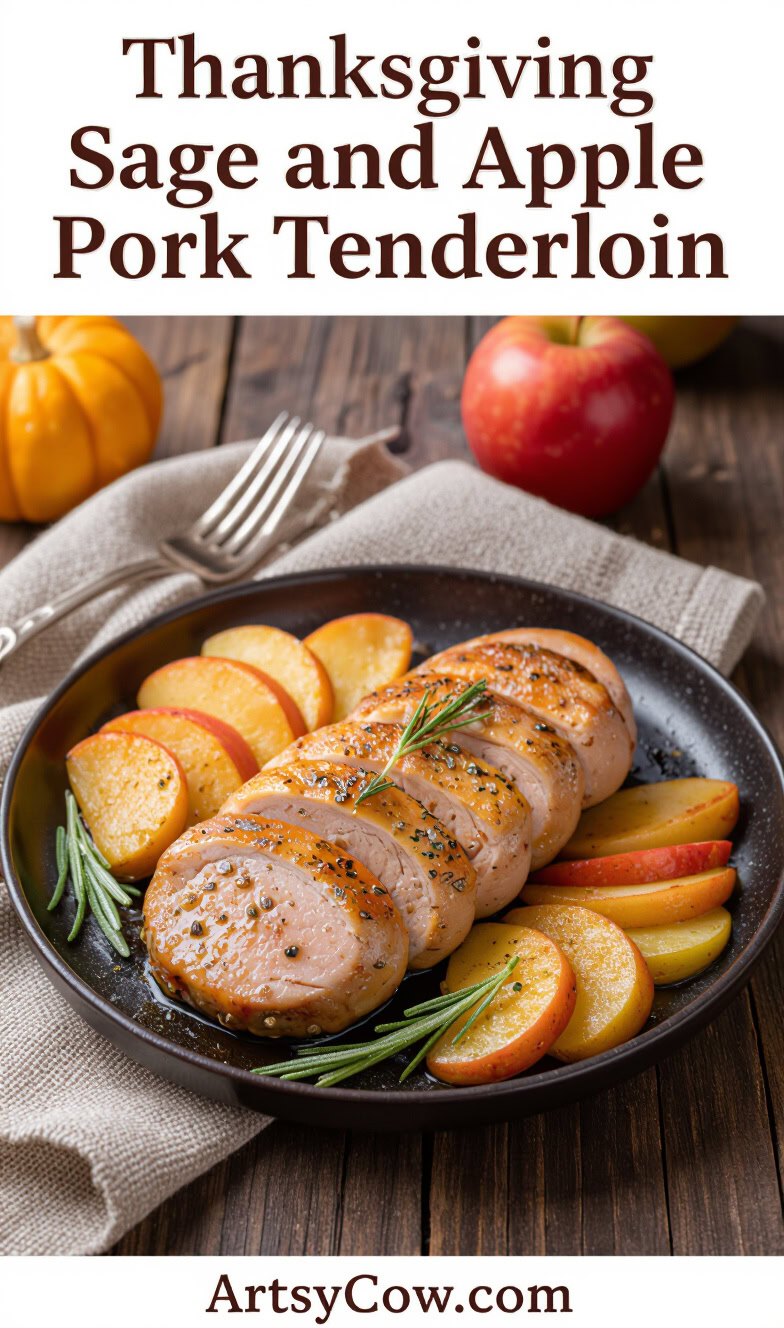
Everyone loves turkey at Thanksgiving, but let’s be real—sometimes you just want something different (and maybe a little less nap-inducing). This Thanksgiving Sage and Apple Pork Tenderloin is loaded with flavor, so you can flex your cooking skills and still have the energy for pie.
It’s that sweet spot of juicy pork, herby sage, and sweet apples that makes folks wonder if you secretly hired a chef.
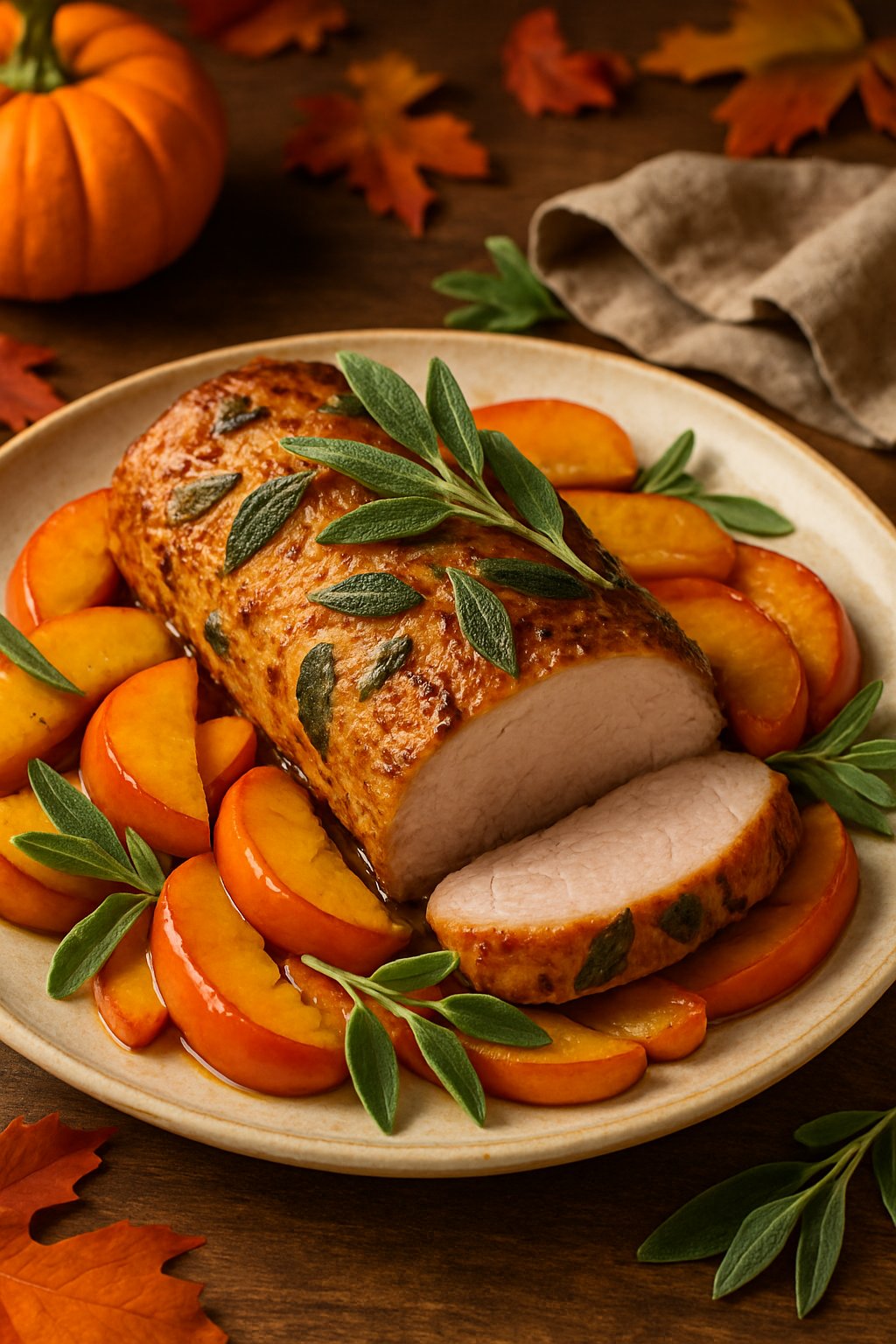
Imagine your kitchen smelling incredible, your family buzzing, and you not wrestling with a turkey the size of a toddler. This recipe brings all the autumn comfort without the hours-long cooking marathon.
If you want your meal to get more applause than the parade, you’re in the right place. Ready to shake things up? This could be the year everyone talks about the pork, not the bird.
Contents
- 1 Equipment
- 2 Ingredients
- 3 Instructions
- 4 What You Need To Know
- 5 Frequently Asked Questions
- 5.1 Can I use my roommate’s fancy apple brandy for the pork glaze, or will they finally move out?
- 5.2 If I confuse sage with parsley again, will my family stage an intervention?
- 5.3 Is it socially acceptable to blame the dog for overcooking the pork, asking for a friend?
- 5.4 Can my vegetarian cousin just eat around the pork, or do I need a plan B?
- 5.5 Are there any tips for not turning the tenderloin into a chewy boot, or is that just part of its charm?
- 5.6 How many times is too many times to ‘taste test’ the tenderloin before dinner officially starts?
- 6 Author
Equipment
Before you become a Thanksgiving kitchen ninja, check your gear. Trust me, hunting for a meat thermometer while your pork is plotting to go dry is not the vibe.
Essential Tools:
- Sharp chef’s knife — For chopping apples, sage, and, let’s be honest, looking cool.
- Cutting board — Bigger than a slice of bread, please.
- Mixing bowl — Where the flavor magic happens.
- Large oven-safe skillet or roasting pan — Nothing like a skillet that goes from stovetop to oven without drama.
- Measuring cups and spoons — For those who don’t trust “a dash.”
- Meat thermometer — So you don’t serve pork tartare.
- Tongs or spatula — To show that tenderloin who’s boss.
You might also want:
- Aluminum foil — Let the pork rest and stay juicy.
- Basting brush — Optional, but it makes you feel like a pro.
Here’s a quick table, because sticky fingers and scrolling don’t mix:
| Tool | Why You Need It |
|---|---|
| Chef’s knife | Chopping and slicing |
| Cutting board | Protects countertops |
| Mixing bowl | Combines ingredients easily |
| Oven-safe skillet | Searing and roasting |
| Measuring tools | Accuracy matters |
| Meat thermometer | No guesswork on doneness |
| Tongs/spatula | Flipping and transferring |
Ingredients
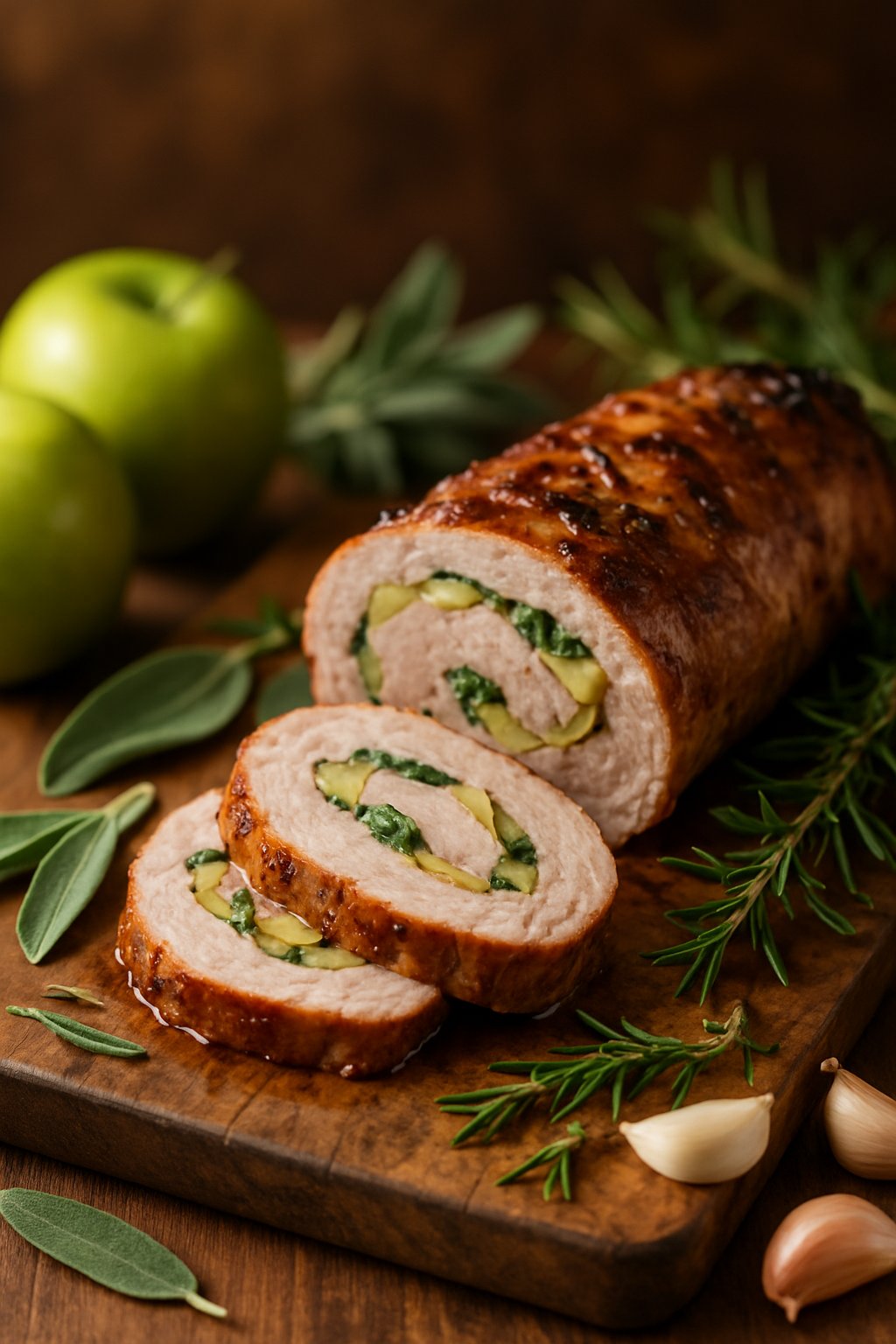
Ready to wow your family? Double-check your fridge before you start—trust me, apples have a way of disappearing. Here’s your shopping list for Thanksgiving sage and apple pork tenderloin:
| Ingredient | Quantity |
|---|---|
| Pork tenderloin | 1½ – 2 pounds |
| Fresh apples (sweet, like Honeycrisp or Fuji) | 2 large |
| Fresh sage leaves | 2 tablespoons, chopped |
| Olive oil | 2 tablespoons |
| Salt | 1½ teaspoons |
| Black pepper | 1 teaspoon |
| Garlic cloves | 2, minced |
| Dijon mustard | 1 tablespoon |
| Apple cider or apple juice | ½ cup |
| Butter | 2 tablespoons |
| Brown sugar | 1 tablespoon |
Even if apples are your go-to snack, save a couple for the pork. Sage isn’t just for stuffing—get ready to love it in a whole new way.
Olive oil and butter are probably hiding somewhere in your kitchen already. If not, maybe borrow from the neighbor (or the turkey, if it’s feeling generous).
Pick crisp apples—they roast up beautifully and balance the savory with a bit of sweet. Don’t stress about perfection here; rustic is charming, right?
Instructions
- Preheat your oven. Pork likes a cozy, warm spot.
- In a bowl, mix olive oil, salt, pepper, chopped sage, and a splash of vinegar. It’ll look fancier than it is.
- Rub that mixture all over the pork tenderloin. Whisper encouragement if you like.
- Heat a large oven-safe skillet on medium-high. Sear the pork on all sides—golden, not burnt.
- Take the pork out for a sec. Toss in your sliced apples and onions. Let them soften up a bit.
- Snuggle the pork back on top of the apples and onions. Pop the skillet in the oven.
- Roast, checking now and then, until the pork hits the right temp. Don’t overthink it.
- Let the pork rest before slicing. Maybe sneak a cooked apple while you wait.
- Slice and serve with the apples and onions on top. Watch everyone try to play it cool when the aroma hits.
Want a sauce? Add a splash of cider or broth to the pan after cooking, scrape up those golden bits, and call it gravy. Pat yourself on the back. For more details, check out this sage and apple pork tenderloin.
What You Need To Know
You don’t need to be a chef to pull off a pork tenderloin that’s juicy and loaded with fall flavor. Confidence helps more than skill here, honestly.
It’s really about trusting the process and not overcomplicating things. Don’t stress if your apples aren’t perfectly sliced or your sage is a little wild—Thanksgiving is about the vibe, not the photo finish.
This dish is a nice change of pace from turkey, and it fits right into the whole cozy, autumn thing. The aroma alone will have people wandering into the kitchen to see what’s up.
And hey, if you’re a little nervous about swapping out the main event, just remember: nobody ever complained about a tender, flavorful pork roast with apples and sage in November. Sometimes it’s good to switch it up and surprise everyone (yourself included).
Frequently Asked Questions
Thanksgiving brings its own set of challenges—like mistaking sage for parsley, eyeing your roommate’s fancy booze, or fending off relatives with strong opinions. Oh, and cooking pork that isn’t dry, rubbery, or bland? That’s a skill too.
Can I use my roommate’s fancy apple brandy for the pork glaze, or will they finally move out?
You can totally use your roommate’s fancy apple brandy for a richer glaze—just be ready for some side-eye or a lock on the liquor shelf. If you get caught, offer a slice of the finished dish. Apple and sage are a winning combo, and maybe your roommate will forgive you (and stick around for dinner).
If I confuse sage with parsley again, will my family stage an intervention?
Mixing up sage and parsley won’t ruin dinner, but it might get you a gentle family roast. Sage gives that cozy, woodsy flavor, while parsley is… well, just green. If your family is big on tradition, expect a few jokes—but nothing too harsh.
Blaming the dog for overcooking pork only works if your pup actually hangs out in the kitchen. Honestly, maybe just admit you looked away for “one second” instead.
You’re definitely not the first to face this drama at dinner. It happens to the best of us.
Can my vegetarian cousin just eat around the pork, or do I need a plan B?
“Eating around the pork” is a gamble and could get awkward fast. It’s probably smart to have a backup—roasted veggies or a hearty salad work.
That way, everyone can eat without dissecting the main dish or starting a staring contest across the table. No need to make dinner weird for anyone.
Are there any tips for not turning the tenderloin into a chewy boot, or is that just part of its charm?
If you want pork tenderloin to stay juicy, marinate ahead, sear it, and aim for the right internal temperature—about 145°F, then let it rest. Try not to keep opening the oven or poking at it, or you’ll end up with chewy disappointment.
It’s tough not to check, but trust the process. You might surprise yourself.
How many times is too many times to ‘taste test’ the tenderloin before dinner officially starts?
Taste testing is essential for “quality control.”
Sure, a slice or three is fair game, but if the tenderloin starts looking like Swiss cheese, maybe it’s time to wander over to the mashed potatoes before someone calls you out.
