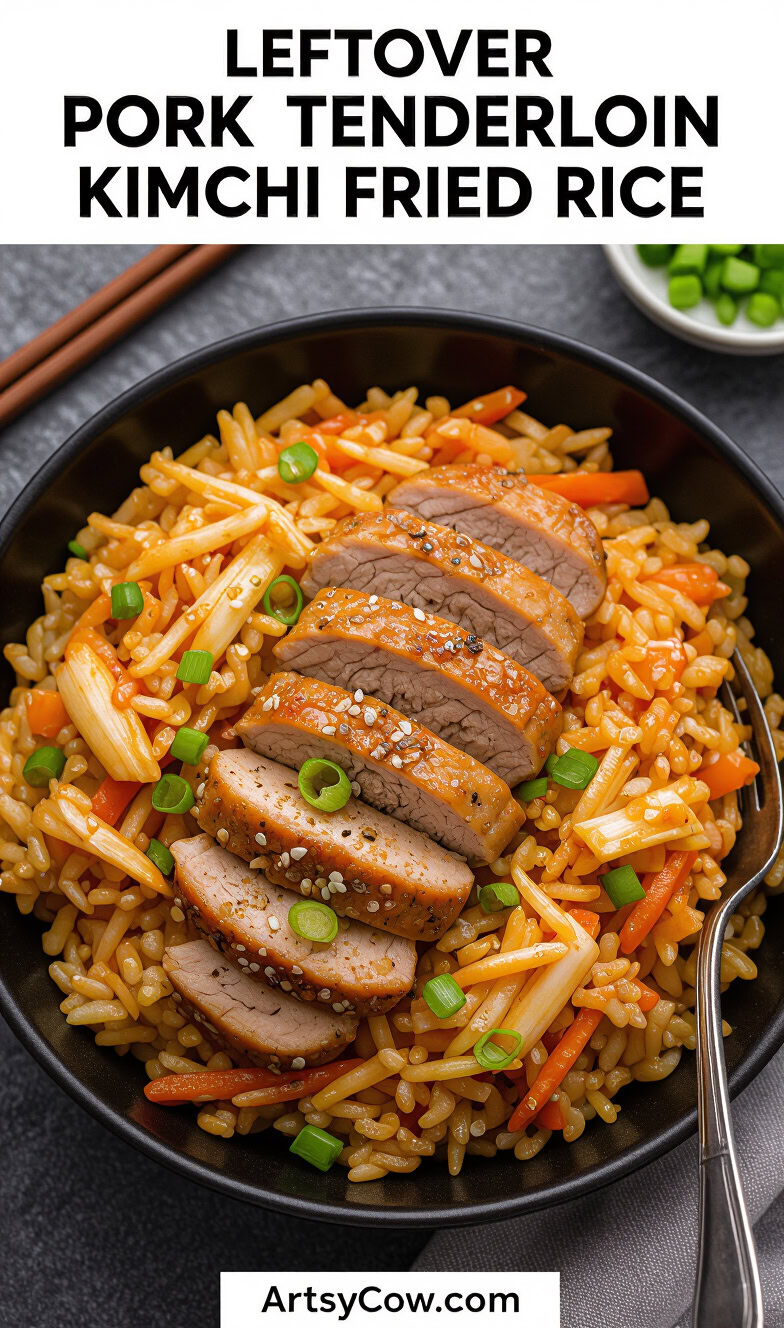
Leftover pork tenderloin begging for mercy from the fridge? Time to give it a glow-up in a pan.
This Leftover Pork Tenderloin Kimchi Fried Rice is the weeknight hero you didn’t know you needed—spicy, savory, and smart enough to use up leftovers without turning your kitchen into a science experiment.
It comes together in one skillet, so you can brag about “one-pan dinner” without actually lying to your friends.
Spoiler: you’ll be licking the last grain off the plate and grinning like you invented nap time for rice.
Contents
Equipment
Must-haves:
- Large skillet or wok — the kind that screams “get in there, wok this way!”
- Spatula or wooden spoon — for the moral support your rice needs
- Sharp knife and cutting board — because dull knives are just kitchen ambushes
- Measuring spoons and a small bowl — because precision is the spice of life
- Rice that’s already cooled (preferably day-old) — your best texture ally
Nice-to-haves:
- Toasted sesame oil for a glossy finish
- Rice cooker or larger steamer insert — for reheating rice in advance if you’re planning ahead
- Green onions and sesame seeds for garnish
- Gochujang (Korean chili paste) if you like extra heat
Ingredients
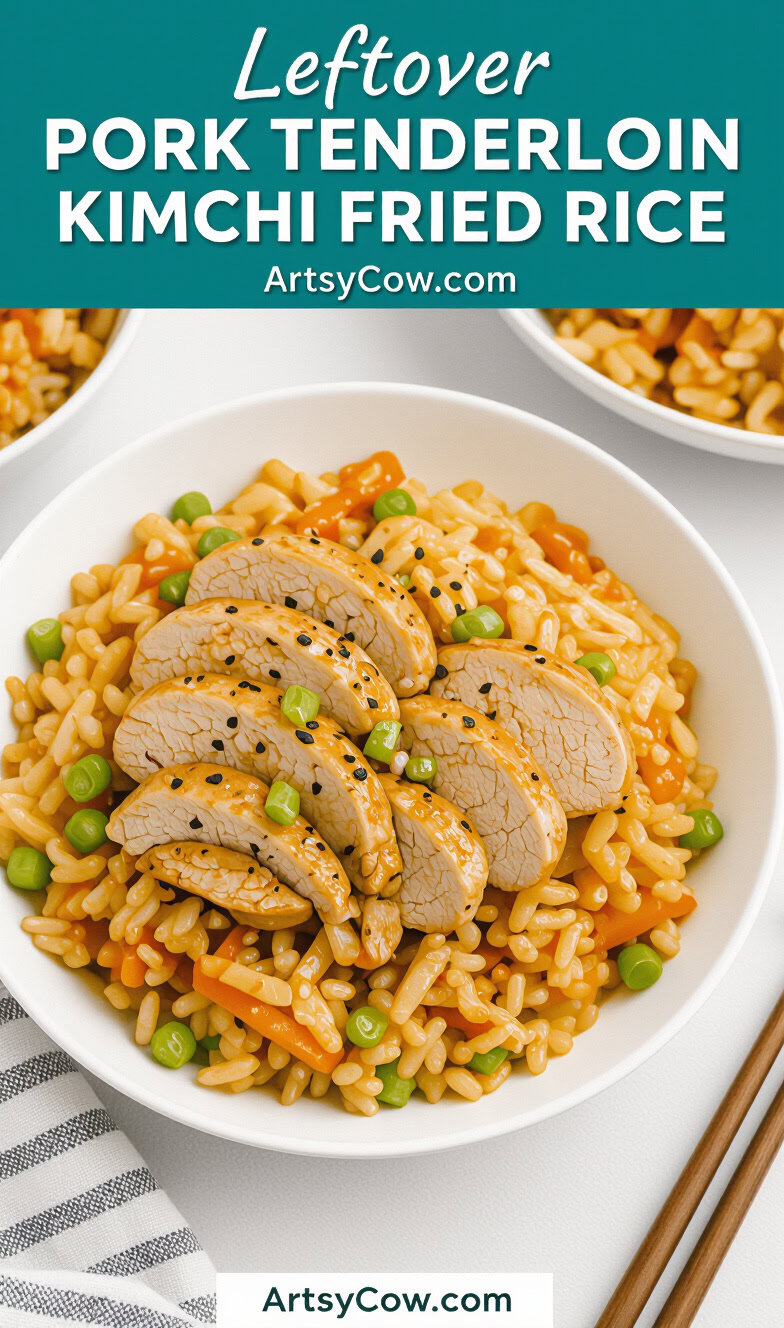
- 2 cups leftover pork tenderloin, diced
- 3 cups cooked white rice, cold or day-old
- 1 cup kimchi, chopped
- 2 eggs, beaten
- 2 tablespoons vegetable oil
- 1 tablespoon sesame oil (for finishing)
- 2 tablespoons soy sauce
- 1 tablespoon gochujang (optional, for heat)
- 2 green onions, sliced
- 1 clove garlic, minced
- 1 teaspoon grated fresh ginger
- Salt and black pepper, to taste
- Optional garnish: sesame seeds
Think of this as a flavor rescue mission: kimchi brings brightness, pork adds protein, and rice soaks up every bit of savory goodness. It’s like a party in your skillet—and your leftovers get to behave.
- Heat the vegetable oil in a large skillet or wok over medium-high heat. When it shimmers, invite the garlic and ginger to the dance for about 30 seconds until fragrant.
- If you’re using eggs, pour them into the pan and scramble until just set. Remove them to a plate and set aside for later—you’ve got eggs-tremely important business to finish.
- Add the kimchi to the pan. Sauté for 2 minutes to let it perfume the room with tangy, spicy goodness.
- Stir in the pork tenderloin and cook until it’s nicely reheated and starting to caramelize a touch. Your kitchen should smell like a busy street market by now.
- Dump in the cold rice. Break up any clumps with your spatula and spread it out so it hits the pan in a single layer—this helps it fry, not steam.
- Drizzle soy sauce over the rice and, if you like heat, swirl in the gochujang. Toss everything together so every grain wears a little red-hot kimchi confidence.
- Return the scrambled eggs to the pan, then fold in the green onions. Drizzle with sesame oil and give it one final toss to glisten like you’ve got a tiny oven light for a sunbeam shot.
- Taste and adjust salt and pepper as needed. Serve hot, with a sprinkle of sesame seeds if you’re feeling fancy.
That’s why leftovers become a celebration: you didn’t cook from scratch, but you still earned the “chef” badge for turning scraps into something you want seconds of.
What You Need To Know: Kimchi brings brightness and a hint of funk, pork adds richness, and rice soaks up all the flavor like a sponge with excellent taste in breakfast cereals. Day-old rice is your secret weapon here—fresh rice tends to cling like a clingy ex. If you don’t have gochujang, you can skip it, though you’ll miss a little heat and color.
Good to Know
Tips to keep this dish as glorious as your confidence after two cups of coffee:
- Use day-old rice for the best texture; it fries crisply instead of clumping into a soggy mass.
- Kimchi is salty—taste before you salt. Adjust soy sauce accordingly.
- Keep the pan hot and don’t overcrowd it; if you crowd, you’ll steam, and nobody wants steamed fried rice.
- If you want extra protein or a vegetarian version, swap pork for chopped mushrooms or tofu.
Tips
Small tweaks can elevate the dish without complicating it. Here are a few quick ideas:
- Double the greens: toss in spinach or bok choy right before finishing for color and crunch.
- Make it spicy: add another teaspoon of gochujang or a pinch of chili flakes if you like heat.
- Make it extra crispy: spread the rice in a thin layer in the pan and let it sit for 1–2 minutes before turning; you’ll hear the glorious crackle.
Variations
If you want to switch things up without reinventing the wheel:
- Swap pork for chicken, shrimp, or firm tofu for a different protein profile.
- Use brown rice or a blend of white and brown for a heartier bite.
- Try a kimchi-mushroom version: sauté mushrooms with garlic and ginger before adding kimchi.
- Keep it vegetarian: skip pork and add chopped tempeh or extra veggies.
Serving suggestions
Plate it hot and garnish with sesame seeds and sliced green onions. A fried egg on top is not strictly necessary, but it does make every bite feel like a tiny brunch party. Serve with a crisp cucumber kimchi on the side if you’ve got it—extra crunch, extra bragging rights.
Leftover pork tenderloin kimchi fried rice: proof that waste-not can taste like a big, satisfying win. Your future self will thank you for not letting the pork get lonely in the back of the fridge.