
Craving a no-fuss dinner that tastes like you spent all afternoon in a five-star kitchen? Yes, please.
One pork tenderloin can save weeknight dinner and make you look like a culinary wizard.
But here’s the catch! It’s all about the garlic, herb, and butter teamwork in the crockpot. This slow-cooked method gives you a juicy interior and melt-in-your-mouth texture without babysitting the oven.
Stick with me and you’ll have a simple, cozy meal that makes leftovers exciting. Leftovers are a bonus round.
Contents
Equipment: Must-haves
- Crockpot (slow cooker)
- Sharp knife
- Cutting board
- Mixing bowl
- Measuring spoons
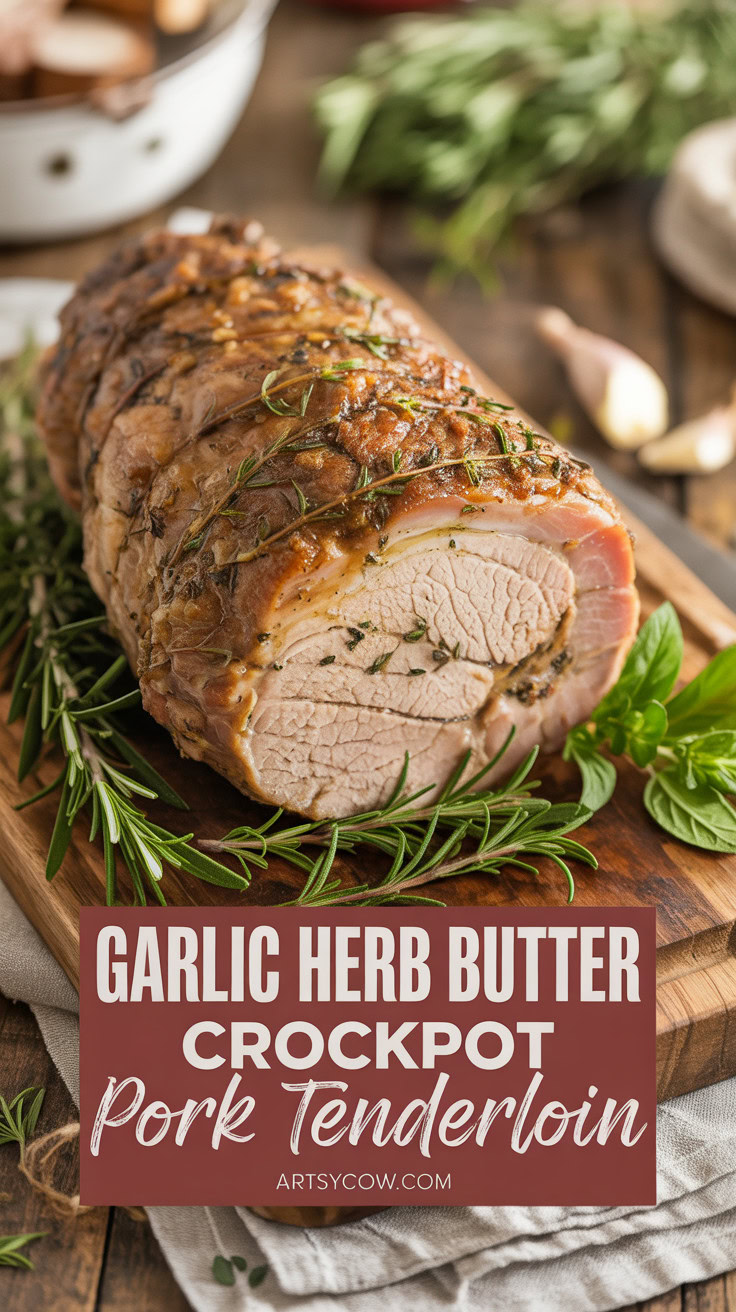
Equipment: Nice-to-haves
- Cast iron skillet for searing (optional)
- Kitchen twine
- Meat thermometer
- Tongs
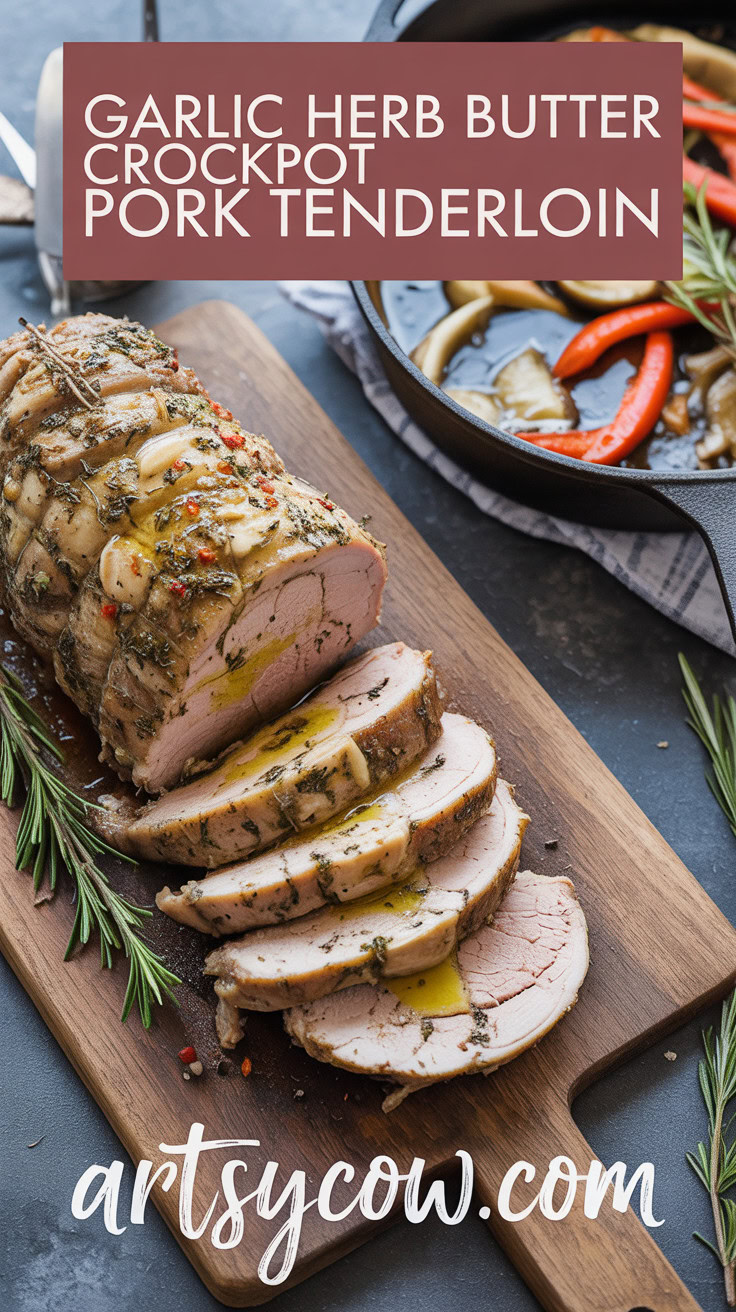
Ingredients
- 1 pork tenderloin (about 1.5 lb)
- 3 tablespoons unsalted butter, softened
- 4 garlic clove, minced
- 1 tablespoon fresh rosemary, chopped
- 1 tablespoon fresh thyme, chopped
- 1 teaspoon dried oregano
- 1 teaspoon salt
- 1/2 teaspoon black pepper
- 1/2 cup low-sodium chicken broth
- 2 tablespoons Dijon mustard
- 1 tablespoon Worcestershire sauce
- 1 tablespoon olive oil (for searing, optional)
- 1 lemon, zested and juiced
- Fresh parsley for garnish (optional)
- Pinch of red pepper flakes (optional, for a little kick)
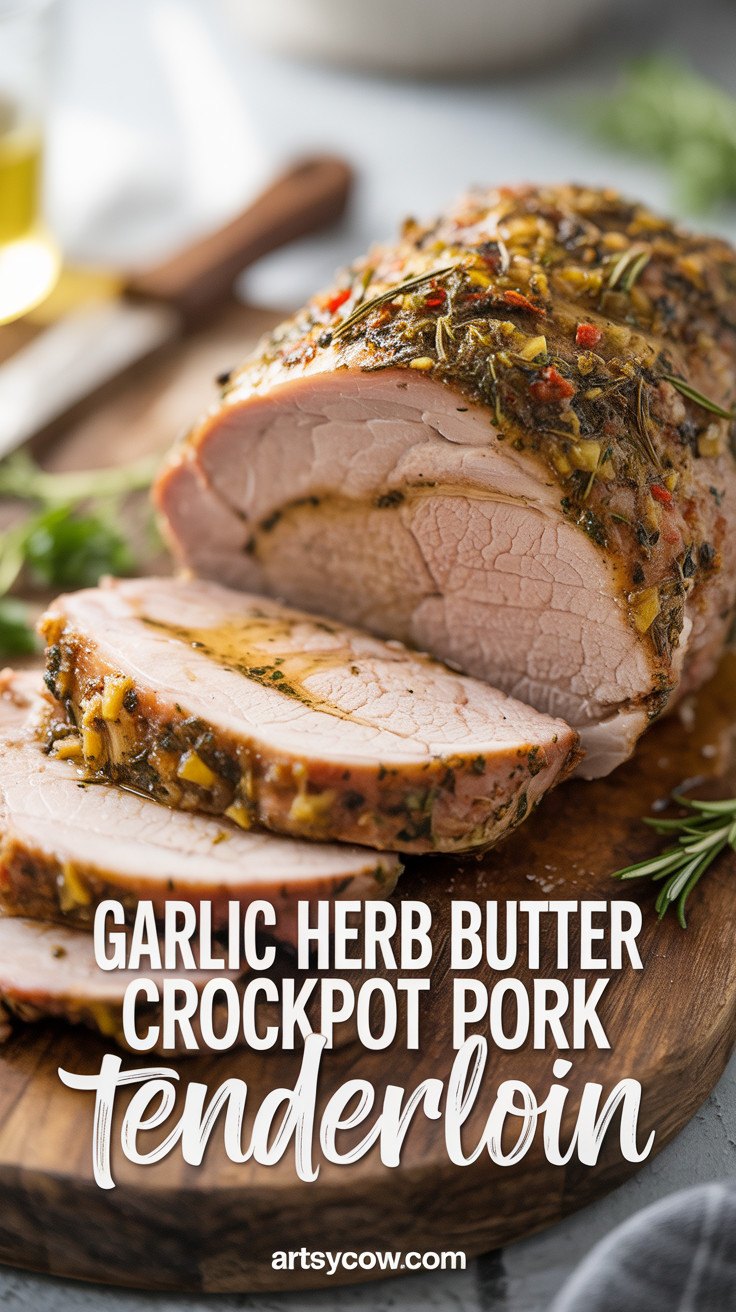
Instructions
- Trim any silver skin from the pork tenderloin and pat it dry with paper towel like you mean it.
- In a mixing bowl, combine butter, minced garlic, chopped rosemary, chopped thyme, dried oregano, lemon zest, Dijon mustard, Worcestershire sauce, salt, pepper, and red pepper flakes if using to make the garlic herb butter.
- Rub the garlic herb butter all over the pork, pressing some under the surface to flavor the meat more deeply.
- If you want the extra-goodness and a prettier crust, heat a skillet and add oil, then sear the pork on all sides until golden; this is optional but highly recommended.
- Place the pork in the crockpot and pour the chicken broth into the bottom to keep things moist and create a light sauce.
- Cover and cook on low until the pork is tender and cooked through; don’t peek too often or the slow-cooker will throw a tiny tantrum.
- Once the pork reaches the proper internal temperature, remove it to a cutting board and tent it loosely with foil to let the juices settle.
- Spoon any juices from the crockpot into the skillet, whisk in a little extra butter if you want a glossy sauce, and simmer briefly to concentrate flavors.
- Slice the pork against the grain to keep each piece tender and arrange on a platter.
- Squeeze lemon juice over the sliced pork and finish with a sprinkle of fresh parsley for color and brightness.
- Serve with the pan sauce spooned over the meat and enjoy the applause (or the satisfied silence).

Good to Know
Tip: Use a meat thermometer to ensure the pork reaches a safe but juicy temperature; 145°F is the sweet spot followed by a short rest. Variation: Swap fresh rosemary or thyme for dried if that’s what you have on hand; the slow cooker will coax out the flavors.
No judgment.
Serving suggestion: Pair this pork with mashed potato, roasted vegetable, or a simple green salad to balance the richness. Bread is excellent for sopping up the sauce—don’t fight it.
Make-ahead note: You can assemble the pork with the garlic herb butter the night before and refrigerate; just bring it to room temperature briefly before starting the crockpot. Leftover love: Shred any leftover pork into sandwiches, tacos, or salads.
It reheats beautifully and tastes even more relaxed the next day. Searing is optional but worth it: Searing adds flavor and color.
If you skip it, you’ll still have tender pork, but the crust won’t be as dramatic. Storing: Refrigerate in an airtight container for up to three days.
Freeze portions for up to three months for emergency deliciousness. A final pro tip: Let the pork rest after cooking so the juices redistribute.
Rest is not lazy—it’s strategic.
