
Craving an easy, hands-off dinner that still tastes like you put in effort? Enter the crockpot—your new best friend on tired weeknights.
This lemon rosemary pork tenderloin feels fancy but asks for almost no babysitting. It’s bright, herbaceous, and juicy enough to make your fork applaud.
But here’s the catch! You still get to pretend you cooked something gourmet while the slow cooker does the heavy lifting.
Contents
Equipment: Must-haves
- Crockpot (slow cooker)
- Cutting board
- Sharp knife
- Tongs
- Measuring spoons
- Small bowl
- Meat thermometer
- Serving platter

Equipment: Nice-to-haves
- Cast-iron skillet for searing
- Zester or microplane
- Citrus juicer
- Kitchen twine
- Silicone brush
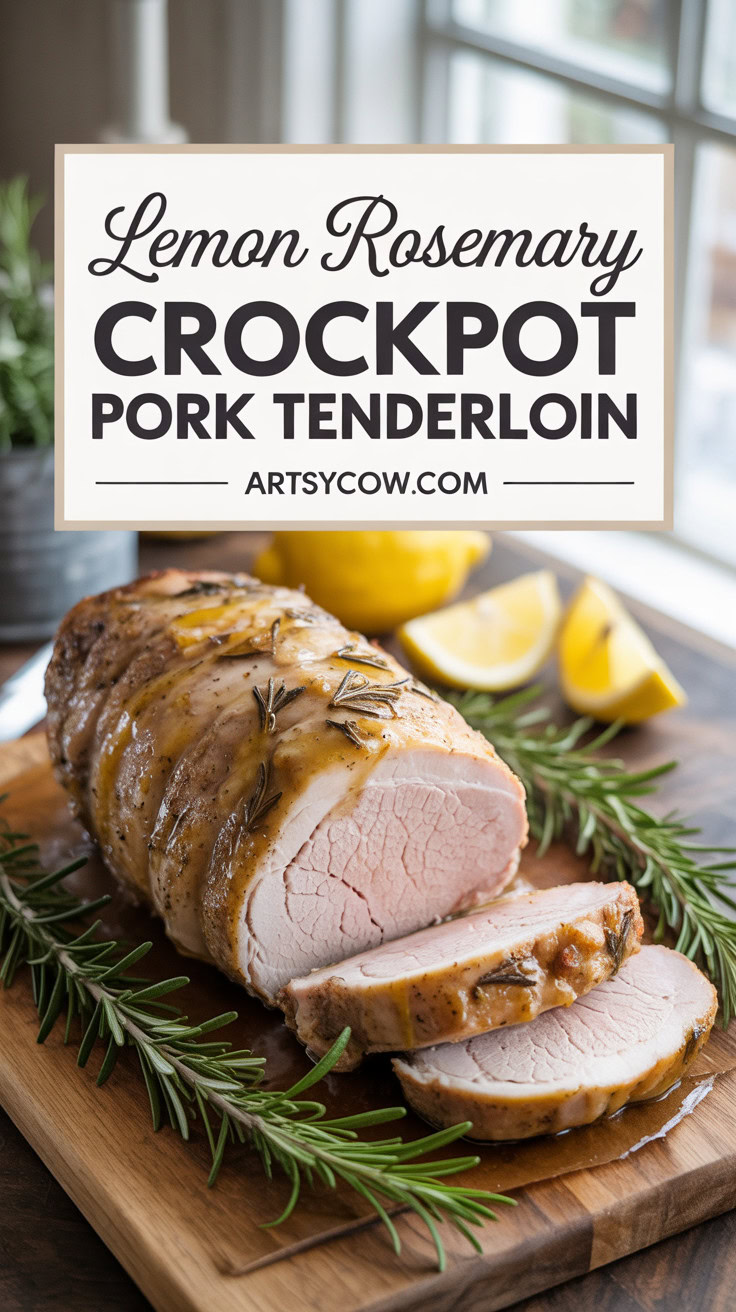
Ingredients
- 1 pork tenderloin (about 1 to 1¼ pound)
- 2 tablespoons olive oil
- 2 cloves garlic, minced
- 1 lemon, zested and juiced
- 1 tablespoon fresh rosemary, finely chopped
- 1 teaspoon salt
- ½ teaspoon black pepper
- ½ cup low-sodium chicken broth
- 1 tablespoon Dijon mustard (optional but delightful)
- 1 tablespoon honey (optional for a touch of sweetness)
- 1 bay leaf
- 1 teaspoon cornstarch (for optional thickening)
- 1 tablespoon cold water (for mixing cornstarch slurry, optional)
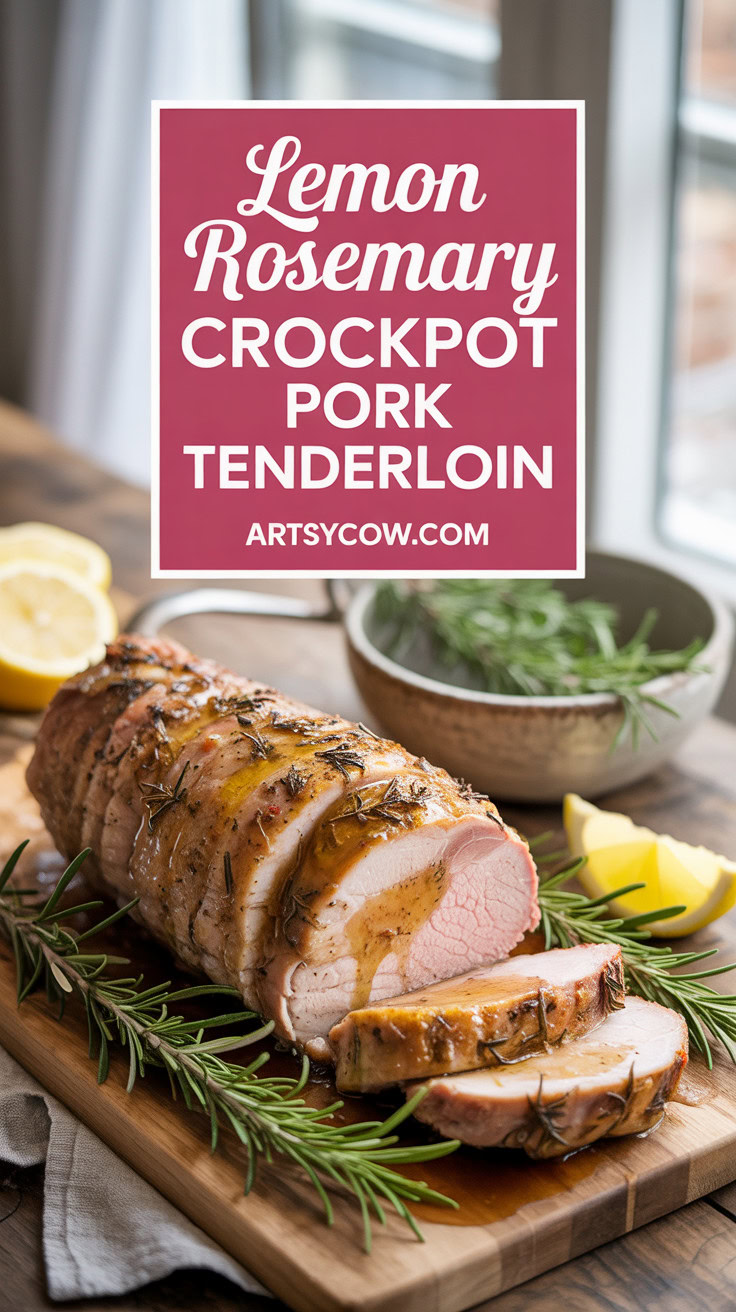
Instructions
- Pat the pork tenderloin dry on the cutting board and season it with salt and pepper on all sides like you mean it.
- If you have a cast-iron skillet, heat it with olive oil until shimmering and sear the pork on all sides until golden to lock in juices; if not, skip to the crockpot and don’t feel guilty.
- Transfer the pork to the crockpot using tongs and place it in the center like it’s taking a nap.
- In a small bowl, whisk together olive oil, minced garlic, lemon zest, lemon juice, chopped rosemary, Dijon mustard, and honey until the mixture looks like it knows what it’s doing.
- Pour the herb-lemon mixture over the pork, making sure some gets under the tenderloin for extra flavor.
- Pour the chicken broth around the pork to provide steam and keep the slow cooker happy.
- Tuck the bay leaf beside the pork so it can lend aromatic support while staying out of the spotlight.
- Cover the crockpot and cook on low until the pork is tender and the internal temperature reads the safe mark on your meat thermometer.
- About halfway through cooking, use tongs to spoon some of the cooking juices over the pork for a quick baste; this is basically a spa treatment for meat.
- When the meat thermometer indicates doneness, remove the pork to the cutting board and tent it loosely with foil to rest so the juices redistribute.
- If you want a pan sauce, pour the crockpot juices into a saucepan and simmer to concentrate the flavor.
- For a glossy sauce, make a cornstarch slurry by whisking cornstarch into cold water and whisking it into the simmering juices until thickened.
- Slice the pork against the grain on the cutting board into medallions and arrange them on the serving platter.
- Spoon the sauce over the sliced pork and garnish with a little extra chopped rosemary and a thin lemon wheel for looks and bragging rights.
- Serve with your favorite side and accept compliments with graceful humility (or shameless delight).
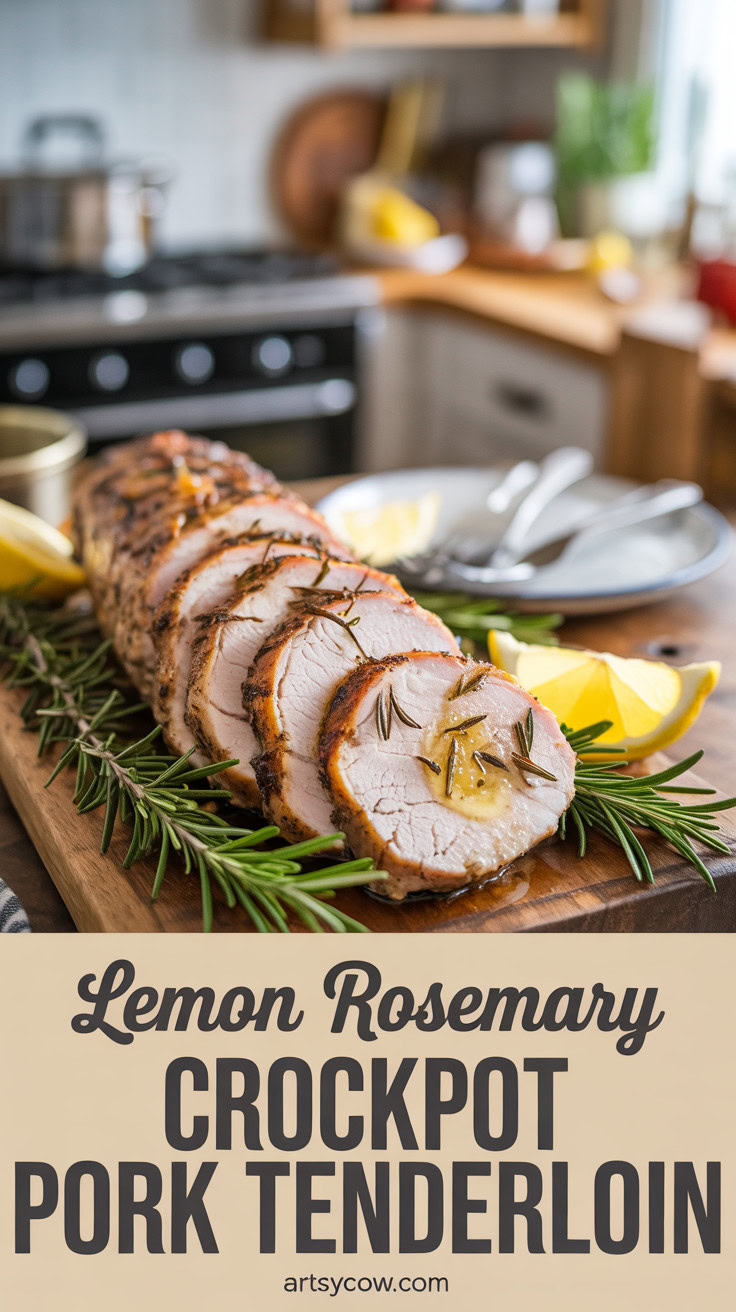
Good to Know
Timing: Cook the pork on low for several hours until the meat thermometer reaches the safe internal temperature for pork. Low-and-slow keeps it tender and forgiving.
Searing tip: Searing first adds flavor and texture, but it’s optional if you’re short on time or dishes. The crockpot will still produce a juicy result.
Thickening: If you like a saucier finish, mix cornstarch with cold water and whisk into simmering juices until glossy. That’s why a small saucepan earns its keep.
Variations: Swap honey for maple syrup for a warmer sweetness. Use thyme instead of rosemary if that’s what your herb garden insists on offering.
Serving suggestions: Pair with mashed potato, roasted vegetable, or a crisp green salad to balance the citrus. Leftovers make great sandwich filling the next day.
Storage: Refrigerate leftover pork in an airtight container for up to three days. Reheat gently to avoid drying—add a splash of broth if needed.
Pro tip: Use a meat thermometer to avoid overcooking. When the pork reaches the ideal temp, it’s done—no drama, no guesswork.
Enjoy the hands-off magic and the extra five minutes of free time that suddenly appears when your crockpot takes center stage.
