
Creamy comfort without the babysitting? Yes please.
You want a dinner that tastes restaurant-level but feels like cheat-night-level effort. This Dijon crockpot pork tenderloin does exactly that — tender pork, tangy mustard, and a silk-smooth sauce that basically high-fives your taste buds.
But here’s the catch! It’s mostly hands-off, so you can actually finish that email or take a nap while dinner cooks.
That’s why this is a weeknight hero.
Contents
Equipment: Must-haves
- Slow cooker or crockpot
- Skillet (preferably cast iron) for searing
- Cutting board
- Sharp knife
- Measuring cups and spoons
- Mixing bowl
- Tongs
- Wooden spoon

Equipment: Nice-to-haves
- Meat thermometer
- Whisk
- Kitchen twine (to keep the tenderloin neat)
- Ladle for serving
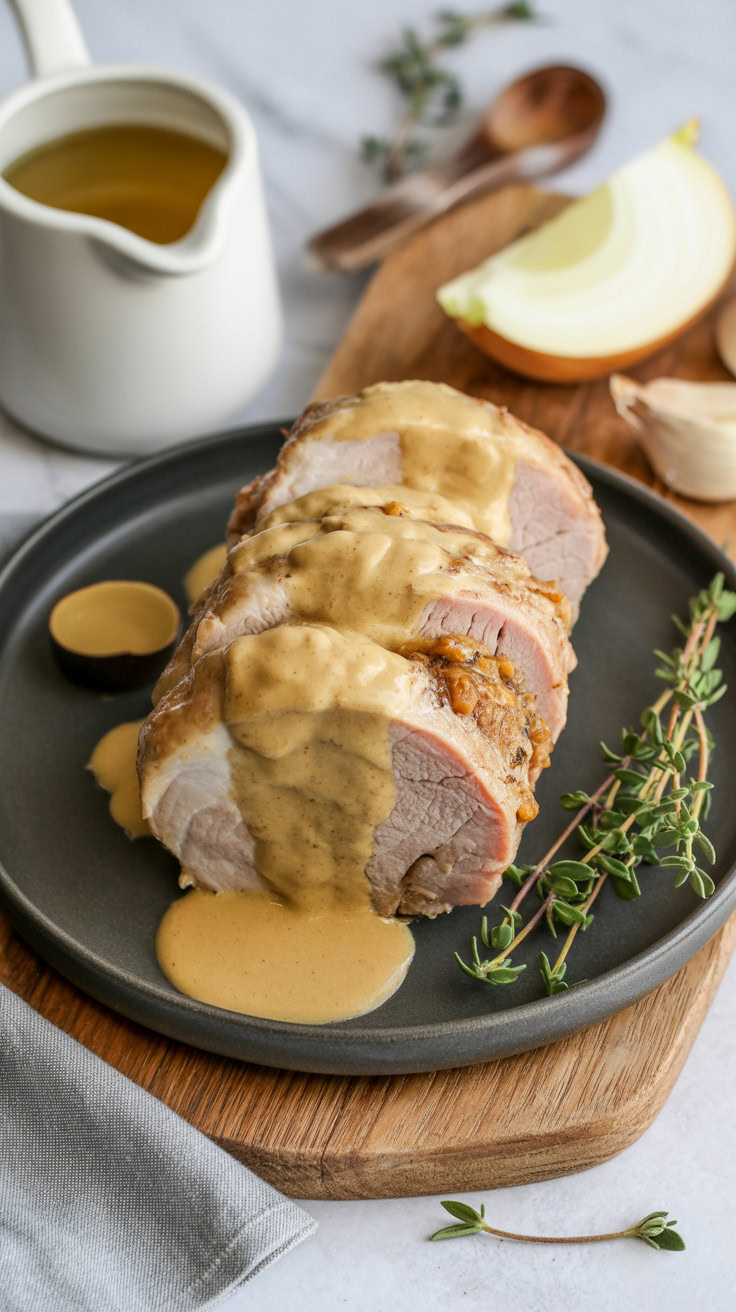
Ingredients
- 1 (about 1 to 1.25 lb) pork tenderloin, trimmed
- 1 tablespoon olive oil (for searing)
- 1 small onion, thinly sliced
- 1 clove garlic, minced
- 1 cup chicken broth
- 1/3 cup Dijon mustard
- 1 tablespoon honey (or maple syrup if you’re fancy)
- 1 tablespoon soy sauce or Worcestershire sauce
- 1 sprig fresh thyme (or a pinch of dried thyme)
- 1/3 cup heavy cream
- 1 tablespoon cornstarch (for slurry)
- Salt, to taste
- Black pepper, to taste

Instructions
- Pat the pork tenderloin dry and season all over with salt and pepper.
- Use kitchen twine to tie the tenderloin if it looks uneven, so it cooks nicely and looks like you knew what you were doing.
- Heat the skillet over medium-high heat and add the olive oil until it shimmers.
- Sear the tenderloin on all sides until it gets a golden crust; use tongs to roll it like a tiny savory log.
- Transfer the seared tenderloin to the slow cooker and tuck the sliced onion around it.
- In the mixing bowl, whisk together the chicken broth, Dijon mustard, honey, soy sauce, minced garlic, and thyme until smooth.
- Pour the mustard mixture over the tenderloin, covering it with saucy goodness.
- Cover and cook on low for several hours or on high for a shorter time, until the pork reaches a safe doneness.
- Use the meat thermometer to check the internal temperature; aim for the recommended safe temp and then a brief rest will finish it to tender perfection.
- When the pork is done, remove it to a cutting board and let it rest while you finish the sauce.
- Skim any excess fat from the cooking liquid and pour the liquid into the skillet used for searing, over medium heat.
- Bring the sauce to a gentle simmer and stir in the heavy cream to make it creamy and lush.
- Whisk the cornstarch with a little cold water to make a slurry, then whisk the slurry into the simmering sauce until it thickens to coat the back of a spoon.
- Taste and adjust seasoning with salt and pepper as needed; this is where you brag about balancing flavors.
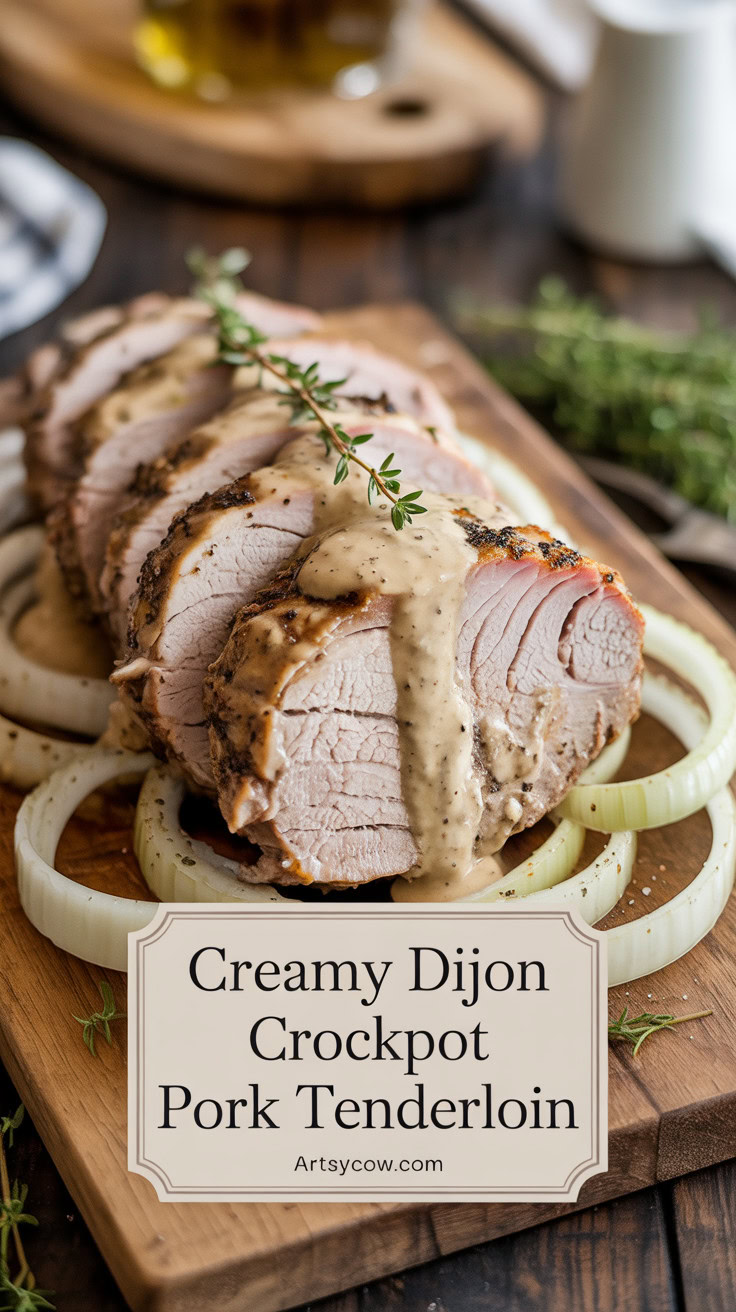
- Slice the rested pork into medallions and arrange them on a plate.
- Ladle the warm creamy Dijon sauce over the pork and serve immediately with your favorite side.
Good to Know
Tip: Searing the pork first is not fancy fluff — it adds flavor. That’s why I don’t skip it unless the skillet is also your cat’s new bed.
But here’s the catch! If you’re short on time, you can skip searing and still get tender results in the crockpot; the sauce will just be slightly less caramelized.
Variation: Swap the heavy cream for half-and-half for a lighter finish, or stir in a pat of butter at the end for extra silk. Serving suggestion: Pair the pork with mashed potato, creamy polenta, or buttered noodles to soak up that mustard sauce.
Storage: Refrigerate leftovers in an airtight container for up to three days. Reheat gently in a skillet and add a splash of broth if the sauce tightens up.
Make-ahead note: You can mix the mustard sauce in advance and keep it refrigerated; pour it over the seared pork right before crockpot time. Timing guide: Cook on low for a few hours for best tenderness, or choose high if you’re racing the clock — but keep an eye on internal temperature with the meat thermometer.
Final pro tip: Let the pork rest before slicing. It’s the culinary equivalent of a power nap — worth every second.
