
Craving a hands-off dinner that still tastes like you spent hours in the kitchen?
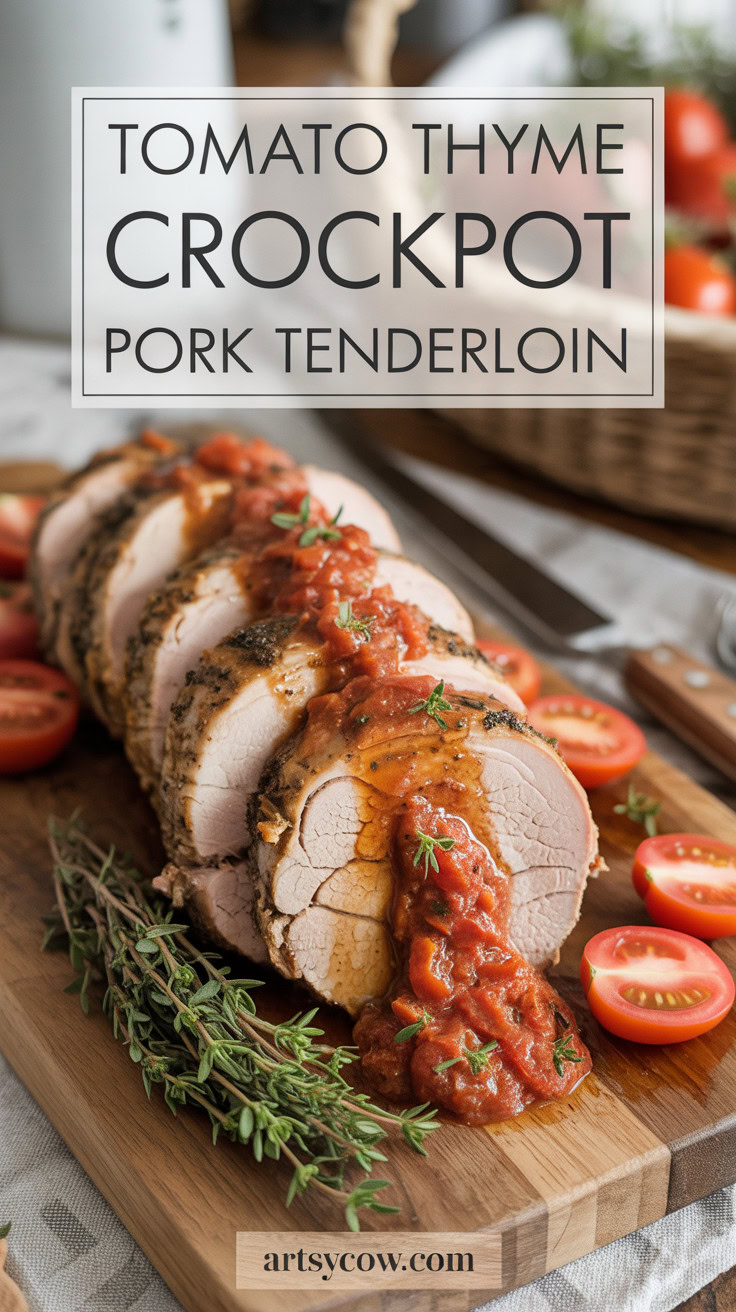
This crockpot pork tenderloin does the heavy lifting while you binge, walk the dog, or pretend you’re folding laundry. Tomato and thyme team up to make a saucy, herb-kissed companion for a single, perfectly cooked pork tenderloin.
That’s why this recipe is perfect for busy weeknights and dinner-win bragging rights.
Contents
Equipment: Must-haves
- Crockpot (slow cooker)
- Cutting board
- Sharp knife
- Measuring spoons
- Tongs
- Measuring cup
Equipment: Nice-to-haves
- Skillet (for searing, optional but recommended)
- Meat thermometer
- Small bowl (for mixing sauce)
- Wooden spoon
Ingredients
- 1 pork tenderloin (about 1 to 1.25 lb)
- 1 tablespoon olive oil
- 1 (14 oz) can diced tomato
- 1 small onion, thinly sliced
- 2 clove garlic, minced
- 1 tablespoon fresh thyme, chopped (or 1 teaspoon dried thyme)
- 1/2 cup chicken broth
- 1 tablespoon balsamic vinegar
- 1 tablespoon brown sugar
- 1 teaspoon salt
- 1/2 teaspoon black pepper
- 1 bay leaf
- 1 tablespoon cornstarch (optional, for thickening)
- 1 tablespoon butter (optional, for finishing)
Instructions
- Pat the pork tenderloin dry with paper towel and season it with salt and pepper on all sides.
- If you have a skillet, heat olive oil over medium-high heat and sear the pork on all sides until golden; this step is optional but adds a lot of flavor.
- Place the sliced onion and minced garlic in the bottom of the crockpot to make a little aromatic bed.
- Nestle the pork tenderloin on top of the onion and garlic bed in the crockpot.
- In a small bowl, combine the diced tomato, chicken broth, balsamic vinegar, brown sugar, and thyme; stir with a wooden spoon or whisk to blend.
- Pour the tomato-thyme mixture over the pork, then tuck the bay leaf into the sauce so it can do its aromatic magic.
- Set the crockpot to low for a longer, more tender result, or high if you’re short on time; cover and walk away.
- Cook until the pork reaches a safe internal temperature using a meat thermometer, checking through the lid at the end of cooking time.
- Carefully remove the pork to a cutting board and tent with foil to rest while you finish the sauce.
- If you want a thicker sauce, skim out bay leaf and spoon a few ladles of hot sauce into a cup, whisk in cornstarch, then stir back into the crockpot and cook on high for a few minutes.
- Stir in butter for a glossy finish if desired, and taste the sauce to adjust salt and pepper.
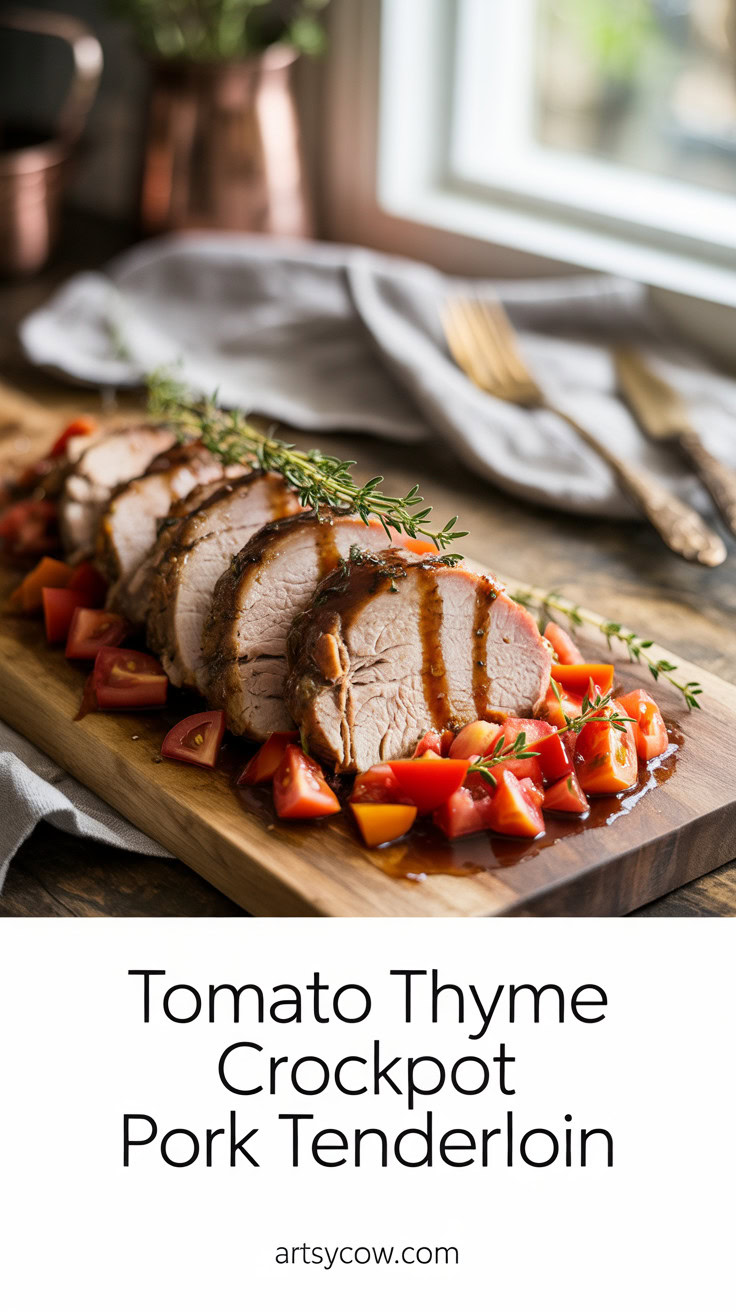
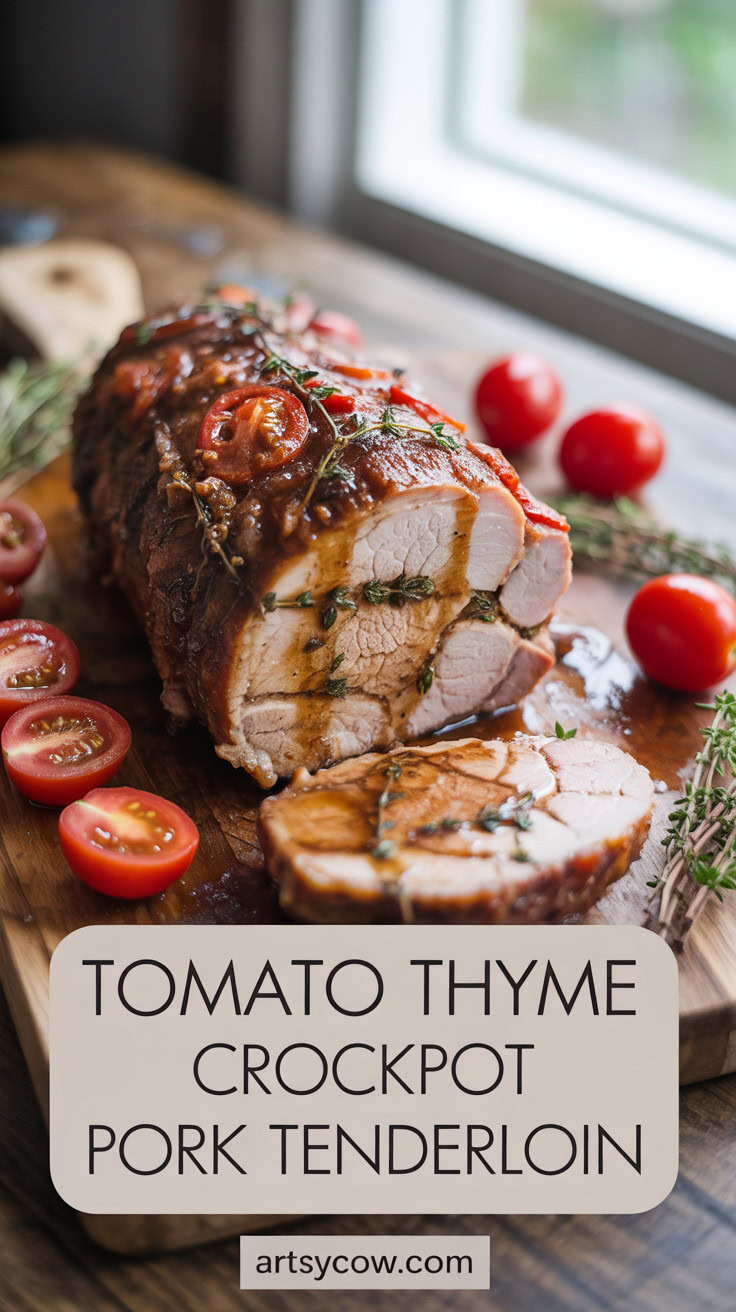
- Slice the rested pork tenderloin against the grain and spoon the tomato-thyme sauce over the top before serving.

Good to Know
Timing: Cooking on low gives the juiciest result and lets connective tissue relax slowly. If you’re in a hurry, use the high setting but check the meat early with a meat thermometer so you don’t overcook.
Searing tip: Searing the pork in a skillet before it goes to the crockpot creates a deeper flavor and better color. But here’s the catch!
If you skip searing, you’ll still get tender, tasty pork—just a bit paler. Thickening: For a glossy sauce, mix cornstarch with a little cold water or broth before adding.
That prevents lumps and gives you a silky finish. Serving ideas: Spoon the pork and sauce over mashed potato, polenta, or a bed of fluffy couscous.
A crisp green salad or roasted vegetable alongside keeps the plate balanced. Variation: Swap balsamic for red wine for a more rustic sauce, or add a pinch of red pepper flakes if you like a little heat.
Storage: Refrigerate leftovers in an airtight container for up to 3 days. Reheat gently in a skillet or low oven to keep the pork juicy.
Final note: One pork tenderloin means just enough leftovers for a lunch or a second dinner without wrestling a whole roast. That’s efficient, delicious, and practically heroic.
