
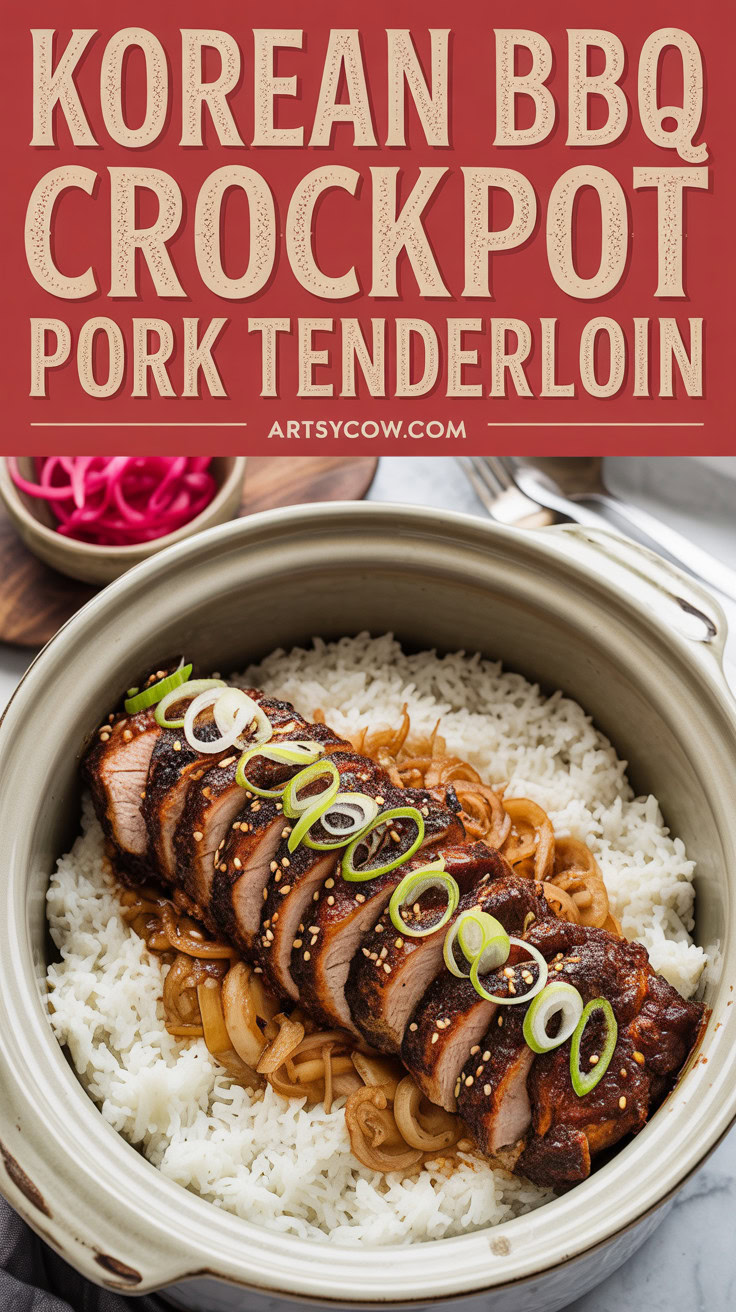
Craving a hands-off dinner that tastes like you spent hours mastering the grill? This slow-cooker hack turns a single pork tenderloin into sticky, savory Korean BBQ perfection with almost zero fuss.
But here’s the catch! You still get all the flavor without babysitting the oven. That’s why this recipe is my go-to when I want wow without the work.
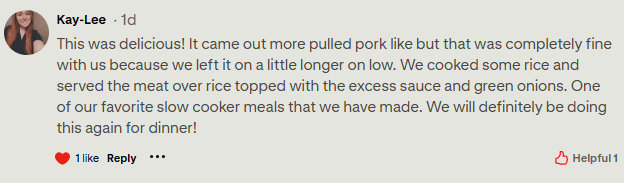
Here’s what our readers think about this recipe:
Let’s dive into it!
Contents
Equipment: Must-haves
- Slow cooker or crockpot
- Cutting board
- Sharp knife
- Mixing bowl
- Tongs
- Measuring spoons and cups
Equipment: Nice-to-haves
- Skillet for optional searing
- Kitchen twine to tie the tenderloin
- Meat thermometer to check doneness
- Silicone brush for glazing
- Microplane grater for fresh ginger
- Fine mesh strainer for smoothing the sauce
Ingredients
- 1 pork tenderloin (about 1 to 1.25 lb)
- 1/2 cup soy sauce (use low-sodium if you prefer less salt)
- 1/4 cup brown sugar, packed
- 2 tablespoons sesame oil
- 3 cloves garlic, minced
- 1 tablespoon fresh ginger, grated
- 2 tablespoons gochujang (Korean chili paste) or chili paste substitute
- 1 tablespoon rice vinegar
- 1 tablespoon honey
- 1/4 cup water or low-sodium chicken broth
- 1 tablespoon cornstarch
- 1 tablespoon water (for slurry)
- 1 teaspoon sesame seeds, toasted
- 1 green onion, thinly sliced
- Cooked rice, for serving (optional)
- Pickled radish or kimchi, for serving (optional)
Instructions
- Pat the pork tenderloin dry and trim any silver skin or loose fat on the cutting board.
- If using kitchen twine, tie the tenderloin loosely to create an even cylinder for more even cooking.
- In the mixing bowl, whisk together soy sauce, brown sugar, sesame oil, garlic, ginger, gochujang, rice vinegar, honey, and water until the sugar dissolves and the mixture looks glossy.
- Place the tenderloin into the slow cooker and pour most of the sauce over it, saving a few spoonfuls for glazing later.
- If you like a deeper flavor and crispier edges, heat the skillet over medium-high heat and quickly sear the tenderloin on all sides before adding it to the slow cooker.
- Cover and cook on low until the pork is tender and the internal temperature reaches the safe range for pork, checking with the meat thermometer.
- Carefully remove the pork with tongs and transfer it to a cutting board to rest while you finish the sauce.
- Pour the cooking liquid through the fine mesh strainer into the skillet, pressing gently to extract the flavorful juices and discard solids.
- Bring the strained sauce to a simmer and whisk together the cornstarch and water to make a slurry, then whisk the slurry into the simmering sauce to thicken to a glossy glaze.
- Brush the reserved spoonfuls of sauce over the pork and return it to the skillet or under a broiler for a minute to caramelize the glaze, watching closely so it does not burn.
- Slice the pork tenderloin against the grain into medallions and spoon the thickened sauce over the top using the silicone brush or a spoon to coat each slice.
- Garnish with toasted sesame seeds and sliced green onion, and serve with cooked rice and pickled radish or kimchi if you like a spicy, tangy contrast.
Good to Know
Tip: Low and slow in the slow cooker means tender pork that almost falls apart, but it won’t turn to mush if you keep an eye on the timing. Tip: Searing before slow cooking is optional, but it adds a caramelized crust and deeper flavor—like a tiny grill cameo.
Variation: Swap gochujang for hoisin or a chili-garlic sauce if you don’t have Korean paste; the profile will shift but stay delicious. Serving suggestion: Pair sliced pork with steamed rice and a side of kimchi or quick-pickled cucumber for crunch and acidity.
Make-ahead: The pork keeps well in the fridge for a couple of days and makes an excellent sandwich or taco filling—leftovers are basically my side hustle. Allergy note: Use gluten-free soy sauce if you need a gluten-free option, and check gochujang labels for wheat.
Finishing trick: If your sauce is too thin, simmer a little longer with the lid off, or stir in a tad more cornstarch slurry. That’s why this recipe works: easy, flavorful, and forgiving.
You get sticky, savory meat with almost no drama and all the bragging rights.
