
Craving something indulgent that still looks like you know what you’re doing in the kitchen? This garlic butter roasted pork belly delivers crispy skin and melt-in-your-mouth meat with very little drama.
No fancy gear. No chef ego required.
Just a little patience, a lick of butter, and a pan in the oven — that’s why this feels like magic, not math.
Contents
Equipment: Must-haves
- Roasting pan
- Baking rack that fits inside the roasting pan
- Sharp knife
- Cutting board
- Oven
- Meat thermometer
- Aluminum foil
- Paper towel

Equipment: Nice-to-haves
- Pastry brush
- Kitchen twine
- Silicone spatula
- Kitchen shears
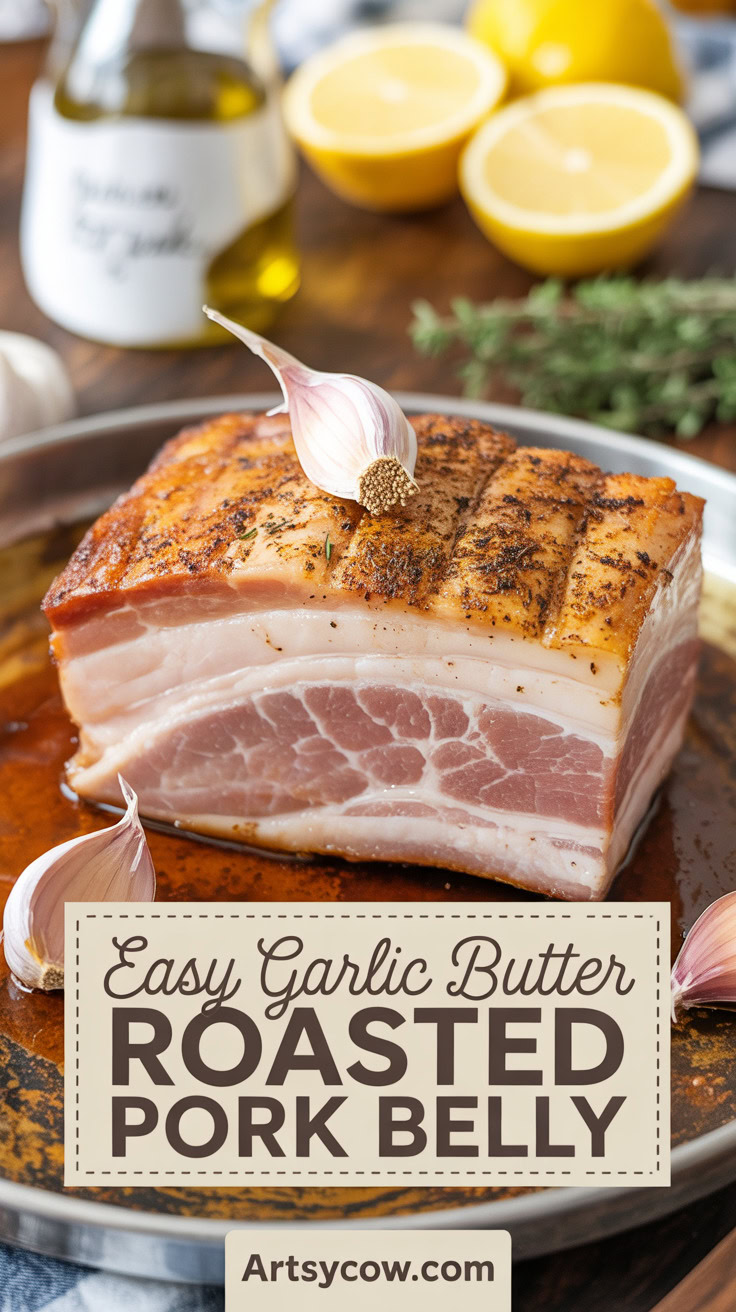
Ingredients
- 1 piece pork belly (about 2 lb), skin on
- 4 garlic clove, minced
- 4 tbsp unsalted butter, softened
- 1 tsp kosher salt, plus extra for salting skin
- 1/2 tsp black pepper, freshly ground
- 1/2 tsp smoked paprika
- 1 tsp fresh thyme leaves, chopped
- 1 tbsp olive oil
- 1 tsp white vinegar
- 1 lemon, halved (for serving)
- Optional: 1 tsp brown sugar (for extra color on skin)
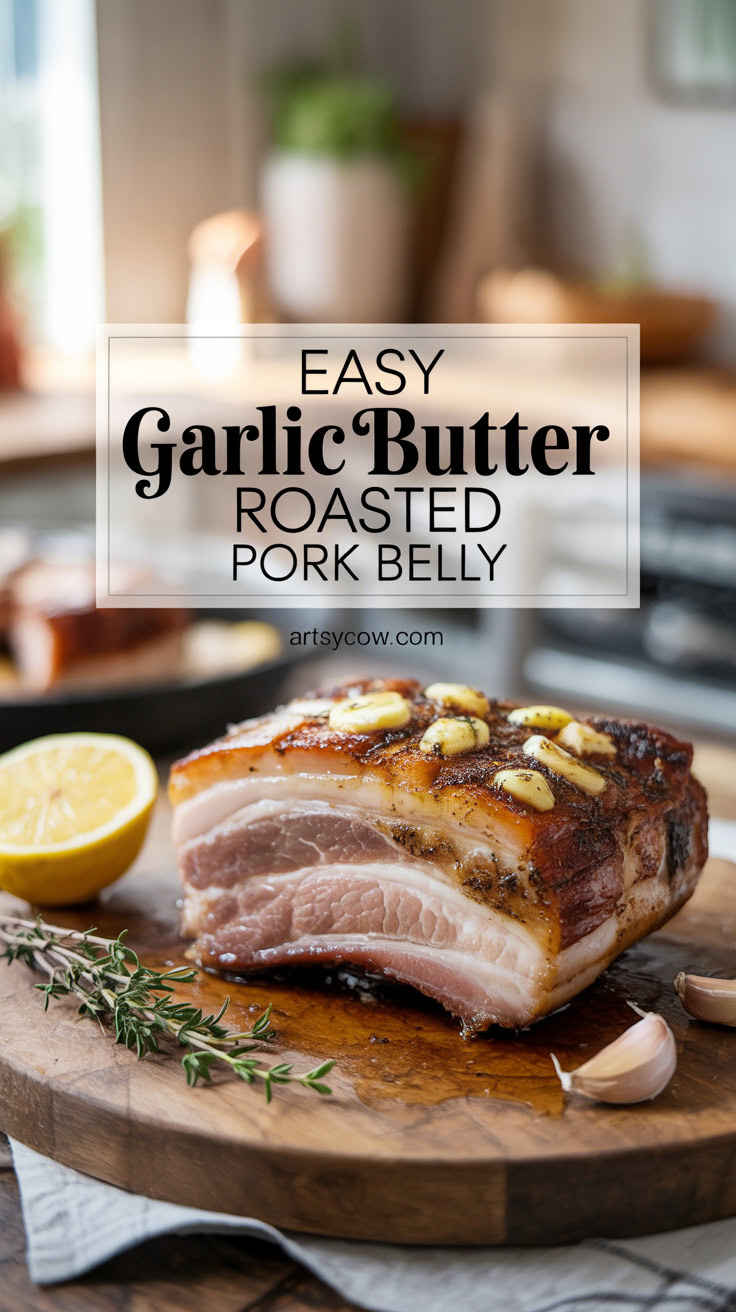
Instructions
- Preheat the oven to 450F so the pork skin gets a head start on becoming crispy.
- Pat the pork belly skin dry with paper towel until it squeaks. Dry skin equals better crackling.
- Use a sharp knife to score the skin in a crosshatch pattern, cutting through the fat but not into the meat; this helps fat render and skin crisp.
- Rub the skin with olive oil and sprinkle salt generously over the scored skin; then place the pork belly uncovered in the refrigerator for at least an hour to dry the skin further.
- Mix the minced garlic, softened butter, chopped thyme, black pepper, smoked paprika, and a pinch of salt in a small bowl using a silicone spatula until combined; this is your garlic butter.
- If needed, trim any ragged edges of the skin using kitchen shears and tie the pork belly with kitchen twine so it cooks evenly and keeps a neat shape.
- Bring the pork belly to room temperature while you get the pan ready; place the baking rack inside the roasting pan so the pork sits above the drippings.
- Spread the garlic butter under the skin by gently lifting the skin with a finger or the back of a spoon and slipping in small amounts; smear the remaining butter over the top and sides of the meat (but avoid piling butter into the scored cuts on the skin).
- Place the pork belly skin-side up on the rack and slide the roasting pan into the hot oven. Roast at high heat until the skin begins to blister and turn deeply golden.
- After the initial high-heat blast, reduce the oven temperature to 325F and continue roasting until the meat is tender and the internal temperature reaches the safe range for pork, checking with a meat thermometer placed into the thickest part of the meat (avoid touching bone or fat).
- If the skin hasn’t reached the desired crackle, switch the oven to broil for short bursts while watching closely to avoid burning; broil in 30-second bursts until the skin pops and cracks.
- Remove the pan from the oven and tent the pork belly loosely with aluminum foil; let it rest so the juices redistribute and the meat firms up for easier slicing.
- After resting, remove kitchen twine, transfer the pork to a cutting board, and slice across the grain into generous pieces using a sharp knife.
- Squeeze fresh lemon over the sliced pork for brightness and serve with pan juices spooned over the meat or reserved for dipping.
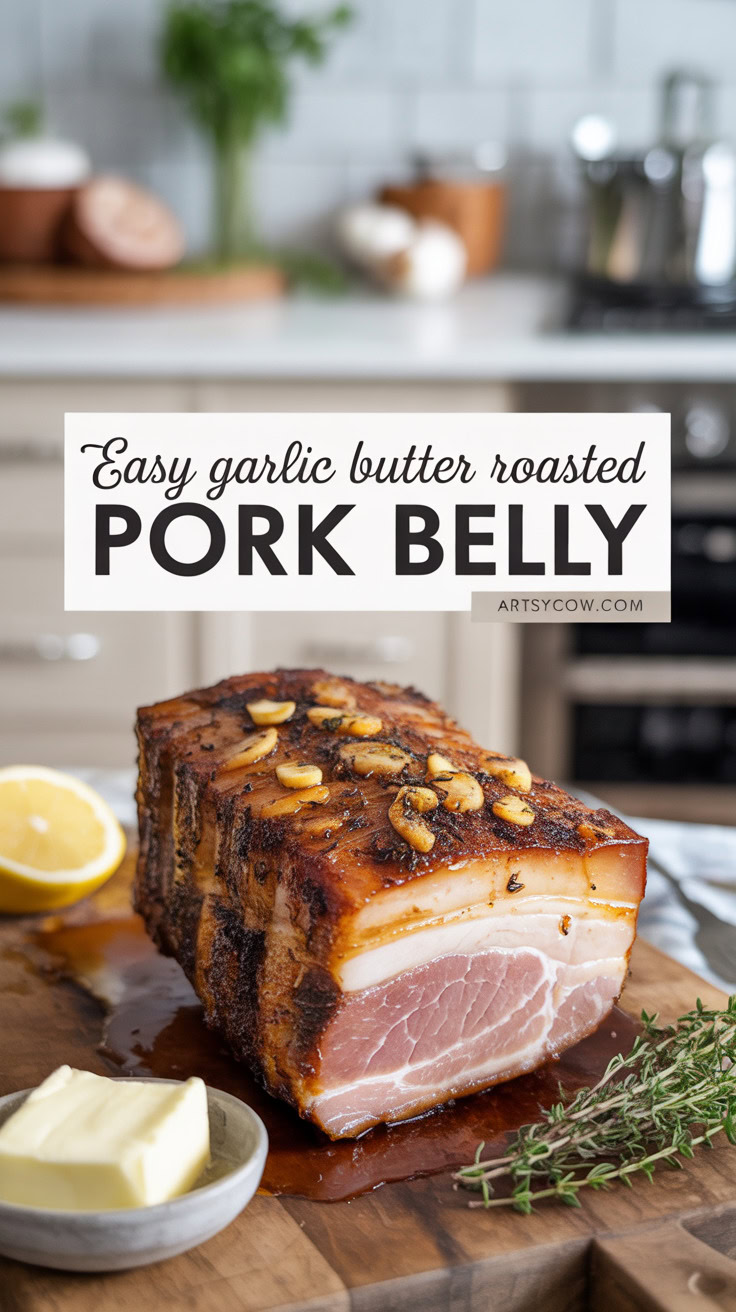
What Else You Should Know
Tip: Drying the skin is the single most important trick for great crackling. The longer it dries (overnight in the fridge is heroic), the better.
Variation: For a slightly sweet glaze, sprinkle brown sugar on the skin before the final broil; it helps caramelize and deepen color. Serving suggestion: Serve the pork with simple sides like roasted potato, steamed green vegetable, or a crisp salad to cut the richness.
Make-ahead: The pork can be roasted earlier in the day and gently reheated in a low oven so the skin stays crisp; re-crisp under the broiler for a few seconds if needed. Safety note: Use the meat thermometer to ensure the pork is cooked to a safe internal temperature and avoid slicing too soon; resting is not optional if you want juicy meat.
Storage: Leftover pork keeps well in the fridge for up to three days. Reheat gently to preserve texture.
But here’s the catch! Even if the skin isn’t perfect first try, the meat will still be delicious.
Keep practicing, and you’ll earn that crackle like a kitchen badge of honor.
