
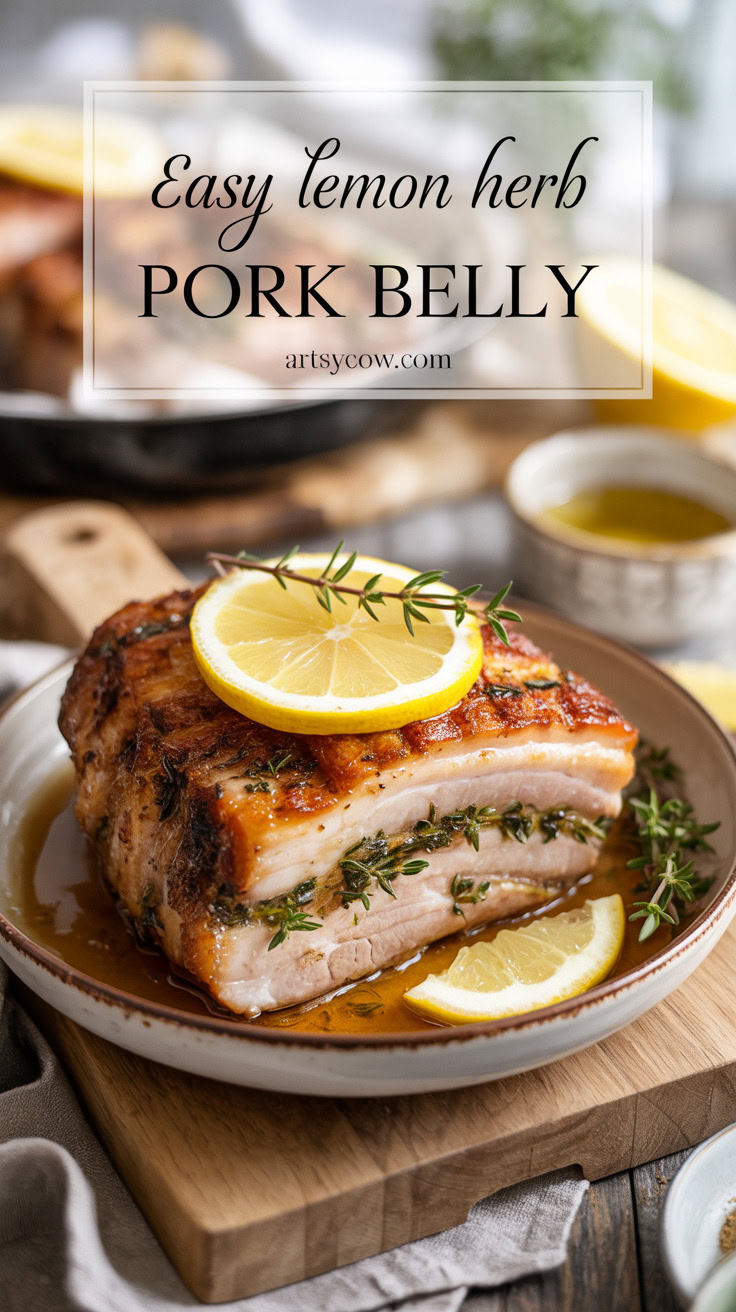
Craving something indulgent but still kinda responsible? Roast pork belly with lemon and herb is your culinary loophole.
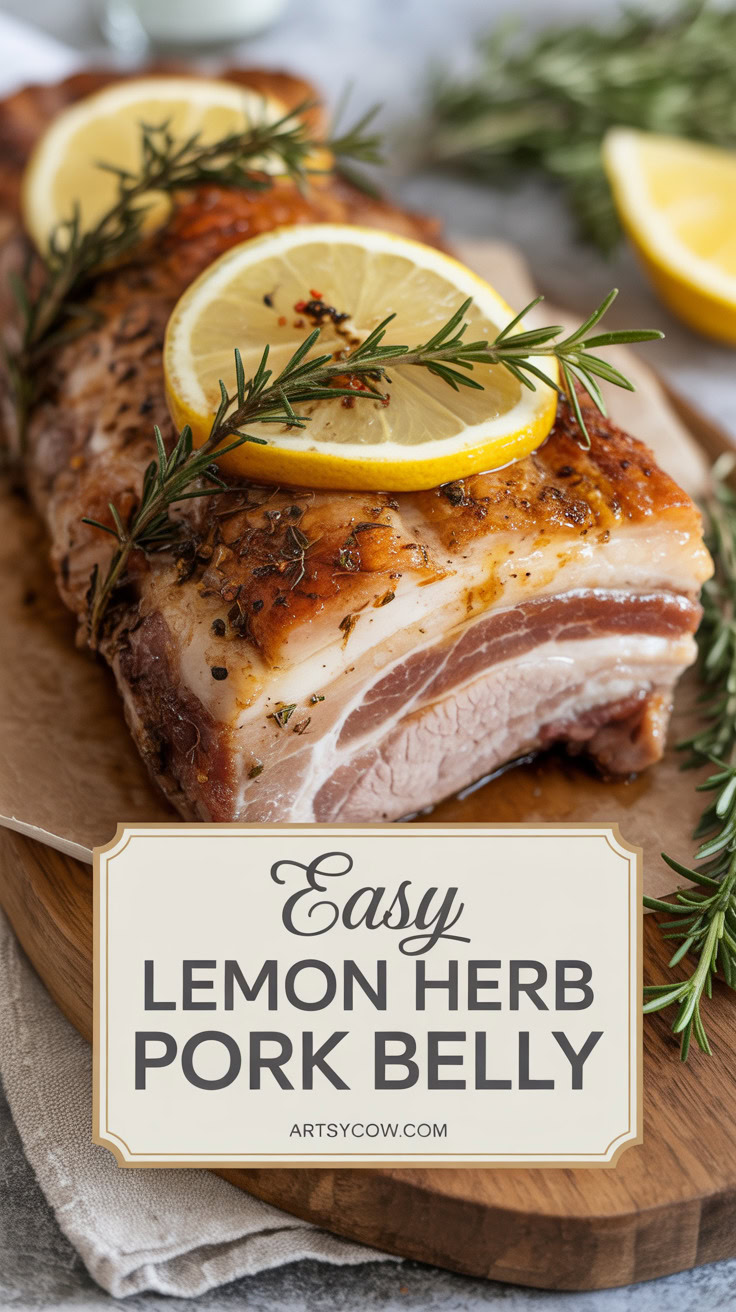
This recipe gives you velvet meat and crackling skin without the drama. It’s fuss-free, oven-friendly, and perfect for when you want to impress without inventing new kitchen skills.
But here’s the catch! A little patience and the right trick will reward you with glorious crispy skin and tender, juicy belly.
Contents
Equipment: Must-haves
- Roasting pan (with rim to catch rendered fat)
- Sharp knife (for scoring skin)
- Cutting board
- Meat thermometer
- Oven

Equipment: Nice-to-haves
- Cooling rack (to lift the pork off the pan)
- Kitchen twine (to keep shape neat)
- Pastry brush (for basting with herb-lemon oil)
- Aluminum foil (for tenting while resting)
Ingredients
- 1 lb pork belly, skin on
- 1 lemon, zested and juiced (keeps things bright)
- 4 garlic cloves, minced
- 1 tbsp olive oil
- 1 tsp salt (fine)
- 1/2 tsp black pepper, freshly ground
- 1 tsp fresh thyme leaves, chopped (or dried if desperate)
- 1 tsp fresh rosemary, chopped (optional but lovely)
- 1 tsp sugar (helps with crisping the skin)
- 1/2 tsp smoked paprika (for subtle warmth)
- 1 bay leaf (optional, for oven aromatics)
- 1 tbsp apple cider vinegar (helps tenderize)
Instructions
- Preheat the oven to 425F and make sure the rack is centered; preheating is non-negotiable.
- Pat the pork belly skin very dry with paper towel; moisture is the enemy of crisp skin, so be thorough.
- Score the skin with a sharp knife in parallel lines about half an inch apart; don’t cut too deep into the meat—just through the skin and fat.
- Mix lemon zest, minced garlic, olive oil, salt, pepper, thyme, rosemary, sugar, smoked paprika, and apple cider vinegar in a small bowl to make a fragrant paste.
- Rub the paste over the meat side of the pork belly and spread a thin layer over the fat without forcing it deep into the skin cuts; keep most of the paste on the meat.
- If using kitchen twine, roll the belly into a neat log and tie it so it holds shape; this helps even cooking and a pretty presentation.
- Place a cooling rack inside the roasting pan and set the pork belly on the rack, skin side up; the rack keeps the pork out of its fat so the bottom doesn’t get soggy.
- Scatter the bay leaf in the pan for aroma, then put the pan into the oven and roast at the high temperature for 30 minutes to jump-start the crackle.
- After the initial burst, reduce the oven temperature to 300F and continue roasting until the meat is tender and the internal temperature reaches your target; probe with a meat thermometer to check doneness. (Use the thermometer to avoid guesswork.)
- For tender, pull-apart pork, roast until the thermometer reads around 190F–195F and the meat yields when poked; if you prefer sliceable but tender pork, aim lower around 160F–170F.
- If the skin hasn’t crisped to your liking, switch the oven to broil for short bursts—watch like a hawk and move the pan if any spot is browning too fast.
- Once the pork belly reaches your desired tenderness and the skin is crackling, remove from the oven and tent loosely with foil. Let it rest undisturbed so the juices settle and the fat firms up a bit.
- After resting, remove the twine, slice the pork belly with a sharp knife across the grain for neat pieces, and serve with a squeeze of fresh lemon juice to brighten every bite.
What Else You Should Know
Tips: Score the skin shallowly if you don’t want the flavor paste to sink into the meat; deep scoring helps fat render faster but can let seasonings escape. Variation: Swap thyme for oregano or add a pinch of chili flakes if you like a little kick—this recipe loves friendly experiments.
Serving suggestion: Plate slices with a simple green salad or steamed rice and a drizzle of the pan juices; lemon wedges on the side make for happy faces. Crisping hack: Sprinkle a tiny extra pinch of salt and sugar on the skin before the final broil; salt pulls moisture out and sugar helps caramelize.
Watch carefully to prevent burning. Make-ahead: You can roast the pork belly ahead and re-crisp under a hot broiler for a few minutes before serving.
Leftovers are great reheated in a skillet so the skin regains some texture. Safety note: A meat thermometer is your best friend; while safe pork can be served at 145F, pork belly often benefits from higher temps for tenderness—decide if you want sliceable or pull-apart texture and target temperature accordingly.
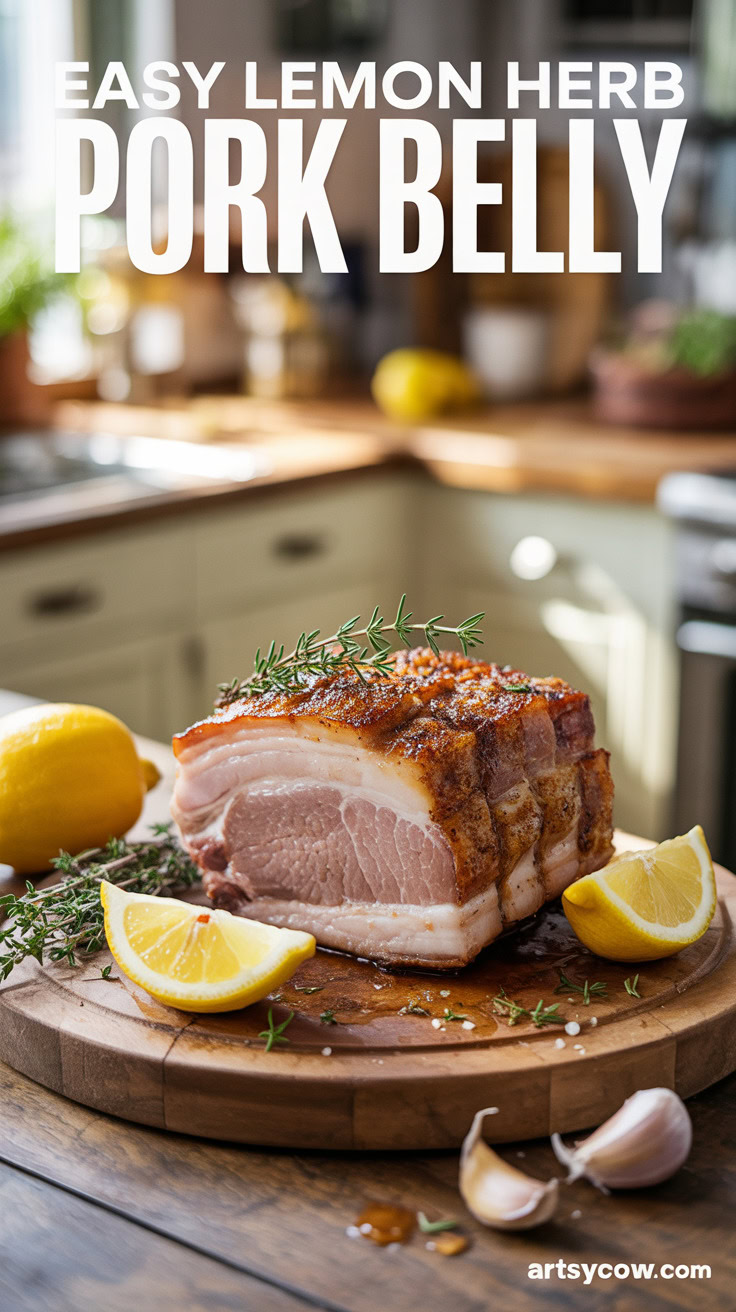
Final thought: This is fancy enough to wow guests and relaxed enough for a weeknight. That’s why lemon, herb, and pork belly are culinary best friends—like a three-person buddy comedy, but tastier.
