
Stuck with a craving for something rich, cozy, and slightly naughty?
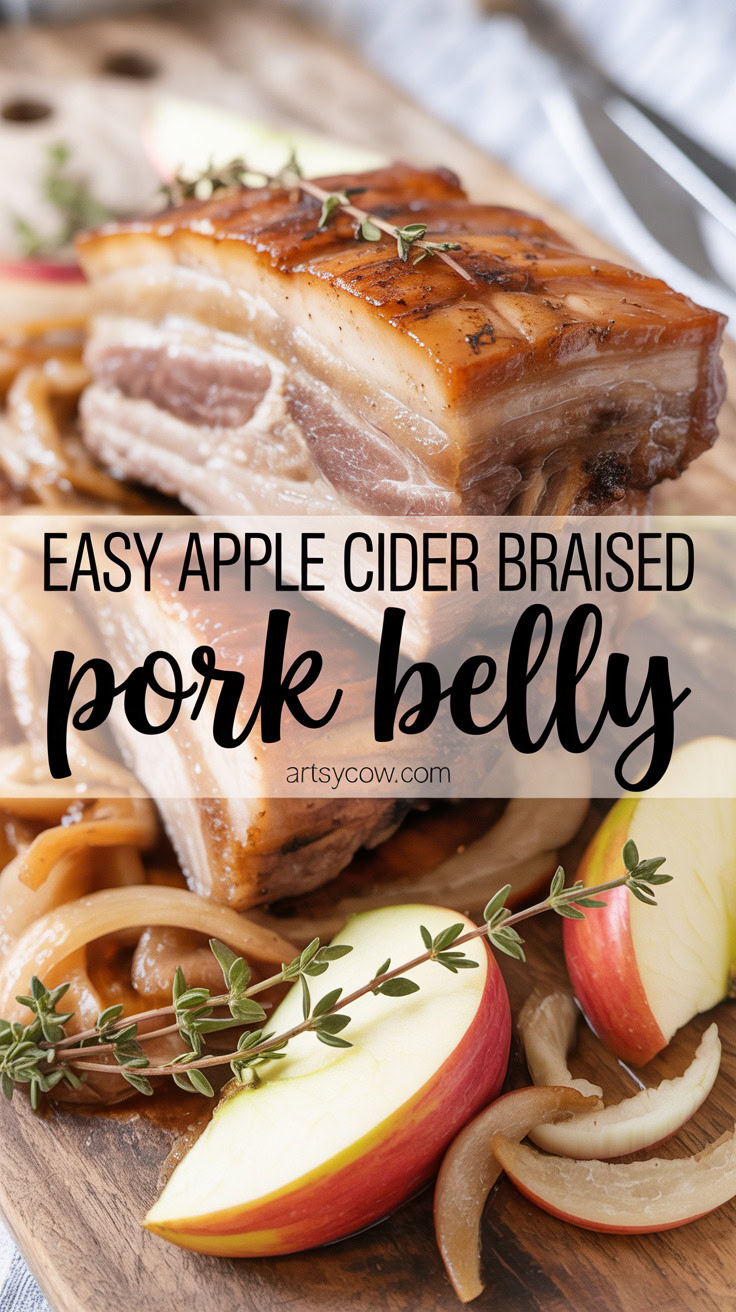
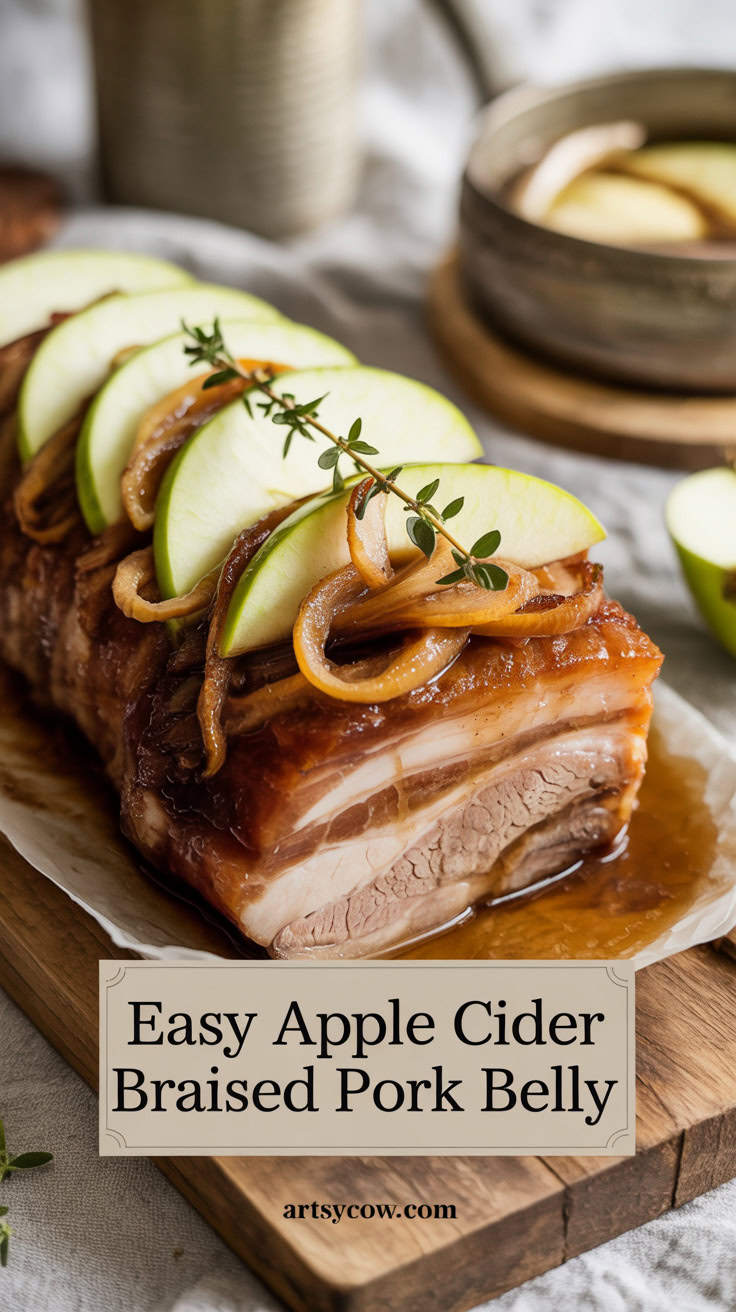
This apple cider braised pork belly answers that call with a syrupy hug and a crisp finish. It takes a little patience and a lot of love, but not a culinary degree.
That’s why this recipe is the perfect weekend show-off dish that still lets you nap while the oven does the heavy lifting.
Contents
Equipment: Must-haves
- Heavy skillet (for searing)
- Dutch oven or braiser (for braising)
- Sharp knife (for scoring and trimming)
- Cutting board
- Tongs (for flipping hot pork)
- Paper towel (for patting dry)
- Wooden spoon (for stirring)
- Meat thermometer (optional, for checking tenderness)
- Oven mitt
Equipment: Nice-to-haves
- Kitchen twine (to tie the pork into a neat roll)
- Roasting rack (for crisping the top)
- Fine-mesh sieve (for straining the glaze)
- Blowtorch (for extra-crispy finish, optional)
Ingredients
- 1 pound pork belly, skin on
- 1 teaspoon kosher salt
- 1/2 teaspoon black pepper, freshly ground
- 1 tablespoon olive oil
- 1 tablespoon unsalted butter
- 1 small apple, cored and thinly sliced
- 1 small onion, thinly sliced
- 1 garlic clove, smashed
- 1 cup apple cider
- 2 tablespoons brown sugar
- 1 tablespoon apple cider vinegar
- 1 tablespoon soy sauce
- 1 sprig fresh thyme
- 1 bay leaf
- 1 teaspoon cornstarch (optional, for thickening)
- 1 tablespoon water (for cornstarch slurry, if using)
- 1 teaspoon finishing salt (for sprinkling)
- 1 tablespoon chopped parsley (for garnish)

Instructions
- Preheat the oven to 325F so it’s lazy-and-warm, not sauna-hot.
- Pat the pork belly dry with a paper towel and score the skin with shallow diagonal cuts if the skin is thick—this helps the fat render and the glaze cling.
- Season the pork on all sides with kosher salt and black pepper; don’t be shy, seasoning is your friend.
- Roll the pork belly into a tight cylinder and tie it with kitchen twine at equal intervals so it looks intentional and not like a culinary mystery.
- Heat the heavy skillet over medium-high heat until it’s hot and shimmering; be careful, hot oil is drama in slow motion.
- Add olive oil and sear the pork on all sides until deeply browned; use tongs to get every side and give that fat a performance review.
- Transfer the seared pork to the Dutch oven and set it aside for the braising step.
- Reduce the heat under the skillet to medium and add butter, then toss in the sliced onion and apple; sauté until they begin to soften and smell like a warm hug.
- Add the smashed garlic and stir briefly—be careful not to burn the garlic so it doesn’t turn bitter.
- Stir in the brown sugar, apple cider vinegar, and soy sauce to gloss the fruit and onion, then pour in the apple cider and scrape the skillet bottom to release the fond.
- Toss in the thyme sprig and bay leaf, give the liquid a quick stir, and pour the mixture over the pork in the Dutch oven so the pork is half-submerged in the braising liquid.
- Cover the Dutch oven and place it in the oven to braise until the pork is fork-tender and the fat has softened; this usually takes about two hours, but check for tenderness rather than relying solely on time.
- When the pork is tender, remove the Dutch oven from the oven with oven mitts and carefully lift the pork onto a roasting rack set over a baking sheet to catch drips.
- Increase the oven temperature to 450F to prepare for crisping; if you prefer, you can finish under a broiler but watch closely so it doesn’t burn.
- Strain the braising liquid through a fine-mesh sieve into a saucepan and press down on the solids to extract every caramel note from the apples and onion.
- Bring the strained liquid to a simmer and reduce it until it becomes syrupy; if you want a thicker glaze, whisk together cornstarch and water and stir it into the simmering liquid until it coats the back of a spoon.
- Return the pork to the oven and roast on the rack until the exterior is blistered and the skin is crisped to your liking; this takes about ten to fifteen minutes, or use a blowtorch for spot-crisping if you have one.
- Let the pork rest on the rack for a few minutes so the juices can settle and the glaze can set—resting is not optional, it’s the quiet hero of juicy meat.
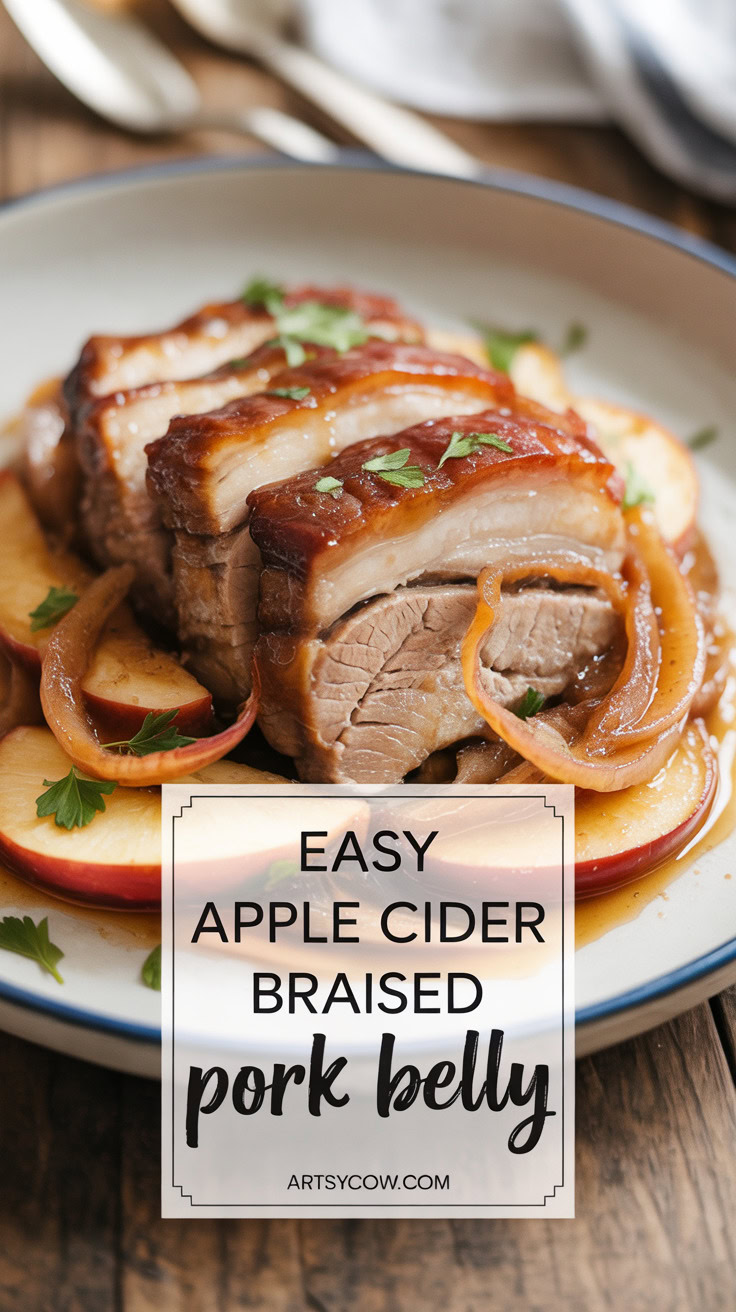
- Remove the kitchen twine and slice the pork into medallions on the cutting board using the sharp knife; aim for even slices so everyone gets a fair share.
- Arrange the slices on a serving plate, spoon the glossy apple cider glaze over the top, and finish with a sprinkle of finishing salt and chopped parsley for brightness.
- Serve warm with a simple side like mashed potato or roasted root vegetable and prepare for applause—or at least pleased silence.
What Else You Should Know
Tip: Pat dry pork belly before searing. Dry skin browns better and yields crispness later.
Variation: Swap the apple for a pear if you want a slightly sweeter glaze. That’s the kind of rebellion the kitchen applauds.
Serving suggestion: Slice thick and serve on mashed potato, steamed greens, or in a toasted bun for a casual sandwich moment. Safety note: Be careful when finishing under high heat or with a blowtorch.
Fat and sugar can flame up quickly. Storage: Cool completely, then refrigerate in an airtight container for up to three days.
Reheat gently to preserve crisp edges—quick oven roast works best. Flavor hack: Reduce the braising liquid extra low until syrupy for a sticky glaze.
A little reduction goes a long way; think concentrated apple joy. Nutrition nod: Pork belly is indulgent and rich.
Pair with a bright salad or roasted vegetable to balance the meal and your conscience. Final thought: This recipe makes a showy plate without being a diva.
You get deep flavor, glossy sauce, and a crispy finish that feels like a tiny miracle. Enjoy—and don’t be surprised if someone asks for your cooking secrets.
