
Craving a pork dish that delivers crispy skin and a sticky, sweet-savory glaze without needing a restaurant-level kitchen? You’re in the right place.
Oven-baked magic is coming to you in the form of maple and mustard glory. But here’s the catch!
It’s easier than you think and way more impressive than it should be.
Contents
Equipment: Must-haves
- Roasting pan
- Wire rack that fits inside the roasting pan
- Baking sheet
- Meat thermometer
- Sharp knife
- Cutting board
- Aluminum foil
- Saucepan
- Whisk
- Pastry brush
- Tongs
- Oven mitts
- Cooling rack
Equipment: Nice-to-haves
- Kitchen twine
- Probe thermometer
- Silicone spatula

Ingredients
- 1 (about 2 lb) pork belly, skin on
- 1 1/2 tsp kosher salt
- 1/2 tsp black pepper
- 2 clove garlic, minced
- 1/4 cup pure maple syrup
- 2 tbsp Dijon mustard
- 1 tbsp whole-grain mustard
- 1 tbsp apple cider vinegar
- 1 tbsp soy sauce
- 1 tsp smoked paprika
- 1 tbsp olive oil
- 1 tsp cornstarch
- 2 tbsp water
- 1 lemon (for serving)
Instructions
- Preheat the oven to 325°F and position a rack in the middle; this temperature gives the fat time to render without drying the meat.
- Pat the pork belly dry with paper towel and place it skin-side up on the cutting board; dryness is the secret to crackling success.
- Use the sharp knife to score the skin in a crosshatch pattern, taking care not to cut into the meat layer; that scoring helps fat render and skin crisp.
- Rub the entire pork belly with olive oil, then season the skin with kosher salt and black pepper; massage the seasoning into the scores so it gets comfortable.
- Tuck the minced garlic around the meat side and, if using, tie the pork belly with kitchen twine so it keeps a tidy shape while cooking.
- Place the wire rack into the roasting pan and set the pork belly on the rack skin-side up so air circulates and drippings fall away.
- Cover the pork belly loosely with aluminum foil and roast at the set temperature until the meat is very tender and most fat has rendered; use the meat thermometer to check for tenderness and a safe internal feel.
- While the pork roasts, combine maple syrup, Dijon mustard, whole-grain mustard, apple cider vinegar, soy sauce, and smoked paprika in a saucepan and bring to a gentle simmer.
- Whisk the glaze until glossy and warm; in a separate small bowl, mix cornstarch with water to make a slurry and whisk it into the simmering glaze to thicken slightly—be careful not to burn the maple.
- When the pork is tender, remove the foil and increase oven heat to 425°F to start crisping the skin; this high heat will transform the skin into crackle territory.
- Brush the pork skin with the maple-mustard glaze using the pastry brush; reserve some glaze for later so you can build sticky layers.
- Return the pork to the oven on the baking sheet placed under the roasting pan to catch any caramel drip and roast until the skin blisters and turns deeply golden—watch closely because sugar caramelizes fast.
- Rotate the pork and brush with more glaze halfway through the high-heat finish so the coating becomes sticky and flavorful without burning.
- Use tongs and oven mitts to transfer the pork to a cooling rack; tent loosely with foil and let it rest so the juices redistribute and the glaze sets slightly.
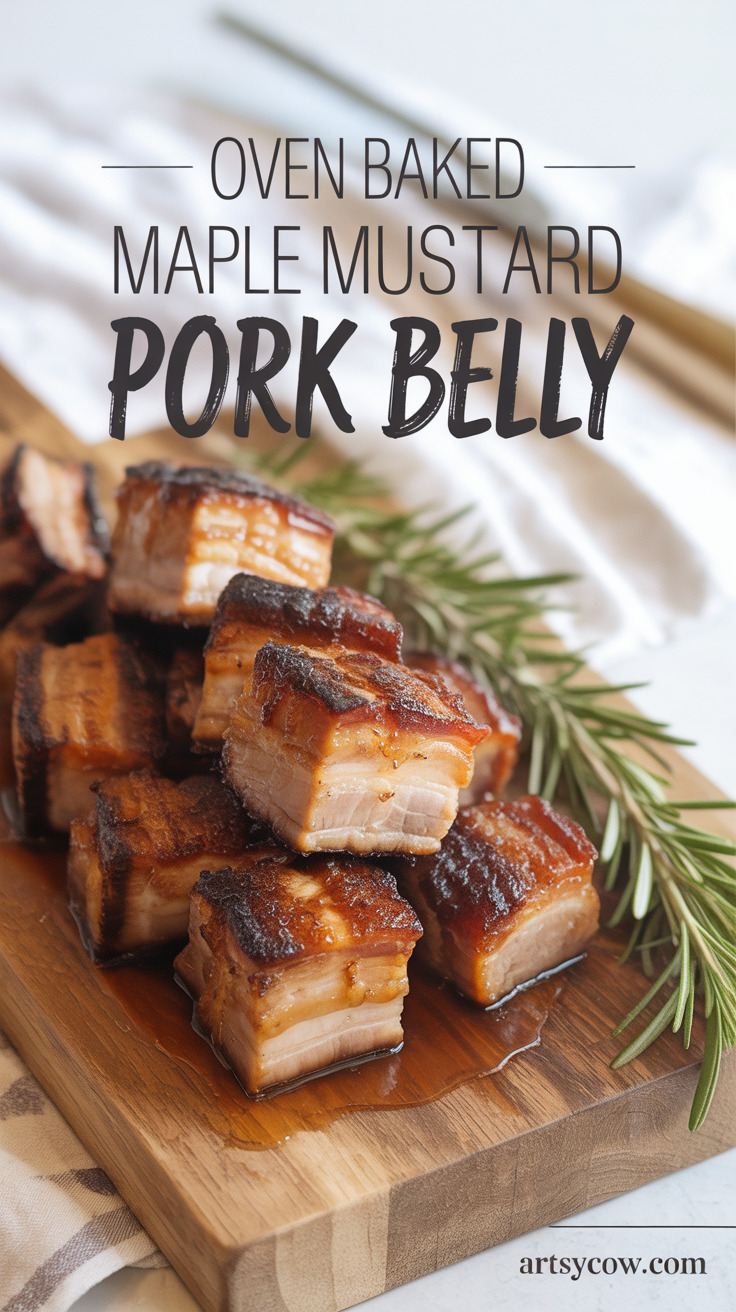
- Carve the pork belly into slices with the sharp knife, making sure each slice shows a beautiful cross-section of rendered fat, tender meat, and blistered skin.
- Serve with a squeeze of lemon if desired and the remaining warm glaze on the side for extra saucy joy.
What Else You Should Know
Tip: For the crispiest skin, pat the pork dry the night before, salt it, and leave it uncovered in the refrigerator; air does wonders. That’s why a little patience pays off.
But here’s the catch! Keep an eye during the final high-heat step—maple burns quickly so frequent checks prevent bitter edges. Variation: Swap smoked paprika for ground cumin for a different smoky warmth.
Serving suggestion: Plate slices over mashed potato or steamed rice to soak up the glaze, and add a simple green salad to cut richness. Storage: Refrigerate leftovers in an airtight container for up to 3 days; reheat under the broiler for a minute to revive crispness.
For thicker glaze, reduce it a minute or two longer on the stove but stir constantly. Using both a meat thermometer and a probe thermometer gives you confidence; the probe can stay in while the meat rests.
Enjoy a little show-off moment—announce “crispy skin achieved” at the table. Bon appétit (and try not to lick your fingers at dinner unless you want everyone to laugh).
