
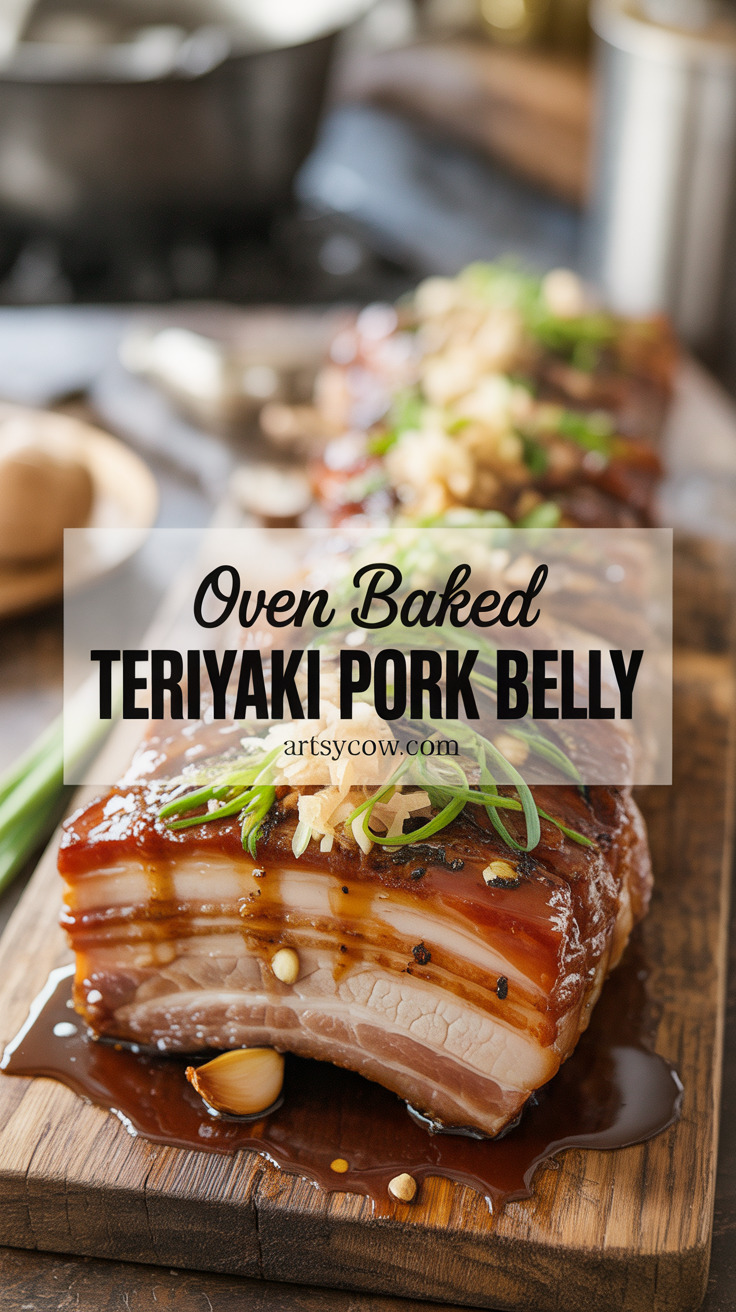
Craving a sticky, glossy piece of teriyaki pork belly that makes takeout jealous? You’re in the right kitchen.
This oven-baked method gives you tender meat and caramelized glaze without standing over a pan all evening. But here’s the catch!
It’s all about patience and a tiny bit of love.
Contents
Equipment: Must-haves
- Roasting pan with rim
- Wire rack that fits inside the roasting pan
- Heavy skillet (cast iron preferred) for searing
- Small saucepan for the glaze
- Meat thermometer
- Sharp knife
- Cutting board
- Aluminum foil
- Silicone brush
- Tongs
- Whisk
Equipment: Nice-to-haves
- Kitchen twine (for neat presentation)
- Baking sheet lined with parchment
- Splatter screen
- Mandoline for thin slicing
- Oven mitts with personality
Ingredients
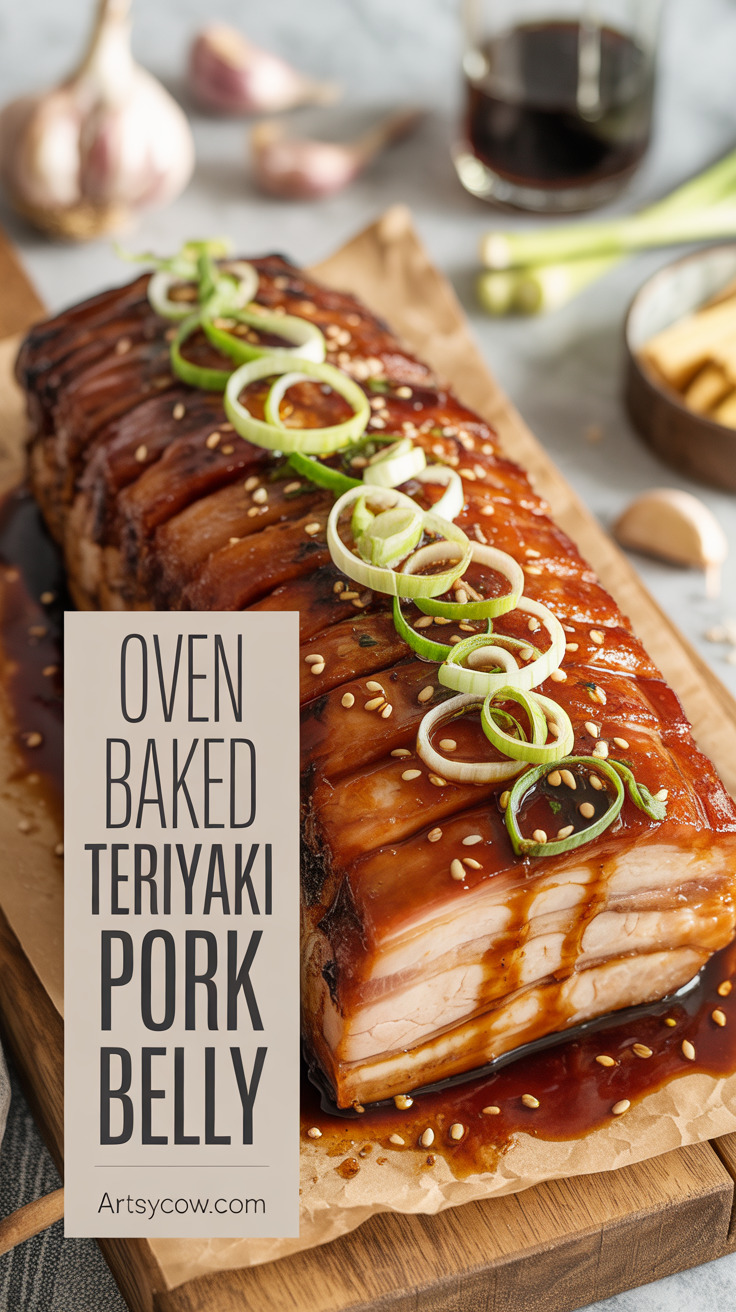
- 1 slab pork belly (about 2 lb), skin scored
- 4 garlic cloves, minced
- 1 piece ginger (about 1 inch), grated
- 1/3 cup soy sauce
- 1/4 cup mirin
- 1/4 cup sake (or substitute apple juice)
- 3 tbsp brown sugar
- 2 tbsp honey
- 1 tbsp rice vinegar
- 1 tsp sesame oil
- 1 tsp black pepper
- 1 tbsp vegetable oil (for searing)
- 1 tsp cornstarch
- 2 tbsp water
- 1 green onion, thinly sliced (garnish)
- 1 tsp sesame seeds (garnish)
Instructions
- Preheat the oven to 300°F and set the roasting pan with the wire rack ready; Preheat is where the magic begins.
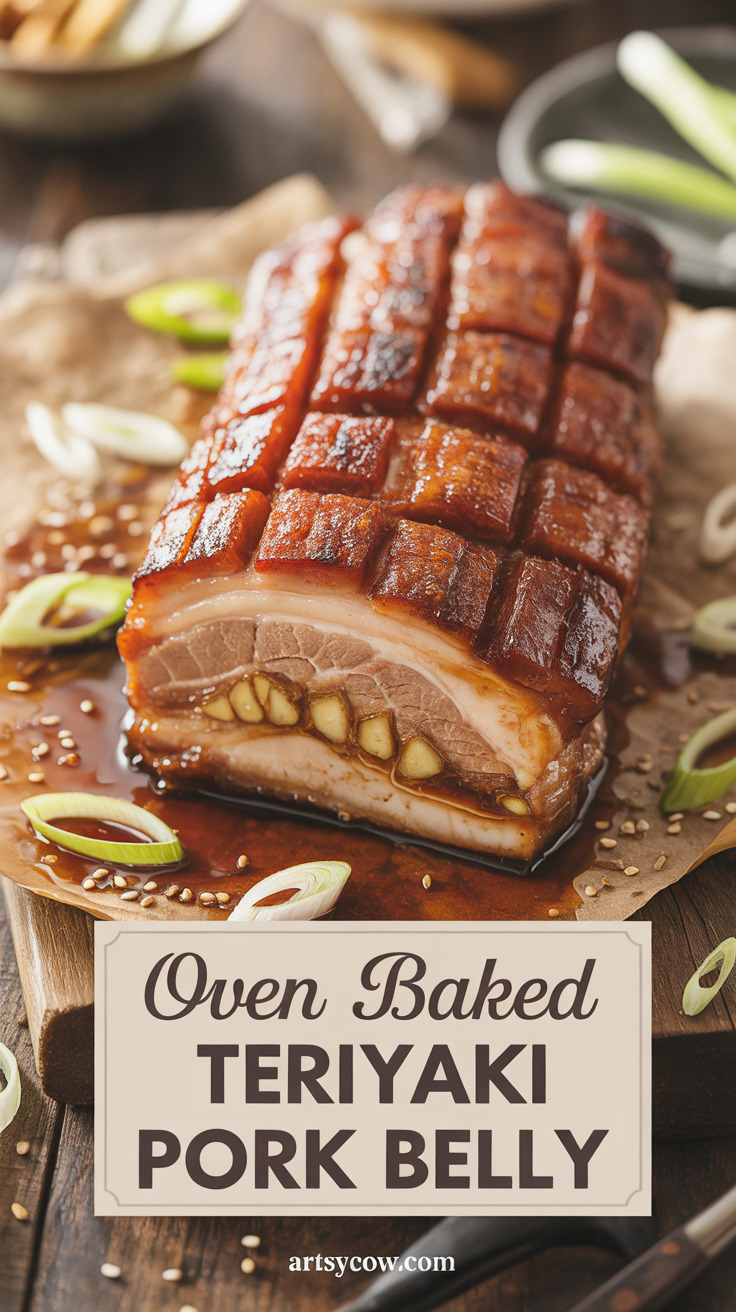
- Pat the pork belly dry on the cutting board and use the sharp knife to score the skin in a crosshatch pattern, taking care not to cut into the meat.
- Season the meat side lightly with black pepper and leave the skin plain so it crisps best.
- Heat the heavy skillet over medium-high heat and add the vegetable oil until shimmering.
- Place the pork belly skin-side down in the skillet and sear until the skin is golden and some fat renders; use tongs and be careful of splatter.
- Transfer the seared pork belly to the wire rack skin-side up and place the rack in the roasting pan; tent loosely with aluminum foil.
- Roast at 300°F until the fat has softened and the meat feels tender when pressed, checking with the meat thermometer for a target internal temperature around 195°F for very tender pork belly.
- While the pork roasts, combine the minced garlic, grated ginger, soy sauce, mirin, sake, brown sugar, honey, rice vinegar, and sesame oil in the small saucepan and bring to a gentle simmer.
- Whisk the glaze until the sugar dissolves and simmer until it reduces and becomes glossy; stir occasionally and watch so it doesn’t burn.
- Mix the cornstarch with water in a small bowl to make a slurry and whisk it into the simmering glaze until it thickens slightly; remove from heat and keep warm.
- When the pork belly reaches the stage where connective tissue is tender, remove the foil and increase oven temperature to 425°F to prepare for glazing and crisping the skin.
- Brush a generous layer of the warm teriyaki glaze over the top of the pork belly using the silicone brush; reserve extra glaze for a finishing coat.
- Return the pork to the oven uncovered and roast at 425°F until the glaze caramelizes and the skin crisps to your liking, watching closely as sugars can brown quickly.
- If you want extra char, broil for a brief moment with the oven door slightly ajar, but stay by the oven and do not walk away.
- Remove the pork belly and tent with foil; Rest for about 10 minutes so juices redistribute and the glaze sets.
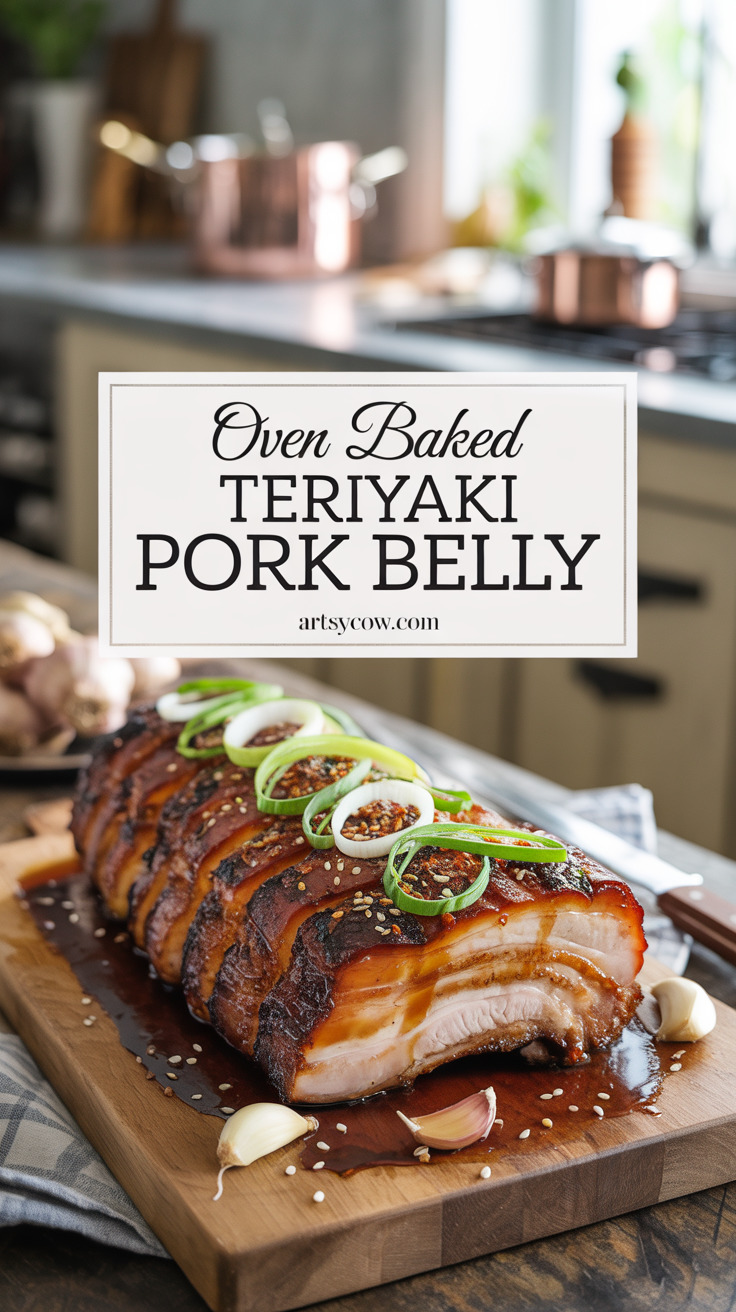
- Use the sharp knife to slice the pork belly against the grain into thin pieces and arrange on a plate; drizzle any reserved glaze over the slices.
- Garnish with the thinly sliced green onion and sprinkle sesame seeds before serving with rice or steamed vegetables.
What Else You Should Know
Tip: Scoring the skin helps fat render and produces a crisp finish; don’t skip it. Variation: Swap honey for maple syrup or omit sake and increase mirin if you prefer non-alcoholic options.
Serving suggestion: Serve with steamed white rice and quick-pickled cucumber to cut the richness. Storage: Cool completely, then refrigerate in an airtight container for up to 3 days.
Reheat gently in a low oven to preserve crispness. Pro tip: If the glaze thickens too much after cooling, warm it briefly in the saucepan and whisk to loosen.
Safety note: Use the meat thermometer to confirm doneness and avoid relying on look alone—pork belly loves long, slow cooking to become melt-in-your-mouth tender.
