
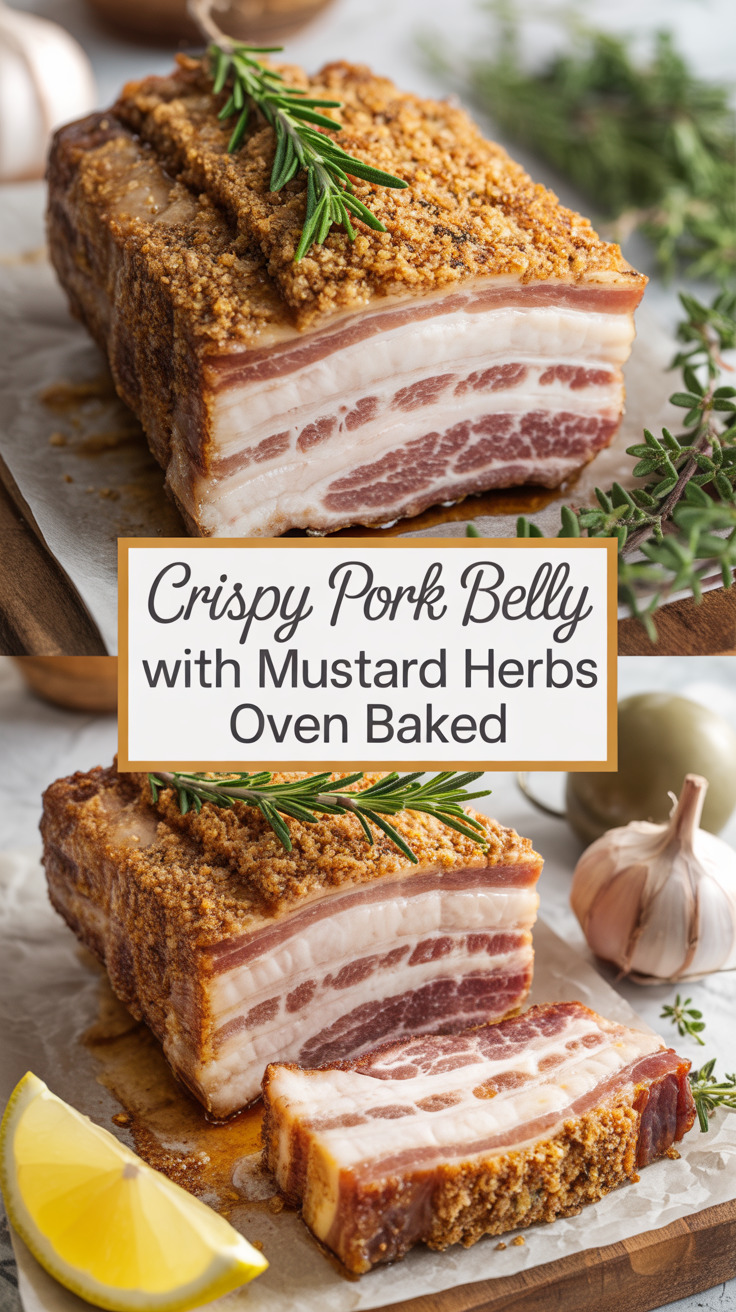
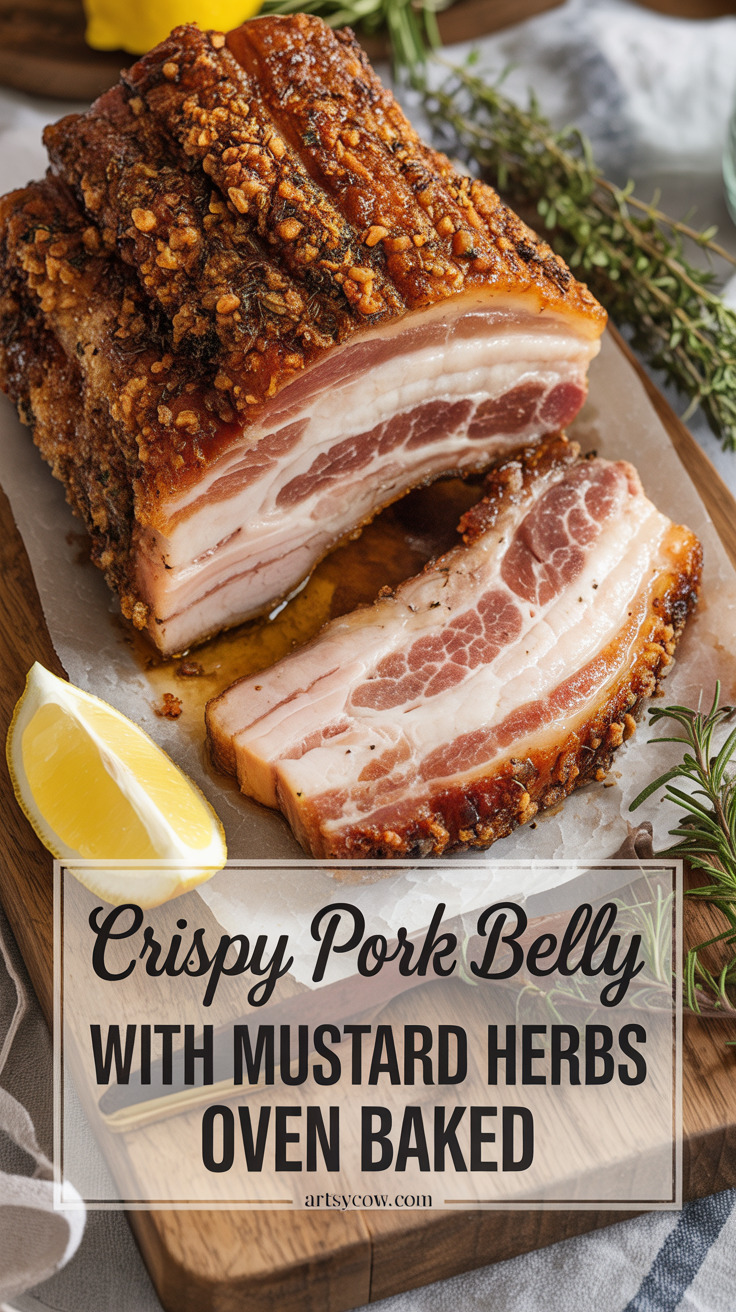
Craving shatteringly crispy pork belly without babysitting a frying pan like a helicopter parent? You’re in luck.
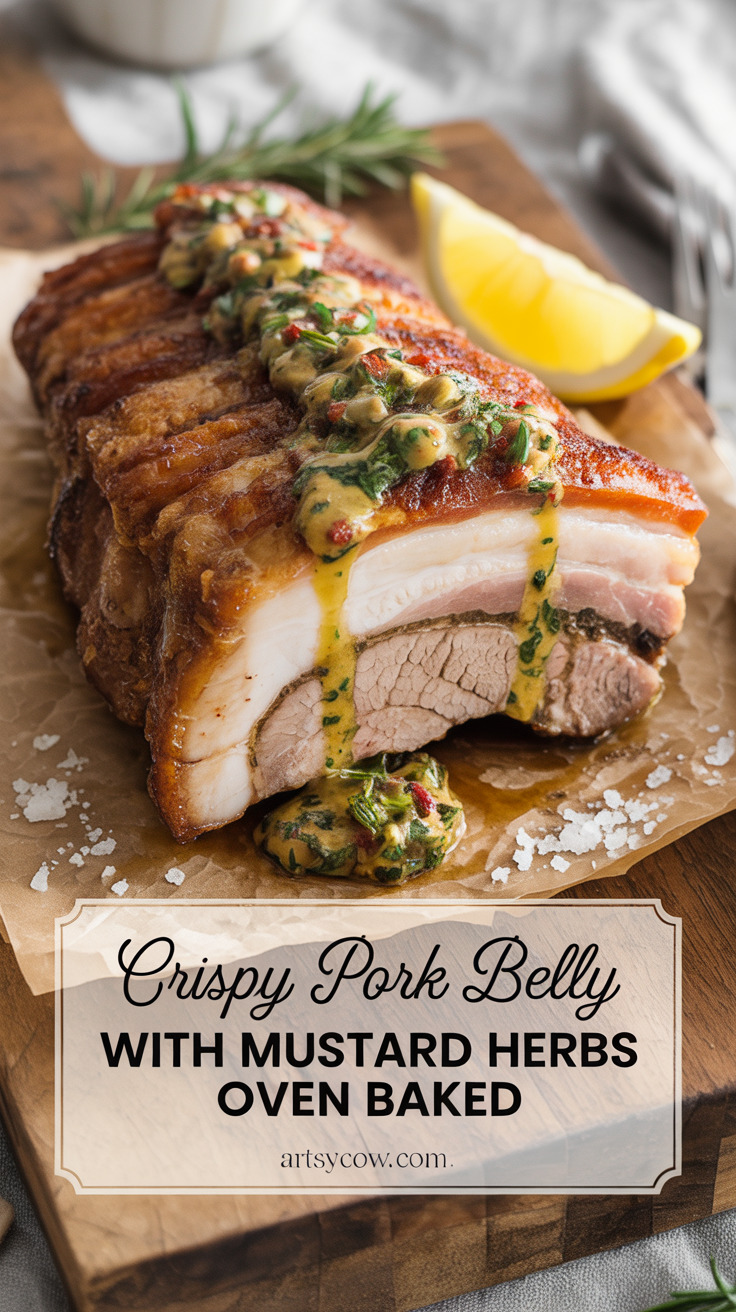
This oven-baked beauty brings mustard and herb swagger with minimal drama and maximum crunch. You get blistered skin, tender meat, and a pan that doesn’t look like a grease crime scene.
But here’s the catch! The skin must be dry and the heat must do a two-step.
That’s why we start slow, then finish hot for the signature crackle. Think spa day followed by a rock concert.
Ready to turn a humble pork belly slab into a triumphant slab of joy? Grab a rack, some mustard, and your confidence.
Contents
Crispy Pork Belly Recipe With Mustard Herbs Oven Baked – At a Glance
- Ready in: about 2 hours including prep and resting
- Skill level: beginner-friendly with pro-level results
- Serves: 4 people as a main, more as a snack
- Method: oven baked on a rack over a sheet pan
- Great for: weeknight showpiece, game day snack, or a cozy dinner with minimal mess
Equipment: Must-haves
- Rimmed baking sheet, to catch every glorious drip and spare your oven
- Wire rack, so the skin gets air and goes full crackle mode
- Sharp knife, for scoring and neat slicing like a pro
- Paper towel, to pat everything bone-dry like a comedy roast
- Aluminum foil, to line the sheet and make cleanup a breeze
- Small bowl, for your mustard–herb magic paste
- Pastry brush, to paint on flavor like edible art
- Instant-read thermometer, for perfectly tender results without guesswork
- Tongs, for safe flipping and dignified handling
- Oven mitt, because bravery isn’t heatproof
Equipment: Nice-to-haves
- Scoring tool, for tidy lines if your knife skills are on vacation
- Mortar and pestle, to bruise garlic and herb for extra aroma
- Kitchen torch, to spot-crisp any shy patches after roasting
- Offset spatula, to lift the slab like a kitchen ninja
- Cooling rack, to rest the meat without steaming the skin
Ingredients
- 2 lb pork belly slab, skin on and unrolled
- 1 tbsp Dijon mustard, the tangy backbone
- 1 tsp whole-grain mustard, for pop and texture
- 1 tsp apple cider vinegar, to wake up the meat
- 1 tsp kosher salt, the essential
- 1/2 tsp baking powder, helps the skin puff and crackle
- 1/2 tsp black pepper, freshly ground if possible
- 1 tsp brown sugar, just a hint for balance
- 1 tsp fresh thyme, chopped fine
- 1 tsp fresh rosemary, chopped fine
- 1 clove garlic, minced into a paste
- 1 tbsp neutral oil, to slick the rack and prevent sticking
- 1 tsp flaky sea salt, finishing touch for crunch (optional)
- 1 lemon wedge, for serving and bright zip (optional)
Instructions
- Preheat the oven to 300°F. Line the rimmed baking sheet with foil, set the wire rack on top, and brush the rack lightly with oil so the slab doesn’t anchor itself.
- Pat the pork belly very dry with paper towel. If the skin isn’t scored, use the sharp knife to make shallow parallel lines about a fingertip apart, taking care not to cut into the meat. If you have a scoring tool, use it for tidy grooves.
- In a small bowl, stir Dijon, whole-grain mustard, and vinegar into a smooth, fragrant paste. If using a mortar and pestle, lightly bruise the garlic and herb first for extra aroma, then mix into the paste.
- In another bowl, combine salt, baking powder, and pepper. Keep this dry; it’s the skin secret. Brown sugar goes with the mustard–herb paste, not on the skin, to avoid burning.
- Place the pork belly on the rack, skin side up. Brush the meat side only with the mustard–herb paste. Make sure it sneaks into the edges, but keep the skin bare and dry.
- Sprinkle the dry mix evenly over the skin, rubbing it in gently so it sinks into the score lines. This is your future crackle.
- Roast at 300°F for about 1 hour 30 minutes, rotating the pan halfway through. The meat should relax and the edges should start to turn golden.
- Bump the heat to 450°F. Roast another 20–30 minutes, until the skin blisters and crackles audibly. Watch closely near the end; drama is fun, smoke alarms are not.
- Check tenderness with the instant-read thermometer; the meat should be in the 190–200°F range for buttery texture. If any patch looks shy, use the kitchen torch to spot-crisp until proudly bubbly.
- Transfer the slab to a cutting board with tongs or an offset spatula, or rest it briefly on a cooling rack so the skin stays crisp. Let it stand 10–15 minutes so the juices settle.
- Slice with a sharp knife through the score lines. Press down firmly to shatter the crackling without sawing. Wipe the blade between cuts for clean, brag-worthy pieces.
- Finish with a whisper of flaky sea salt and a squeeze of lemon, if using. Serve immediately while it’s singing its crispy song.
Substitutions
Need a swap because your store, budget, or taste bud had other plans? Here are smart substitutions that keep the crunch and the flavor on track.
- Use yellow mustard if Dijon ran away; add a tiny splash of vinegar for tang.
- Swap dried herb for fresh by using about one-third the amount and crumbling well for more aroma.
- Replace brown sugar with a drop of honey or a keto-friendly sweetener; keep any sweetness off the skin to prevent burning.
- If you’re salt-sensitive, use fine sea salt lightly on the skin and finish with a pinch of flaky salt only at the end.
- No wire rack? Prop the slab on thick onion or carrot slices so air circulates under it.
- Gluten-free? Most mustard is naturally GF, but check the label and you’re golden.
What to Serve With It
A crisp green salad with sharp vinaigrette keeps the richness in check. Think arugula with lemon and a whisper of mustard.
Creamy mashed potato or garlicky cauliflower mash is a dreamy contrast to the crunch. Your fork will write love letters.
Pickled cucumber or apple slaw brings bright acidity, which is code for “I can eat more.” A cold cider or light beer is a flawless wingman. Steamed jasmine rice turns this into comfort central.
A spoon of pan drippings over the top? Chef’s kiss, no notes.

What Else You Should Know
For ultra-crunch, leave the slab uncovered in the fridge for a few hours before roasting. Dry skin equals loud crackle.
Short on time? Even a 30-minute air-dry on the rack helps.
That’s why you start with a dry surface before any heat. Make ahead by roasting low at 300°F, chilling, then blasting at 450°F just before serving.
The second bake brings back the crisp like a magic trick. Store leftovers in an airtight container, skin side uncovered with a paper towel on top.
Reheat on a rack at 400°F until hot and snappy again.
