
Cooking pork at home doesn’t have to be tricky. With a few smart habits, you can turn any cut into a tender, juicy, and well-seasoned meal.
Below are easy, confidence-boosting tips you can apply tonight… no special gear required beyond a good pan and a thermometer.
Contents
Choose the right cut.
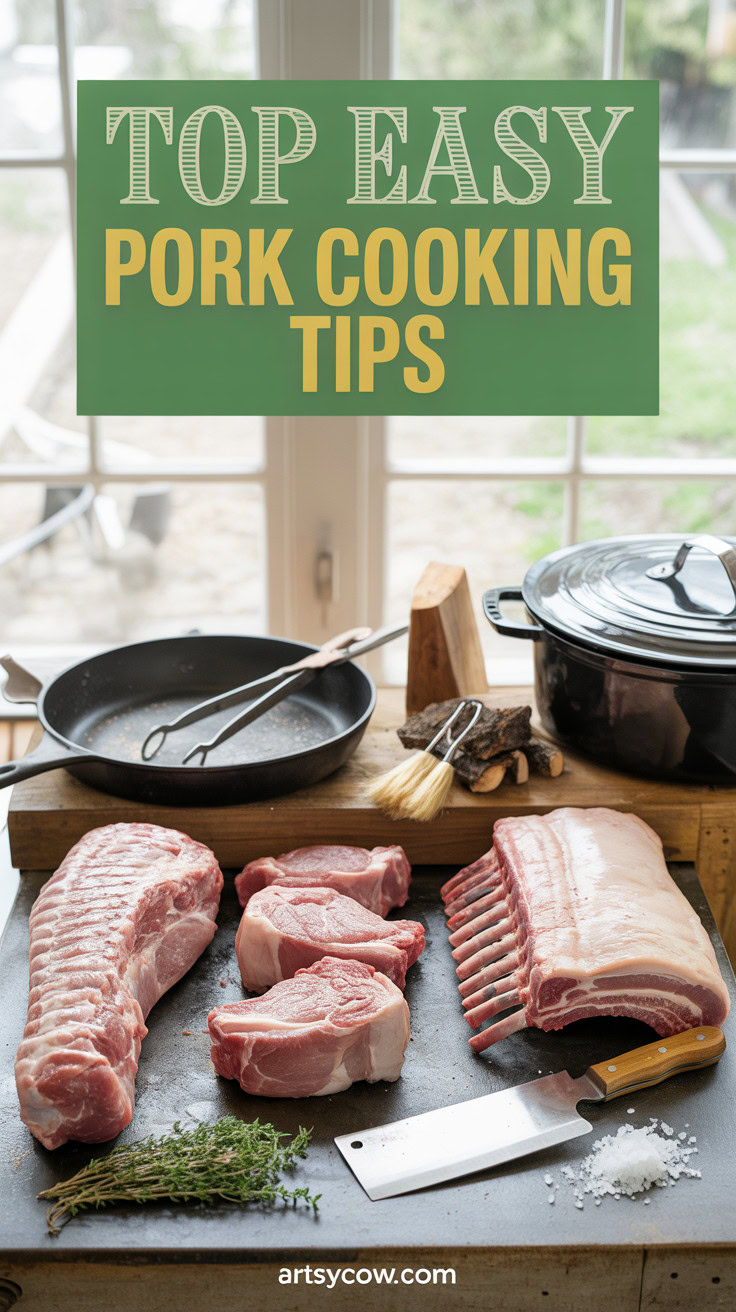
Match the cut to the cooking method for the best texture and flavor. Lean cuts like pork tenderloin, loin roast, and center-cut chops love quick, high heat.
Think hot pan sear plus a short roast or grill. Thick-cut chops (about 1–1.5 inches) are more forgiving and stay juicier.
Fattier cuts – pork shoulder/butt, ribs, and belly… shine with low-and-slow cooking so the fat renders and collagen melts.
Braise a shoulder at 300°F for 3–4 hours (or slow-cook on LOW for 6–8 hours) until it’s fork-tender. For pulled pork, aim until it’s probe-tender and around 195–203°F.
Keep a little fat cap on; it bastes the meat and boosts moisture. Bonus pointers: bone-in chops are slightly more forgiving; boneless cook faster.
If you’re unsure, choose thicker, bone-in chops for weeknight wins.
Don’t cook it straight from the fridge.
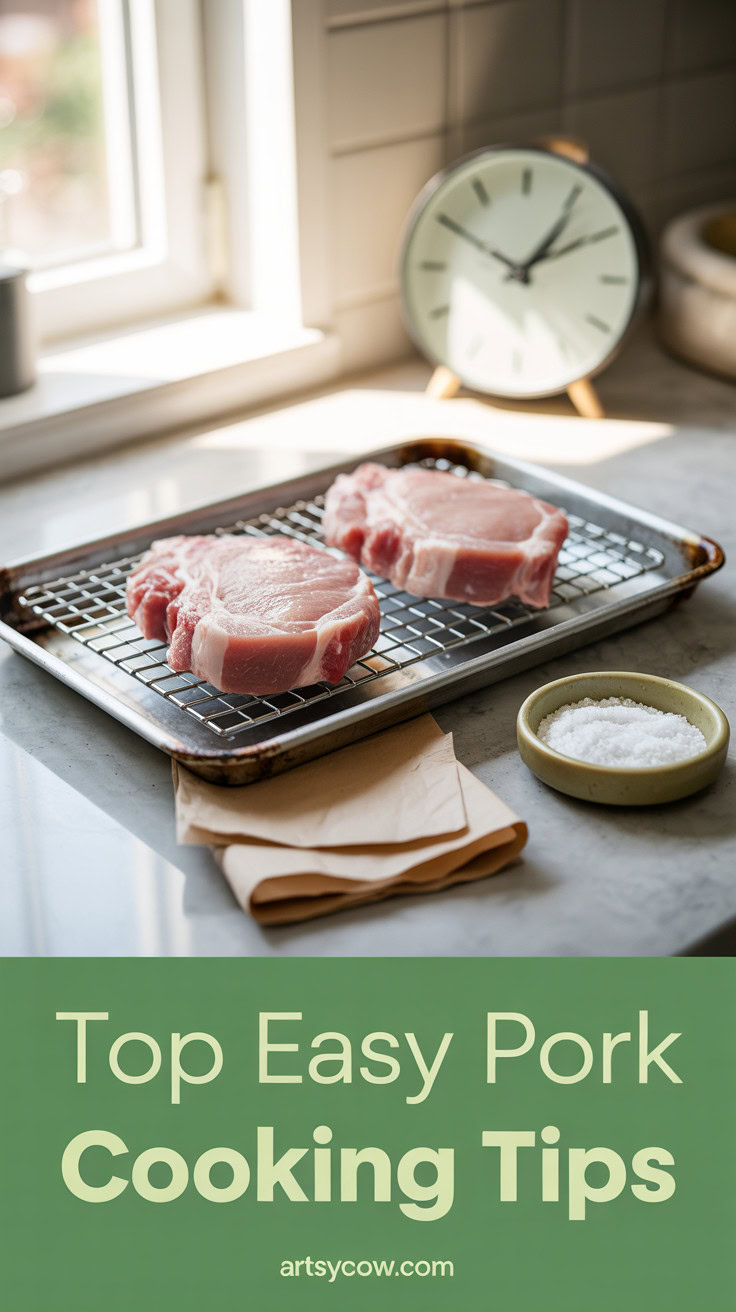
Let pork warm slightly on the counter before it hits the heat. This helps it cook more evenly, so you don’t end up with a dry exterior and an underdone center.
As a guide: chops and tenderloin need about 20–30 minutes; larger roasts can use 45–60 minutes. Pat the surface dry right before cooking for better browning and a crisper crust.
For food safety, don’t leave raw pork out for more than 2 hours total (or more than 1 hour if it’s very warm in your kitchen).
Season it well.
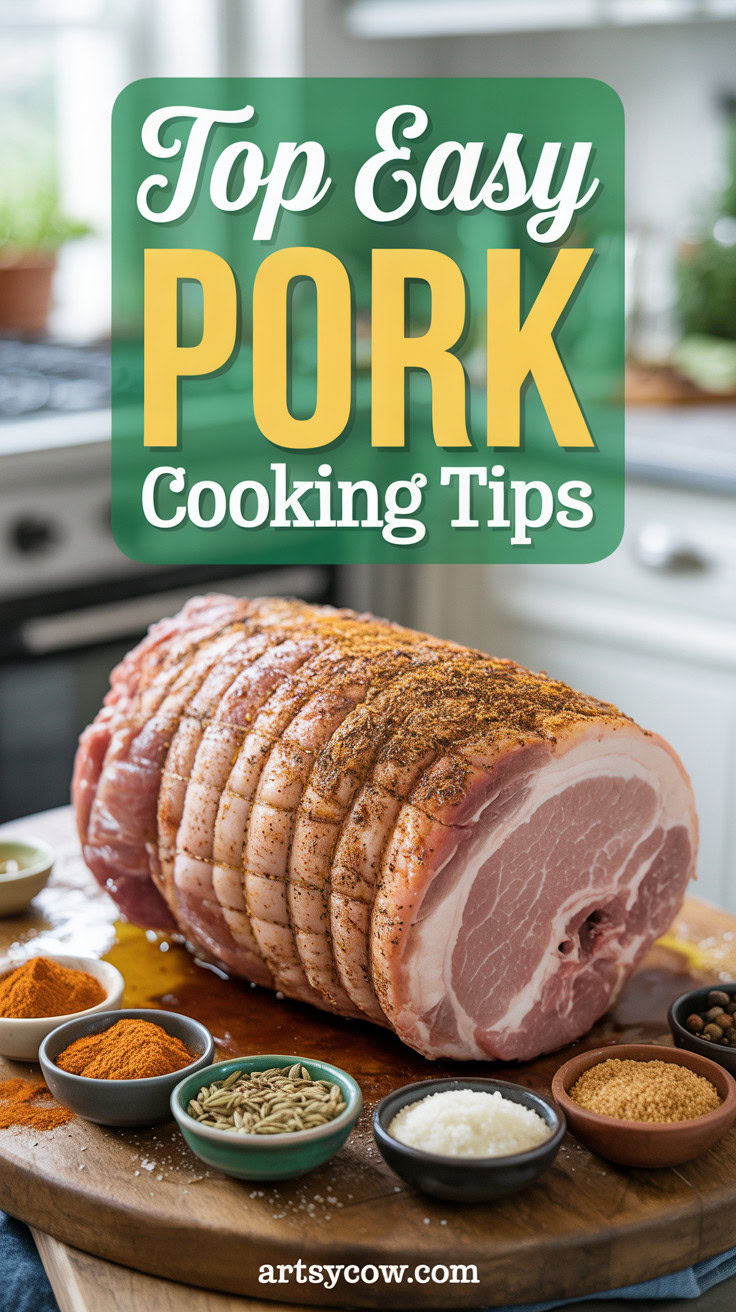
Salt is your best friend. Salt early (a simple dry brine) for deeper flavor and better moisture retention: about 3/4 to 1 teaspoon kosher salt per pound, sprinkled evenly.
Refrigerate uncovered for 30 minutes up to 24 hours; even a short 15–30 minute salt rest helps on busy nights. Keep the seasoning simple and bold.
Pork pairs beautifully with black pepper, garlic powder, smoked paprika, thyme, cumin, fennel, and a touch of brown sugar for caramelization. Lightly oil before searing to help spices stick and promote browning.
For fattier cuts, use a robust spice rub; for roasts with a fat cap, score the fat in a crosshatch so seasoning penetrates and fat renders evenly.
Use a thermometer.

A reliable instant-read thermometer is the easiest path to juicy pork. For chops and tenderloin, cook to an internal temperature of 145°F, then rest before slicing.
Remove from heat a few degrees early (around 140–143°F); carryover cooking brings it to target. Insert the probe into the thickest part, avoiding bone and the pan.
For pork shoulder meant for shredding, cook until tenderness tells you it’s done – typically 195–203°F and “like butter” when probed. Handy note: ground pork should be cooked to 160°F.
Let it rest after cooking.
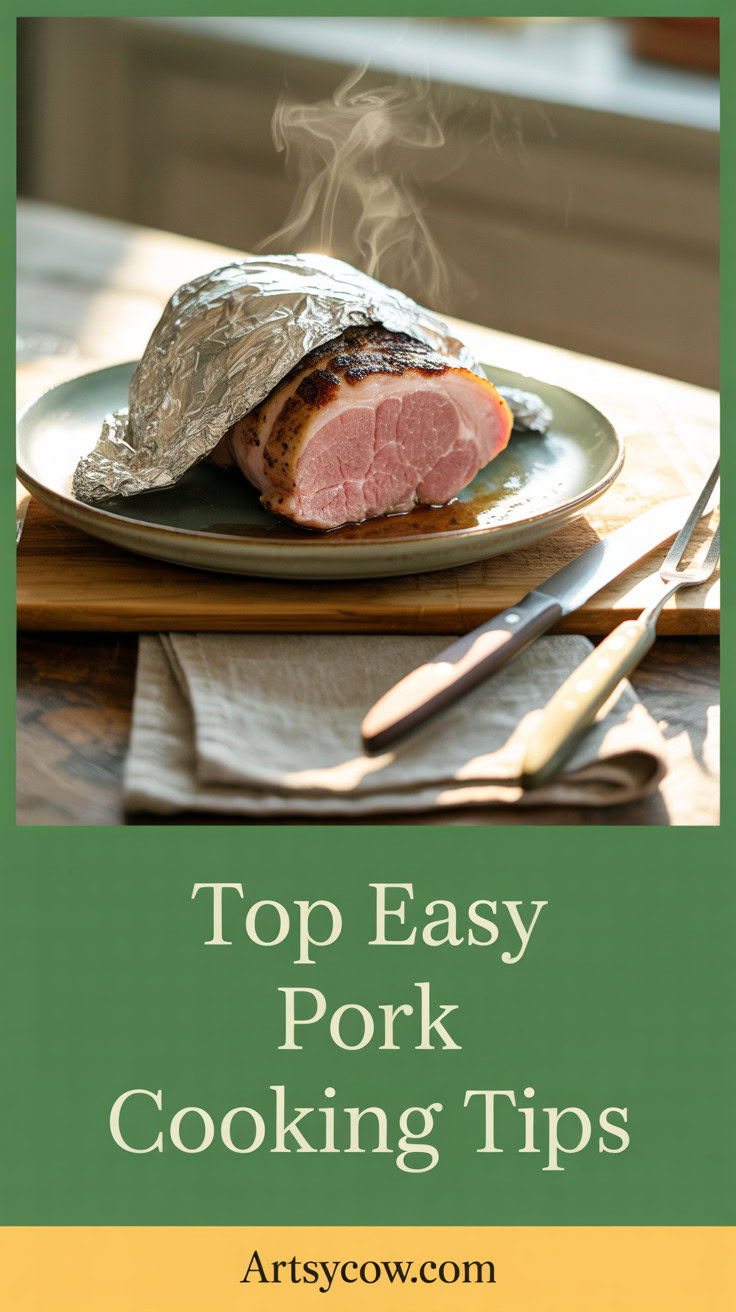
Resting lets the juices redistribute, so each bite is moist and tender. Tent loosely with foil to keep heat without steaming the crust.
As a rule of thumb: chops and tenderloin rest 5–10 minutes; roasts and shoulders rest 15–20 minutes (or a bit longer for very large cuts). Slice across the grain for the most tender texture, and try to keep those flavorful juices in the meat; not on the cutting board.
Conclusion
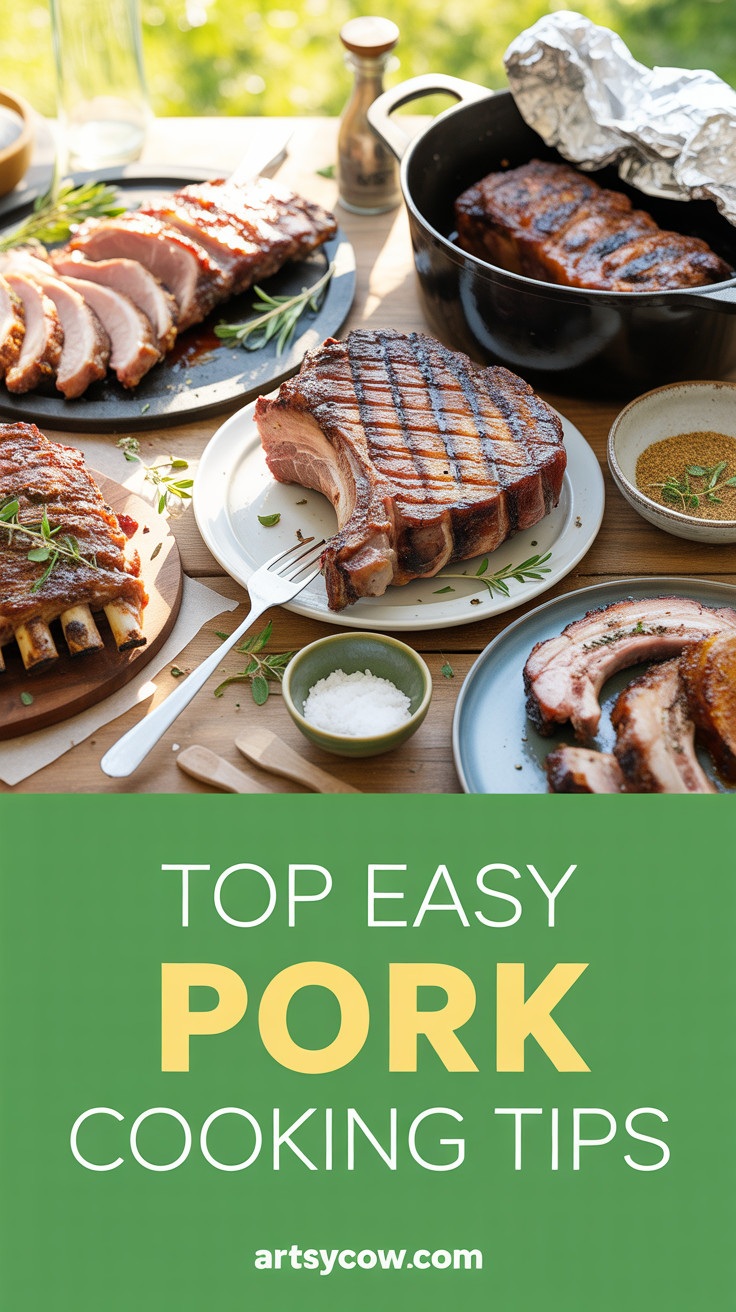
Great pork is simple: choose the right cut, temper it briefly, season with confidence, cook to temperature, and give it a short rest. Follow these easy steps and you’ll get reliably juicy, flavorful results…
whether it’s a quick weeknight chop or a slow-cooked shoulder for a crowd.
