
Craving something tropical but want dinner to practically make itself?
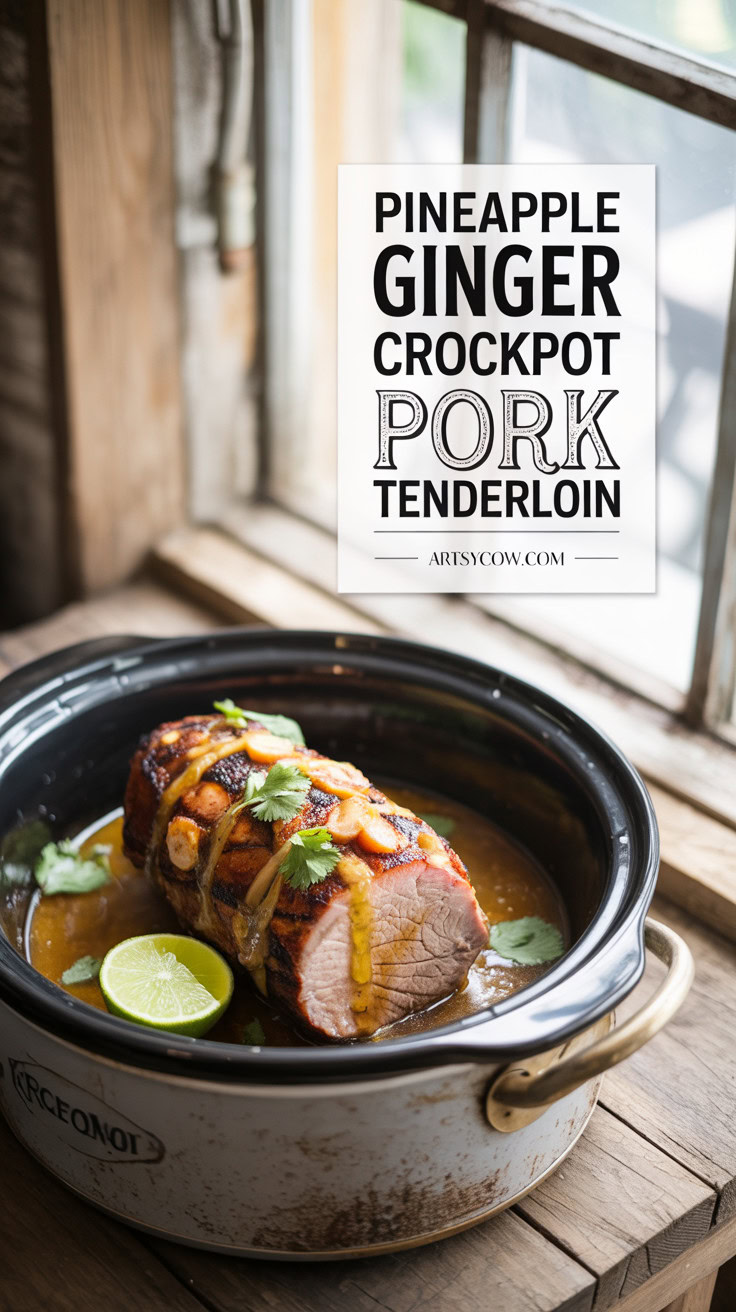
Pineapple and ginger team up in a slow-cooked hug for a single pork tenderloin that tastes like vacation without the airfare. This is the recipe you bring out when you want juicy meat, sticky-sweet sauce, and zero drama.
But here’s the catch! The Crockpot does the heavy lifting, and you get all the applause when you slice into perfectly tender pork.
Contents
Equipment: Must-haves
- Crockpot (slow cooker)
- Cutting board
- Sharp knife
- Mixing bowl
- Measuring cup and measuring spoons
- Tongs
Equipment: Nice-to-haves
- Skillet (for searing)
- Kitchen twine
- Instant-read thermometer
- Immersion blender
- Small bowl (for slurry)
Ingredients
- 1 pork tenderloin (about 1 to 1.5 lb)
- 1/2 cup crushed pineapple (juice reserved)
- 1/4 cup pineapple juice (use reserved juice if you drained the crushed pineapple)
- 2 tablespoon soy sauce (or tamari for gluten-free)
- 2 tablespoon brown sugar
- 1 tablespoon fresh ginger, grated
- 2 garlic clove, minced
- 1 tablespoon rice vinegar
- 1 teaspoon sesame oil
- 1/4 teaspoon red pepper flakes (optional, for a little kick)
- 1 tablespoon cornstarch
- 2 tablespoon cold water
- 1 tablespoon vegetable oil (for searing)
- Salt and black pepper to taste
- Fresh cilantro leaf for garnish (optional)
- 1 lime, cut into wedge for serving (optional)
Instructions
- Pat the pork tenderloin dry on the cutting board and season it sprinkled with salt and black pepper.
- If using kitchen twine, tie the tenderloin loosely to keep its shape while cooking.
- Heat the skillet over medium-high and add vegetable oil until it shimmers.
- Sear the tenderloin in the hot skillet, turning with tongs until all sides are browned to a nice crust.
- Transfer the seared tenderloin into the crockpot and set it in the center.
- In the mixing bowl, combine crushed pineapple with its reserved juice, pineapple juice, soy sauce, brown sugar, grated ginger, minced garlic, rice vinegar, sesame oil, and red pepper flakes; stir with a spoon until the sugar dissolves.
- Pour the pineapple-ginger sauce over the pork in the crockpot so the tenderloin is mostly covered.
- Cover and cook on low until the meat is tender and a fork slides in easily, or cook on high for a shorter time.
- Halfway through cooking, baste the tenderloin with sauce using the tongs so flavors mingle and nobody gets lonely.
- When the pork is cooked, use the tongs to lift it onto the cutting board and tent it with foil to rest for a few minutes.
- Spoon the cooking liquid from the crockpot into the skillet and bring it to a gentle simmer on the stove.
- If you want a smooth sauce, use the immersion blender right in the skillet to puree, or skip blending to keep pineapple texture.
- In the small bowl, whisk cornstarch and cold water to make a slurry, then whisk the slurry into the simmering sauce until it thickens to a glossy glaze.
- Check the internal temperature of the pork with the instant-read thermometer to confirm doneness before slicing.
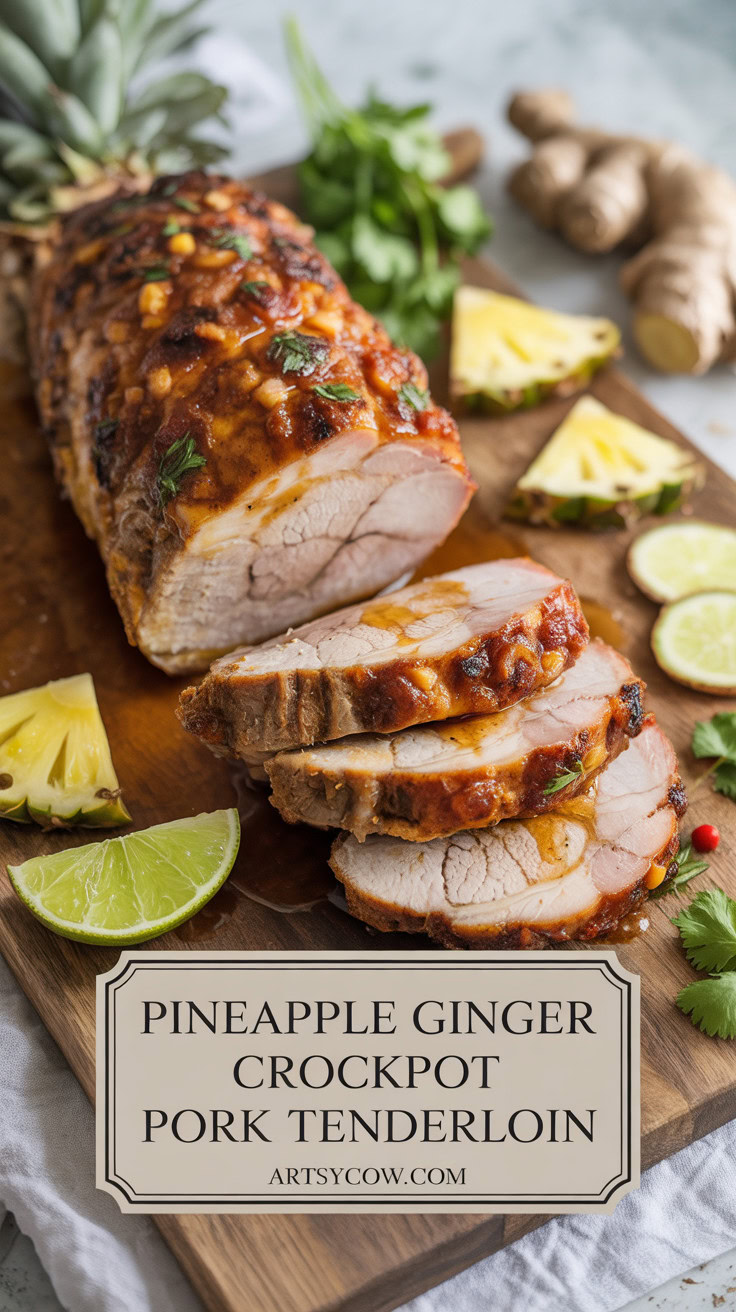
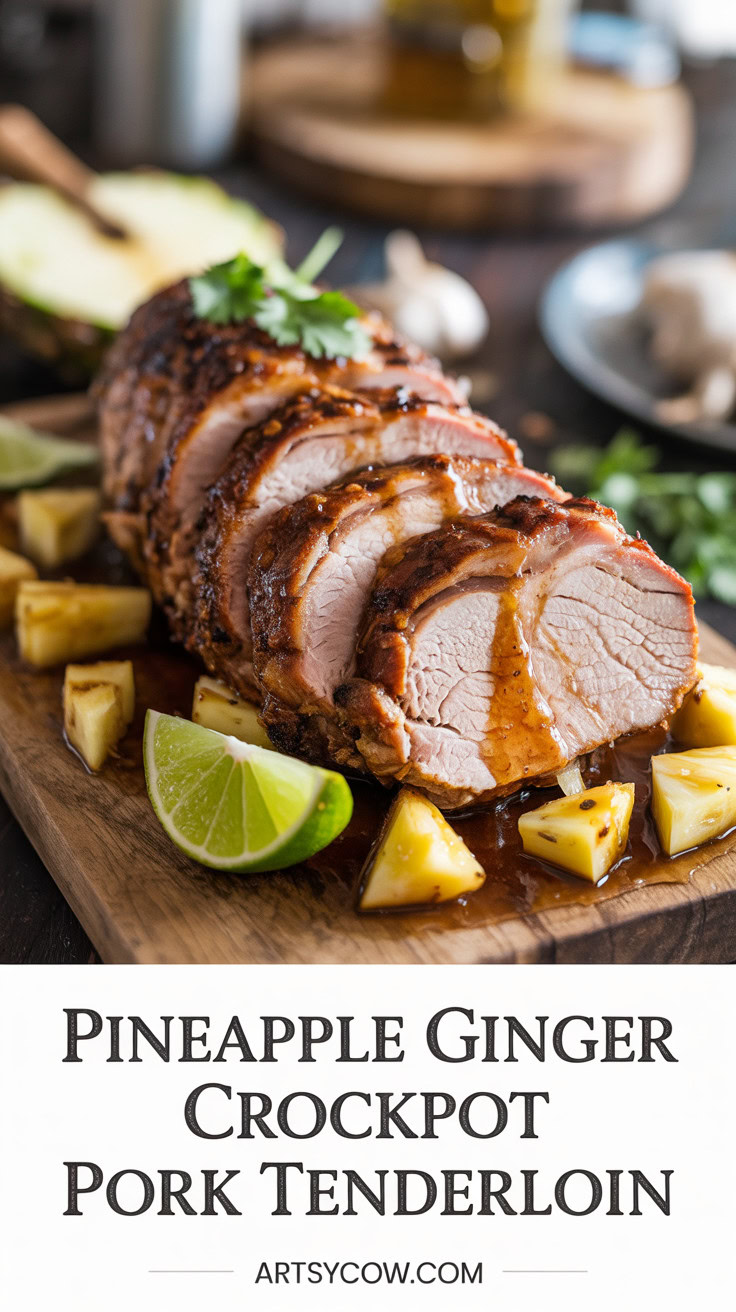
- Slice the rested tenderloin against the grain on the cutting board and arrange on a serving plate.
- Spoon the thickened pineapple-ginger glaze over the slices, garnish with cilantro leaf and a wedge of lime, and serve with your favorite side.

Good to Know
Tip: Searing is optional but recommended because it adds caramelized flavor and keeps the tenderloin looking fancy without extra effort. Make-ahead: The sauce can be mixed in the mixing bowl ahead of time and refrigerated.
That’s why weekday dinners suddenly look like you planned them all week. Variation: Swap soy sauce for coconut aminos if you want a gluten-free twist, or add a drizzle of maple syrup instead of brown sugar for deeper sweetness.
Thickening options: If you don’t have cornstarch, mash a few pineapple pieces into the sauce to naturally thicken it while adding body and sweetness. Serving suggestion: Slice and serve over steamed rice or cauliflower rice with a side of roasted vegetable to balance the sweet notes.
A lime wedge brightens everything up. Storage: Keep leftovers covered in the fridge for up to three days and reheat gently in a skillet to keep the glaze shiny and the pork juicy.
Safety note: Pork is best when it reaches a safe internal temperature, so use the instant-read thermometer to check that the center has reached a safe doneness. Chef’s wink: If you like it spicy, sprinkle a little extra red pepper flakes at the end.
If you don’t, well, more heat for me—no judgment.
