
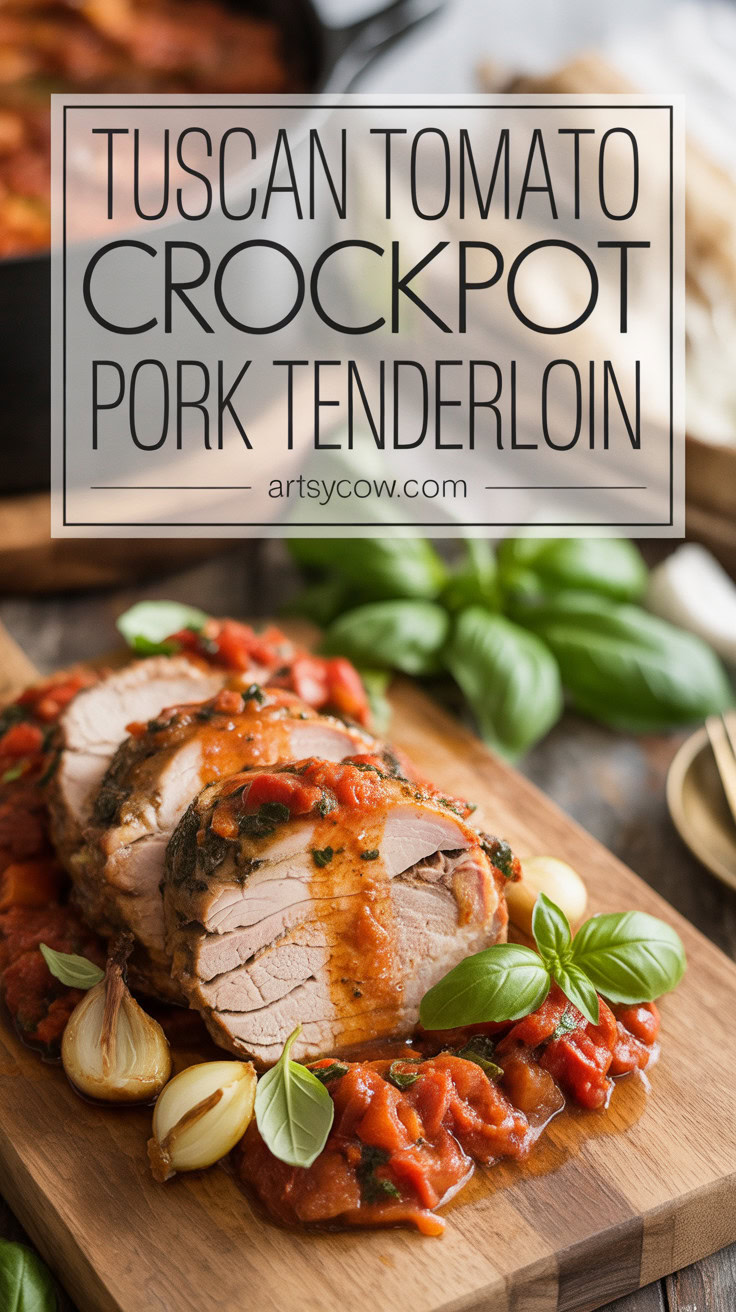
Craving a dinner that smells like a Tuscan villa but requires zero passport stamps? You’re in luck.
This slow-cooker pork tenderloin cooks itself while you do literally anything else.
But here’s the catch! A quick sear first turns good into unforgettable. Simple steps, bold flavor, and a sauce that begs for bread.
Let’s do this.
Contents
Equipment: Must-haves
- Slow cooker (crockpot)
- Skillet (for searing)
- Knife
- Cutting board
- Measuring spoon
- Measuring cup
- Wooden spoon
Equipment: Nice-to-haves
- Immersion blender (optional)
- Instant-read thermometer (optional)
- Tongs
- Serving platter
Ingredients
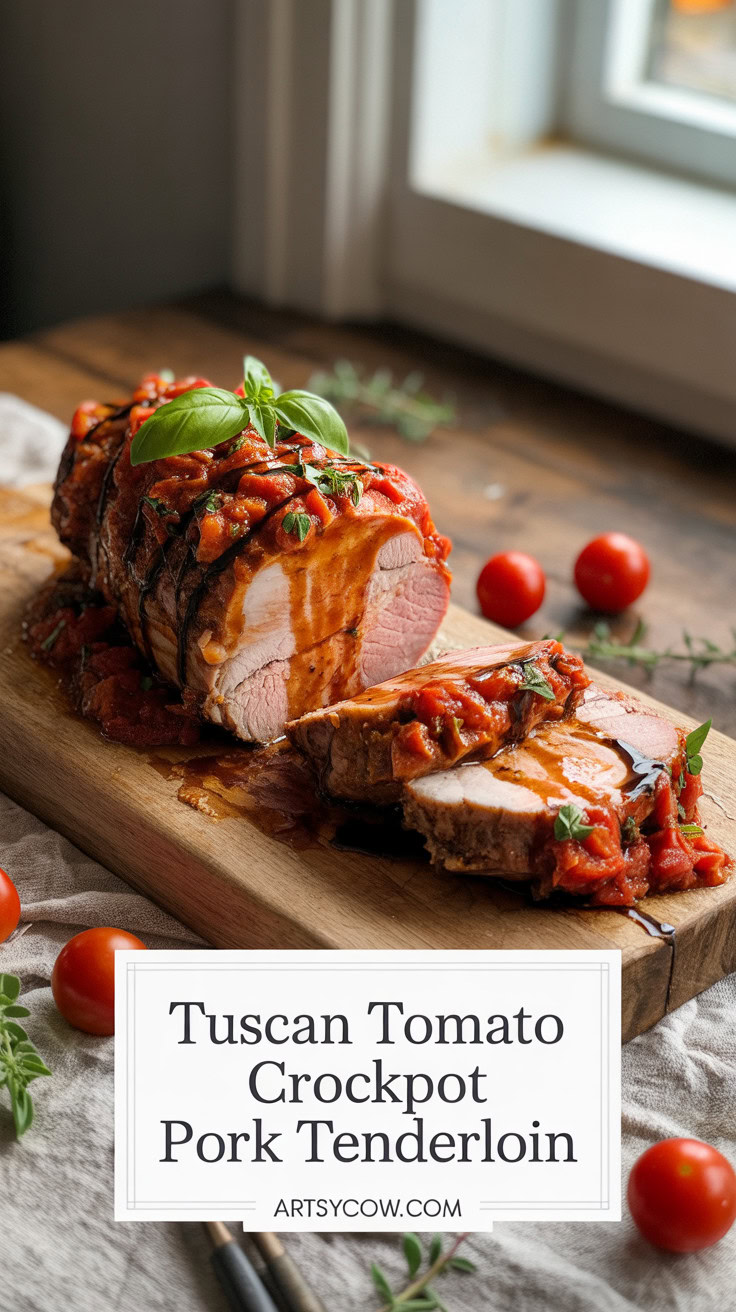
- 1 pork tenderloin (about 1 lb)
- 1 tablespoon olive oil
- 1 onion, diced
- 1 clove garlic, minced
- 1 can (14 oz) crushed tomato
- 1 jar (about 1/2 cup) sun-dried tomato in oil, chopped
- 1/4 cup chicken broth
- 1 teaspoon dried oregano
- 1 teaspoon dried basil
- 1/2 teaspoon red pepper flake (optional)
- 1 teaspoon salt
- 1/2 teaspoon black pepper
- 1 tablespoon balsamic vinegar
- 2 tablespoons heavy cream (optional for creamier sauce)
- 1 tablespoon cornstarch (optional for thickening)
- 1 tablespoon butter (optional, for finish)
- 1 sprig fresh basil (for garnish)
Instructions
- Pat the pork tenderloin dry and season it with salt and pepper like you mean it.
- Heat the skillet with olive oil until shimmering and use the tongs to sear the tenderloin on all sides until golden.
- Transfer the seared tenderloin to the slow cooker and set the skillet aside for sauce work.
- Add diced onion to the slow cooker around the pork so it can sweeten and mingle with the meat.
- Scatter minced garlic over the onion, then sprinkle dried oregano, dried basil, and red pepper flake into the slow cooker.
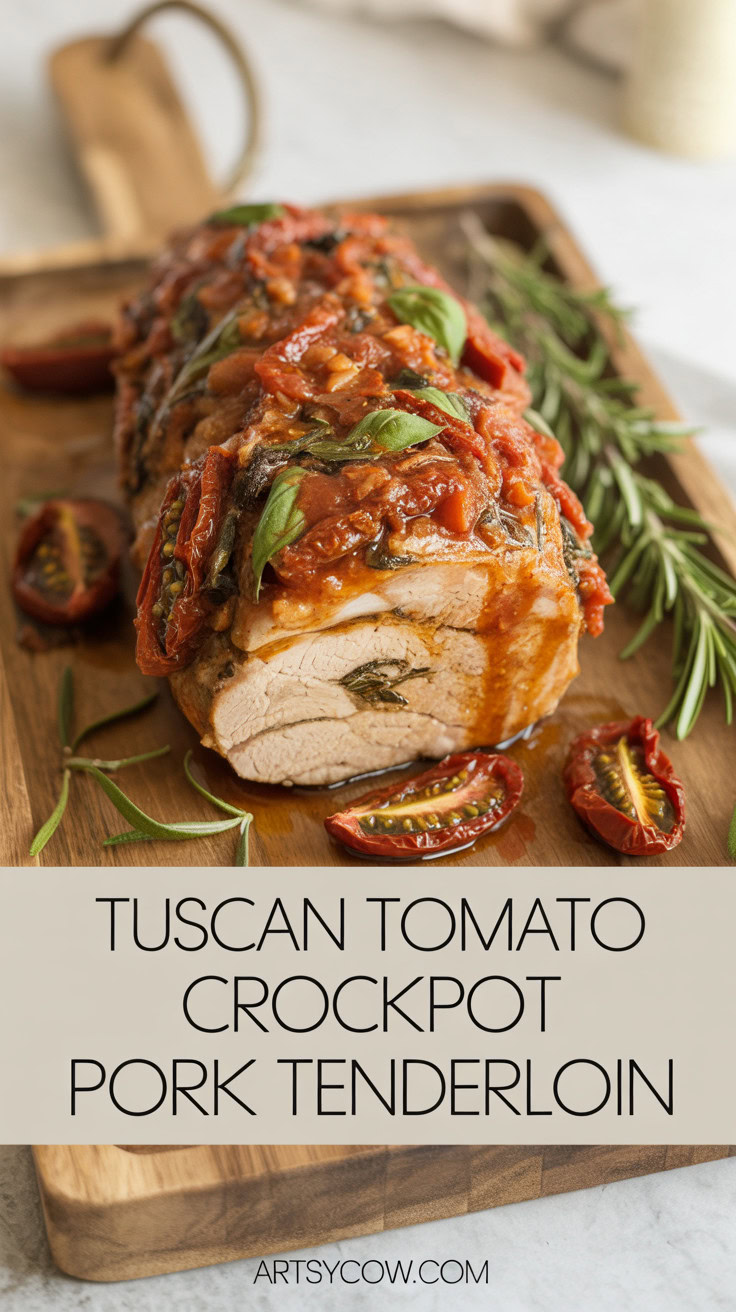
- Spoon the chopped sun-dried tomato and pour crushed tomato over the pork to create a rustic Tuscan blanket.
- Pour chicken broth into the slow cooker and add a splash of balsamic vinegar for brightness.
- Cover and cook on low until the pork reaches a safe internal temperature and is tender enough to shred with a fork; use the instant-read thermometer if you have it.
- When the pork is done, carefully remove it to the cutting board with the tongs and let it rest for a moment.
- If you want a smoother sauce, use the skillet to simmer sauce from the slow cooker and blitz it with the immersion blender until velvety.
- Stir in heavy cream and butter into the sauce for richness, or skip for a lighter finish.
- If the sauce needs thickening, whisk cornstarch with a small amount of cold water then stir into the simmering sauce until it coats the spoon.
- Slice or shred the rested tenderloin and return it to the sauce to soak up every last drop of flavor.
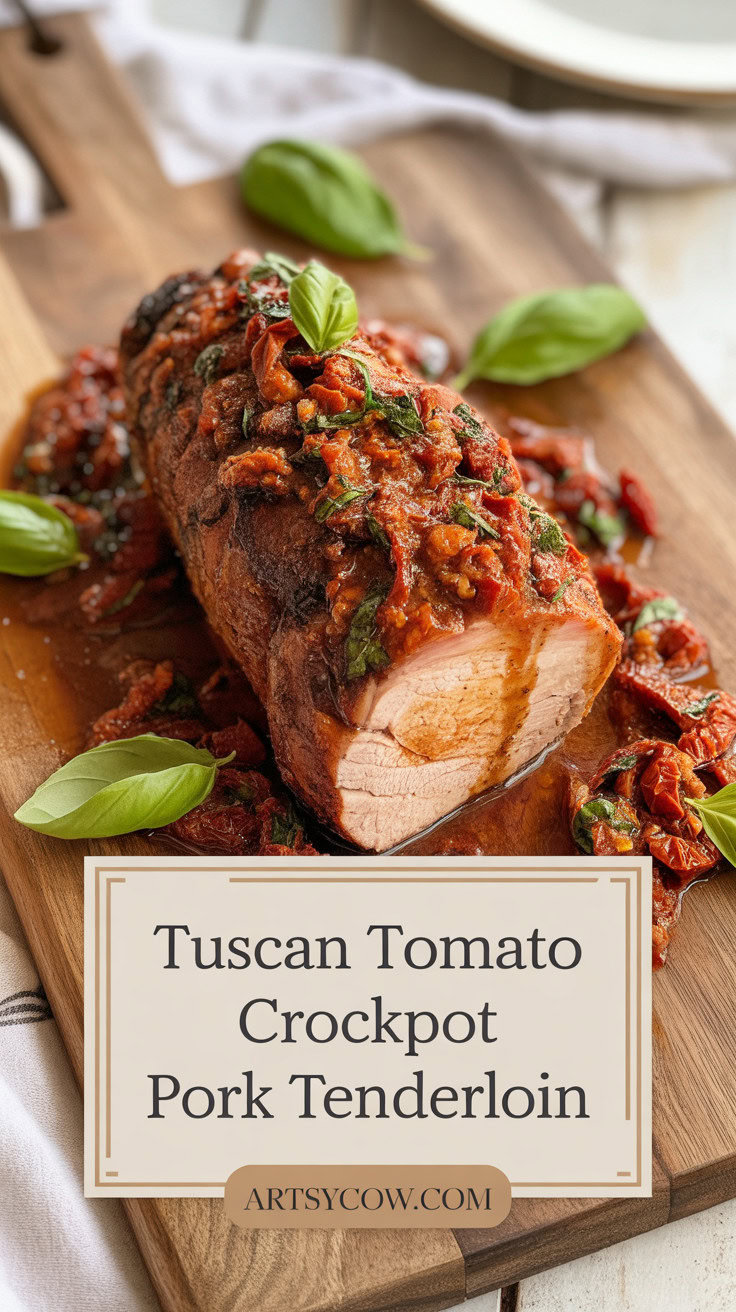
- Transfer the pork and sauce to the serving platter and garnish with the fresh basil sprig before presenting to anyone lucky enough to be nearby.
Good to Know
Timing: Cooking on low gives more tender results, but high works if you’re in a hurry. Low and slow is less drama.
Searing matters.
It locks in flavor and creates caramelized bits that make the sauce sing. Yes, it’s worth the two-minute panic at the stove.
Thickening: If your sauce is too thin, cornflour slurry or a quick simmer will fix it. Don’t drown it—just coax it.
Variations: Swap chicken broth for white wine for a brighter finish, or drop in a sprig of rosemary for a piney note.
For a dairy-free version, skip the cream and butter. Serving suggestion: Spoon the pork and sauce over mashed potato, polenta, or crusty bread to sop up every drop.
That’s why you made extra sauce, right? Make-ahead: This dish tastes even better the next day once the flavors have married.
Reheat gently and add a splash of broth if the sauce tightens up. Leftover idea: Slice chilled tenderloin thinly and pile it on a sandwich with fresh basil and softened sauce.
Your future self will send a thank-you note. Safety: Use the instant-read thermometer to ensure pork reaches a safe temperature.
Safety never goes out of style.
