
Hungry but short on hands-on time? Put those frantic weeknight vibes on hold and let the crockpot do the heavy lifting.
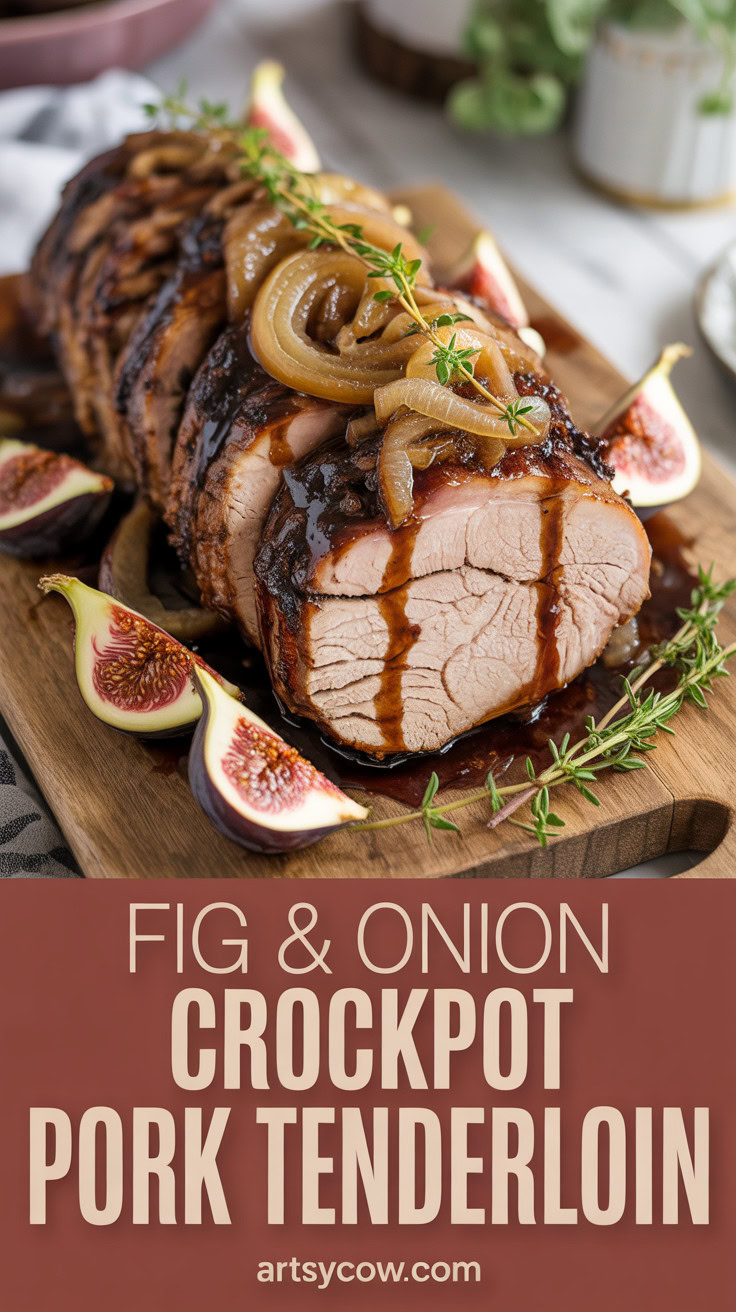
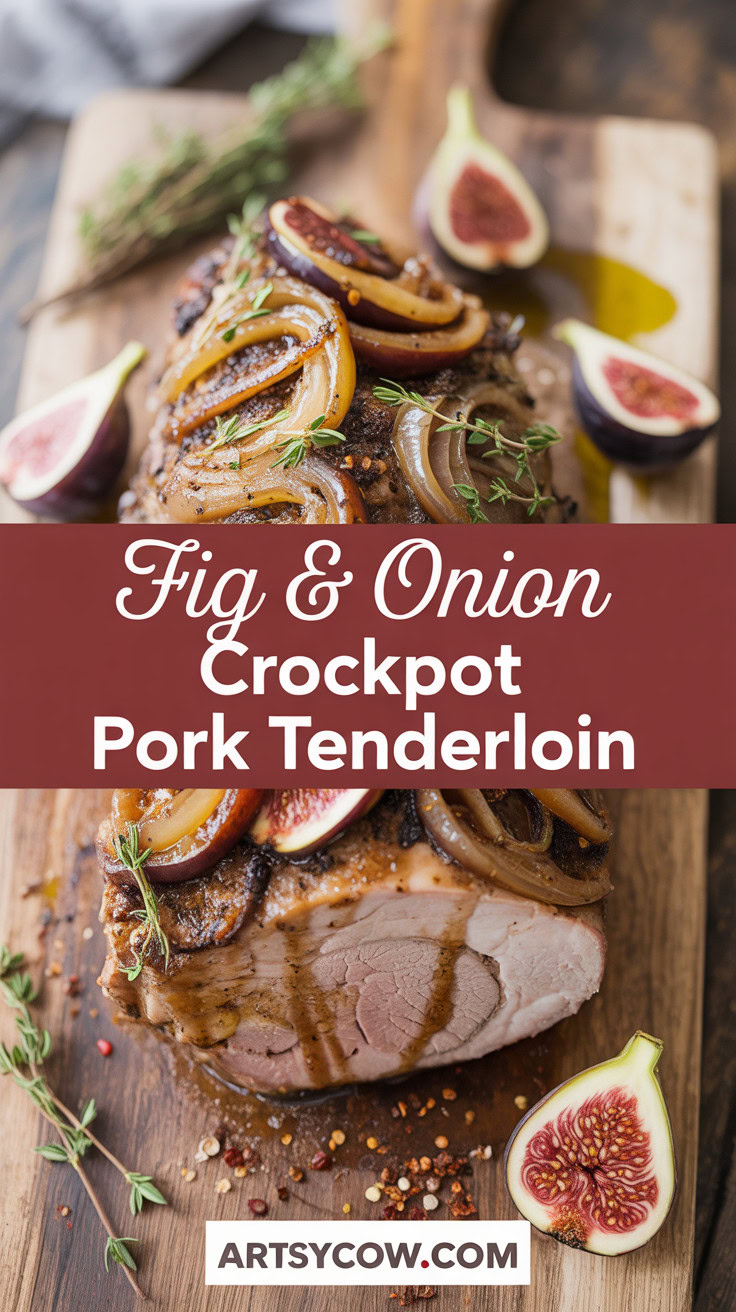
This recipe turns a humble pork tenderloin into a cozy, slightly sweet, wildly comforting dinner with fig and onion. But here’s the catch!
You get dinner that tastes fancy while barely lifting a finger. That’s why slow cooking is the obvious cheat code for tasty, no-drama meals.
Contents
Equipment: Must-haves
- Crockpot (slow cooker)
- Cutting board
- Sharp knife
- Measuring spoon
- Spoon or spatula
- Tongs
- Small bowl
- Meat thermometer
Equipment: Nice-to-haves
- Skillet (for quick sear)
- Kitchen twine (for tidy presentation)
- Slow cooker liner (lazy-cleaning hack)
- Immersion blender or whisk (for silky pan sauce)
- Serving platter (for dramatic reveal)
Ingredients
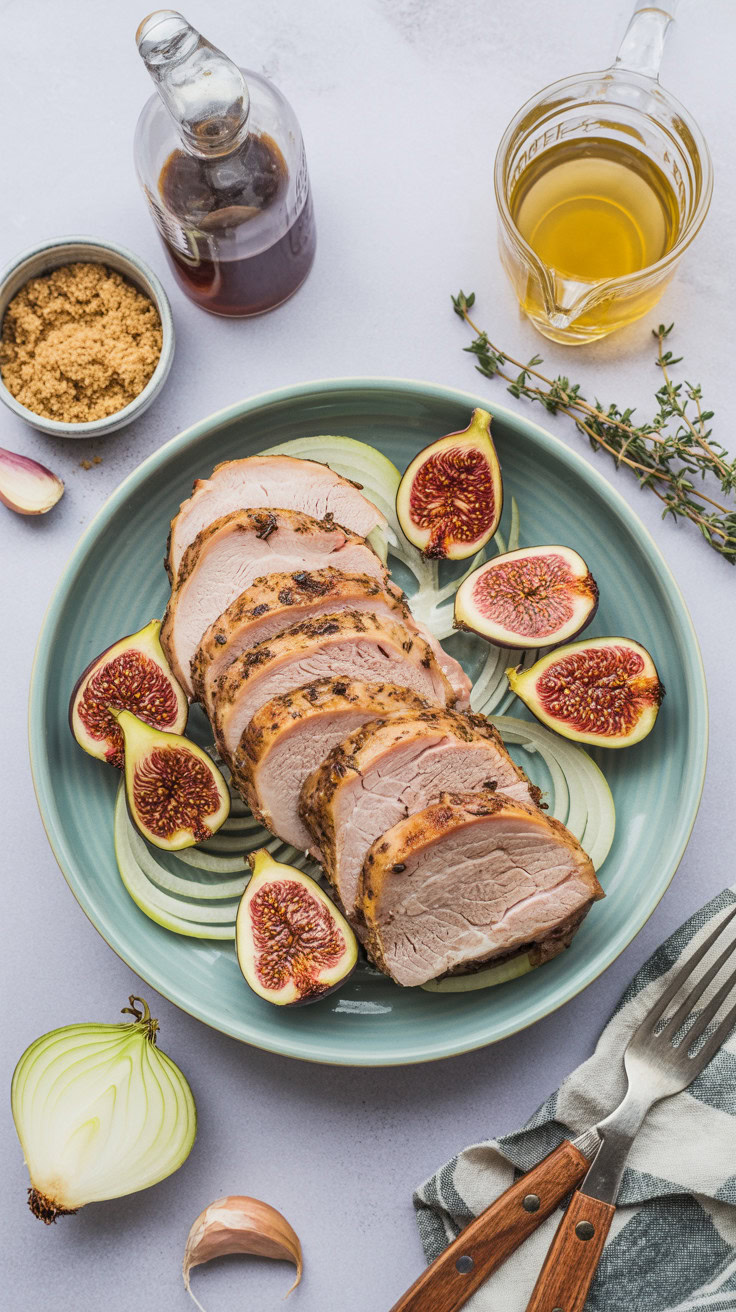
- 1 pork tenderloin (about 1 to 1¼ lb), trimmed
- 1 onion, thinly sliced
- 6 dried fig, chopped (or fresh if you’re feeling bougie)
- 2 tablespoon fig jam (or preserves)
- 1 tablespoon balsamic vinegar
- 1 tablespoon brown sugar (light or dark—no judgment)
- 1 clove garlic, minced
- 1 tablespoon olive oil
- 1 cup chicken broth
- 1 sprig thyme (or a pinch dried thyme)
- 1 pinch red pepper flakes (optional, for a tiny kick)
- 1 tablespoon cornstarch (for slurry, optional)
- 1 tablespoon cold water (for slurry, optional)
- Salt, to taste
- Black pepper, to taste
- 1 tablespoon butter (optional, for glossy sauce)
Instructions
- Pat the pork tenderloin dry and season it with salt and black pepper.
- If you want extra flavor and crisp skin, heat a skillet and sear the tenderloin on all sides in olive oil until golden; this step is optional but delicious.
- Place the sliced onion in the bottom of the crockpot to make a cozy aromatics bed.
- Nestle the seared or raw tenderloin on top of the onion in the crockpot.
- In a small bowl, stir together the chopped fig, fig jam, minced garlic, balsamic vinegar, brown sugar, and red pepper flakes if using.
- Pour the mixture over the tenderloin, then add the chicken broth around (not directly on) the meat so it stays moist.
- Tuck the thyme sprig into the liquid for a gentle herbal note.
- Cover and cook on low until the pork reaches the safe internal temperature and is tender; resist sneaking peeks.
- When the pork is done, transfer it to a cutting board and let it rest while you finish the sauce. Resting keeps the juices in the meat, not on your cutting board floor.
- Skim any fat from the top of the cooking liquid, then transfer some liquid to a small bowl or a skillet to make a sauce.
- If you want a thicker sauce, whisk cornstarch with cold water to make a slurry and stir it into the hot liquid until it thickens.
- For a glossy finish, whisk in butter off the heat until melted and shiny. Taste and adjust seasoning with salt and black pepper.
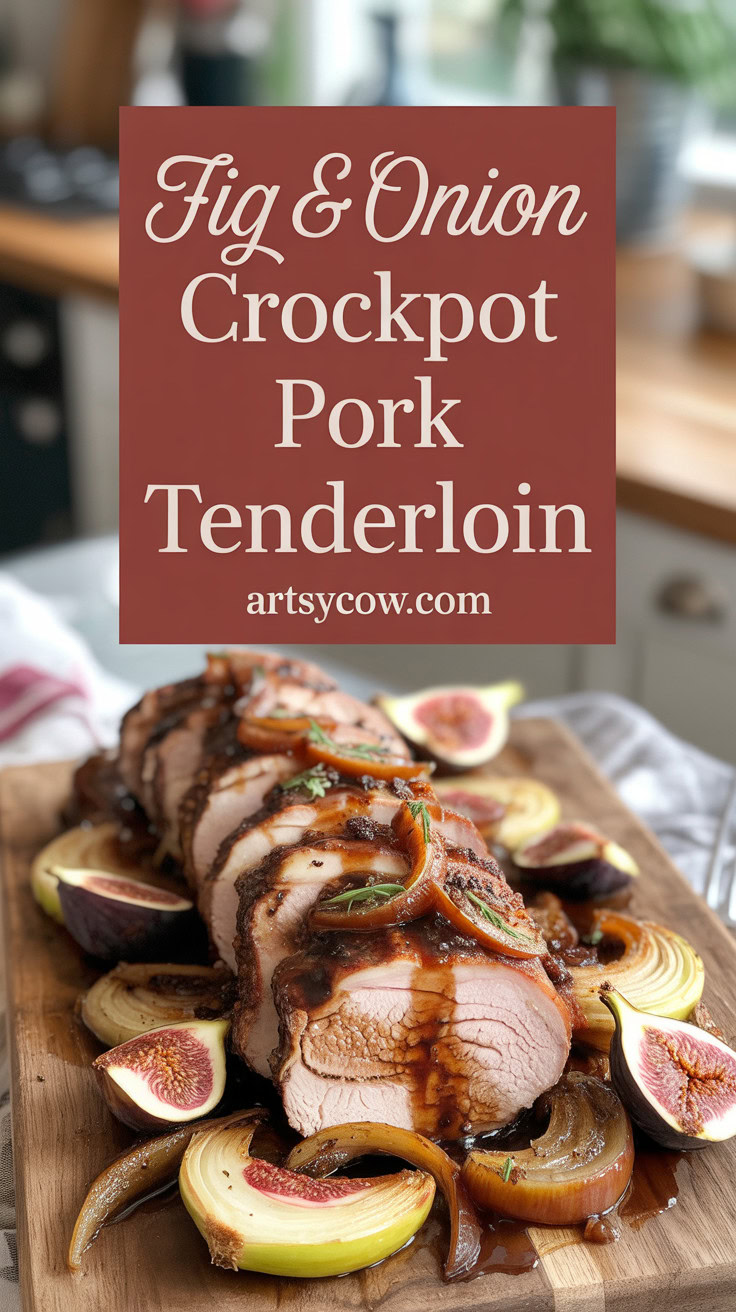
- Slice the pork tenderloin against the grain and spoon the fig and onion sauce over each slice.
- Garnish with a tiny pinch of thyme leaves if you want to look professional without the degree. Serve and bask in compliments.
Good to Know
Tips for success:
Let the pork rest after cooking so juices redistribute; that’s why resting is non-negotiable. If you skip the sear, increase the flavor punch by using a little extra fig jam and a hot final broil if your oven and the crockpot lid get along.
But here’s the catch! A quick sear adds caramel notes that slow cooking can’t mimic.
Sauce tricks:
If your sauce is too thin, mash a few cooked fig pieces into it or use the cornstarch slurry; both thicken and add body. That’s why a slurry is the secret lazy chef weapon.
Variations:
Swap the thyme for rosemary if you want a woodsy twist. Try substituting fig jam with apricot jam in a pinch—sweetness saves the day often.
Serving suggestions:
Serve sliced pork over creamy mashed potato, polenta, or buttered egg noodle to soak up the sauce. Add a simple green salad to cut the sweetness with bright acidity.
Make-ahead and storage:
Leftovers keep well in an airtight container in the fridge for a few days; reheat gently to avoid drying. The sauce gets better overnight, so sometimes tomorrow’s lunch is the best part.
Final note:
This recipe is perfect for when you want something that reads like effort but doesn’t require stage-level cooking skills. Your crockpot will do most of the work, and you’ll look like the hero of the dinner table.
Enjoy the applause (and the seconds).
