
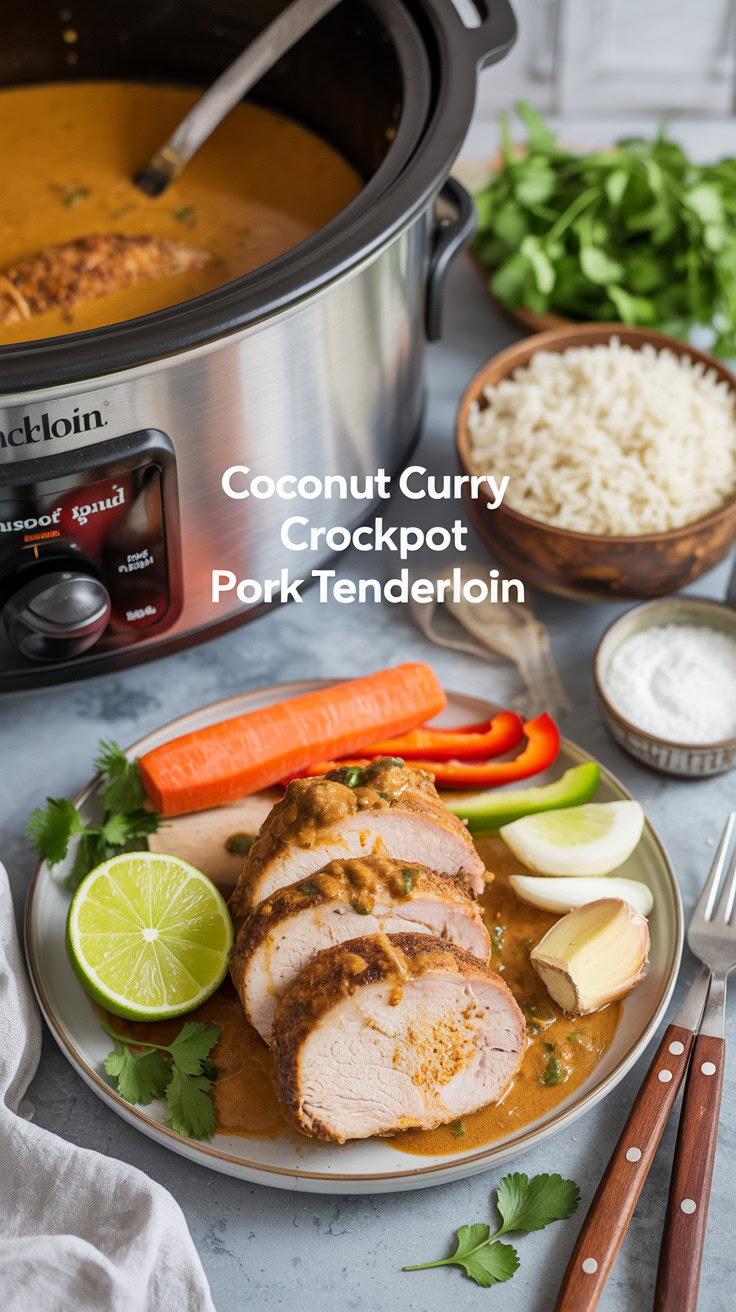
Craving a hands-off dinner that still tastes like you put in effort? This Crockpot coconut curry pork tenderloin does the heavy lifting while you binge something important.
It’s cozy, slightly exotic, and perfect for nights when you want flavor without fuss. But here’s the catch!
It’s impossibly easy and almost suspiciously delicious.
Contents
Equipment: Must-haves
- Crockpot (slow cooker)
- Sharp knife
- Cutting board
- Measuring spoons
- Can opener
- Tongs
- Wooden spoon
- Mixing bowl
Equipment: Nice-to-haves
- Skillet (for searing and finishing)
- Immersion blender
- Kitchen twine
- Meat thermometer
- Fine mesh strainer
Ingredients
- 1 pork tenderloin (about 1 lb), trimmed
- 1 can coconut milk (13.5 oz)
- 2 tablespoons red curry paste
- 1 onion, sliced
- 1 garlic clove, minced
- 1 piece fresh ginger (about 1-inch), grated
- 1 tablespoon brown sugar
- 1 tablespoon fish sauce
- 1 tablespoon soy sauce or tamari
- 1 lime, juiced and cut into wedge
- 1 carrot, sliced
- 1 red bell pepper, sliced
- 1/2 teaspoon salt
- 1/4 teaspoon black pepper
- 1 teaspoon cornstarch (for slurry)
- 1 tablespoon water (for slurry)
- 1 cup jasmine rice, uncooked (to serve)
- 1 tablespoon fresh cilantro, chopped (for garnish)

Instructions
- Pat the pork tenderloin dry and season with salt and pepper on all sides.
- Tie the pork gently with kitchen twine to keep an even shape for cooking.
- Heat a skillet over medium-high heat and add a splash of oil.
- Sear the pork on all sides until golden to lock in flavor, using tongs to turn.
- Place the seared pork into the crockpot and set aside.
- Open the can of coconut milk with a can opener and pour into a mixing bowl.
- Add the red curry paste to the bowl and whisk with garlic, grated ginger, brown sugar, fish sauce, soy sauce, and lime juice until smooth.
- Scatter the sliced onion, carrot, and red bell pepper into the crockpot around the pork.
- Pour the curry coconut mixture over the pork and vegetables so everything gets cozy.
- Cover and cook on low or high according to your schedule until pork reaches safe doneness when checked with a meat thermometer.
- When the pork is done, transfer it to a cutting board and let it rest while you finish the sauce.
- If you want a silky sauce, use the immersion blender right in the crockpot to blend the sauce and soften bits of vegetable slightly.
- For extra-smooth sauce, pour the blended sauce through a fine mesh strainer into the skillet and press with a wooden spoon.
- Make a cornstarch slurry in a small bowl by stirring the cornstarch into water until smooth.
- Heat the strained sauce in the skillet over medium heat and whisk in the slurry until the sauce thickens to a glossy consistency.
- Slice the rested pork into medallions with a sharp knife.
- Cook the jasmine rice according to package instructions, rinsing the rice first in a fine mesh strainer if desired.
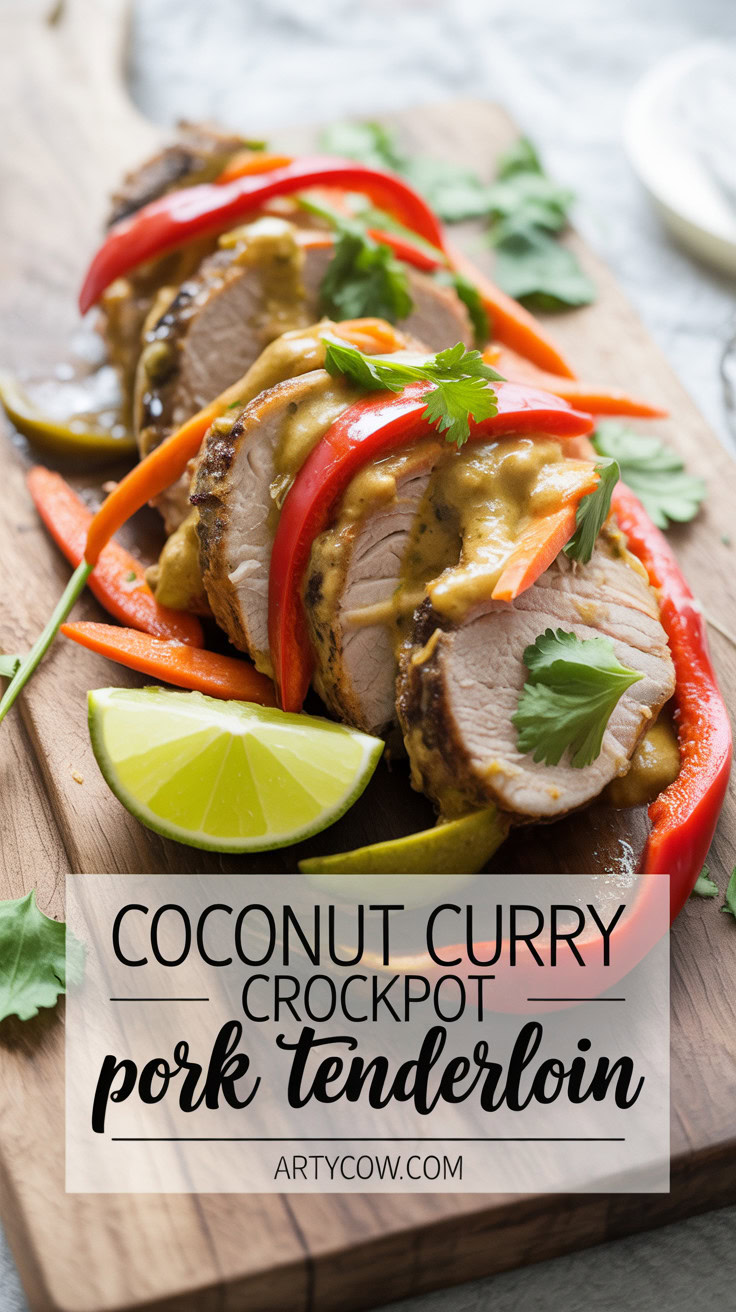
- Arrange rice on a plate, top with pork medallions, spoon over the coconut curry sauce and vegetables, and sprinkle with chopped cilantro.
- Serve with a lime wedge for squeezing and bask in the applause (or at least appreciative chewing).

Good to Know
Timing tip: low setting gives deeper flavor if you have the time. That’s why slow cooking is great for this dish.
If you sear the pork first you get a richer flavor and better texture. Searing is optional but highly recommended.
Use the immersion blender to smooth the sauce right in the crockpot for fewer dishes. If you prefer a restaurant-smooth sauce, strain it through a fine mesh strainer and finish it in a skillet with the cornstarch slurry.
Leftovers keep well in the fridge for up to three days. Reheat gently to avoid drying the pork.
The sauce reheats beautifully and even tastes better the next day. Variations: Swap red curry paste for yellow or green for a different heat and flavor profile.
Add a handful of spinach at the end for extra greens. For a gluten-free option choose tamari instead of soy sauce.
Serving suggestion: Serve over jasmine rice or cauliflower rice for a lighter plate. A side of steamed green bean or snap pea keeps things bright.
A final note: use a meat thermometer and aim for a safe internal temperature. Resting the pork after cooking keeps it juicy.
Tiny effort, big payoff. You’re welcome.
