
Craving restaurant-level pork without the drama?
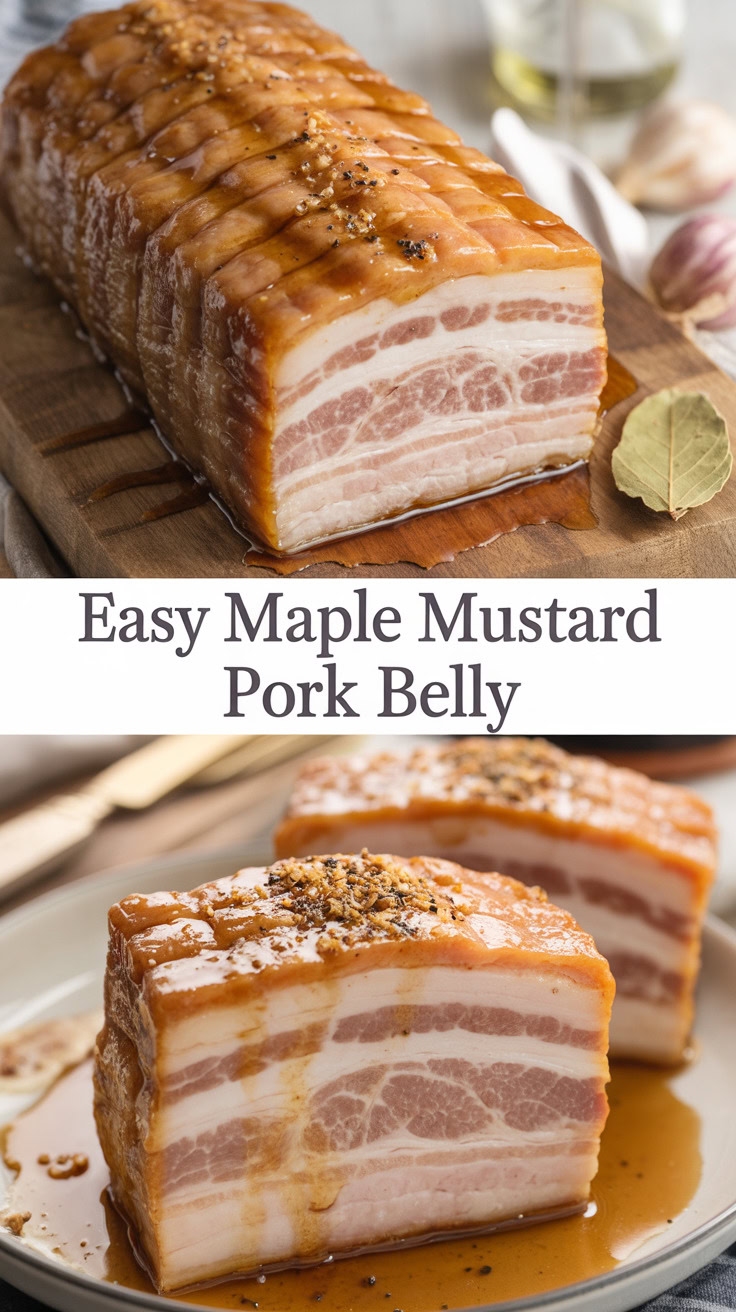
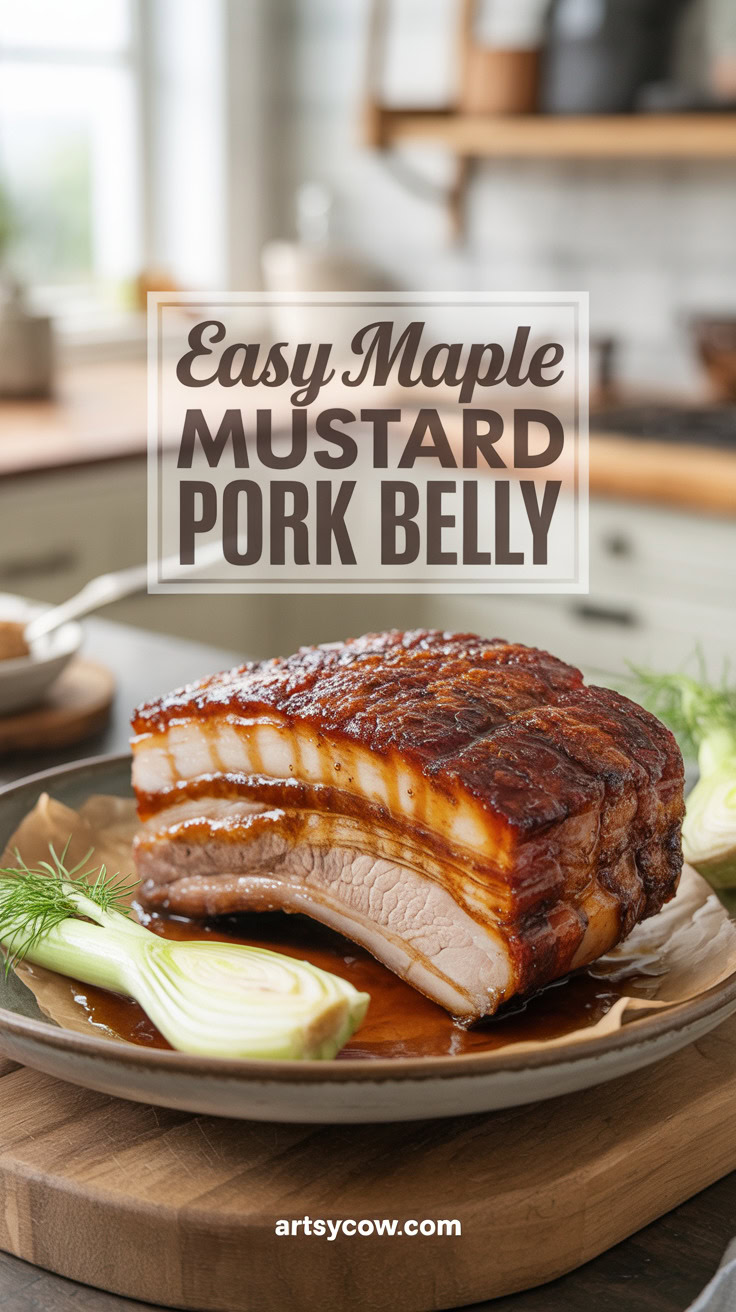
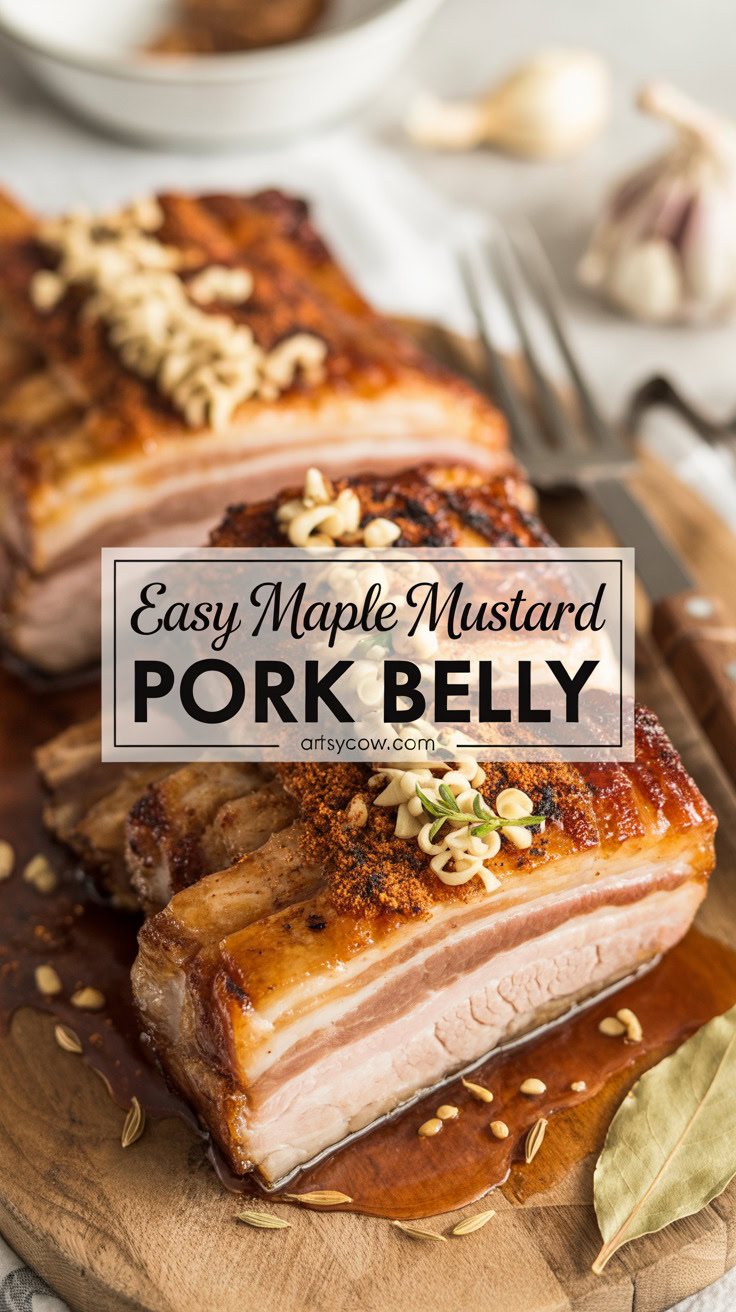
This maple mustard pork belly recipe delivers sticky-sweet glaze and crackling skin with minimal fuss. It’s bold, cozy, and surprisingly simple—perfect when you want something indulgent but not time-consuming.
Stay with me; I’ll walk you through scoring, glazing, and the one secret move that makes the skin sing.
Contents
Equipment: Must-haves
- Roasting pan
- Wire rack
- Mixing bowl
- Sharp knife
- Cutting board
- Whisk
- Measuring spoon
- Meat thermometer
- Basting brush
- Aluminum foil
Equipment: Nice-to-haves
- Kitchen twine (optional)
- Silicone brush (optional)
- Blowtorch (optional, for extra crisp)
Ingredients
- 2 lb pork belly, skin on
- 1/4 cup maple syrup
- 2 tbsp Dijon mustard
- 1 tbsp whole-grain mustard
- 2 tbsp soy sauce
- 1 tbsp apple cider vinegar
- 1 tbsp olive oil
- 1 clove garlic, minced
- 1/2 tsp smoked paprika
- 1/2 tsp black pepper, freshly ground
- 1 tsp salt (for skin rub)
- 1 tsp salt (for marinade)
- 1/2 tsp crushed fennel seed (optional, for a subtle anise note)
- 1 bay leaf (optional, for roasting aroma)
Instructions
- Preheat the oven to 300°F and place the oven rack in the middle position.
- Pat the pork belly skin dry with paper towel like you’re prepping it for a spa—dry skin equals crisp skin.
- Use the sharp knife to score the skin in a shallow crosshatch; don’t cut too deep into the meat or you’ll make it cry.
- Rub the salt (skin rub) over the scored skin, working it into the creases to draw moisture out while roasting.
- Place the pork belly on the wire rack set inside the roasting pan, skin side up.
- In the mixing bowl, whisk together the maple syrup, Dijon mustard, whole-grain mustard, soy sauce, apple cider vinegar, olive oil, minced garlic, smoked paprika, black pepper, and the salt for the marinade until glossy.
- Brush or spoon half of the marinade over the top and sides of the pork belly using the basting brush; reserve the rest for later glazing.
- If you want a neater roast, tie the pork belly with kitchen twine to keep the shape—this is optional but it helps if your belly flops.
- Add the bay leaf to the roasting pan for aroma if you’re feeling fancy.
- Roast the pork belly at 300°F for about 2 hours until the fat has rendered and the meat feels tender when poked with the meat thermometer; the internal temperature target for tender, fully rendered pork belly is around 200°F, but base doneness on tenderness as well.
- After the low roast, increase the oven temperature to 450°F or switch to broil for extra crisp; keep an eye on it so the skin doesn’t burn.
- Remove the pan carefully and brush the reserved marinade all over the pork belly using the basting brush to build layers of sticky glaze.
- Return the pork belly to the oven at 450°F for 15–20 minutes, or broil for 3–6 minutes, until the skin puffs and crisps; watch closely and rotate the pan if needed for even browning.
- If you have a blowtorch, give the skin a quick, even pass to blister spots for restaurant-level crackle—this is optional but dramatic.
- Once the skin is crisp and the outside is deeply caramelized, remove the pork belly and tent with aluminum foil.
- Let the pork belly rest for 15 minutes so the juices redistribute; this keeps every bite juicy and avoids sad, dry meat.
- Slice the pork belly against the grain into serving pieces using the sharp knife and a clean cutting board.
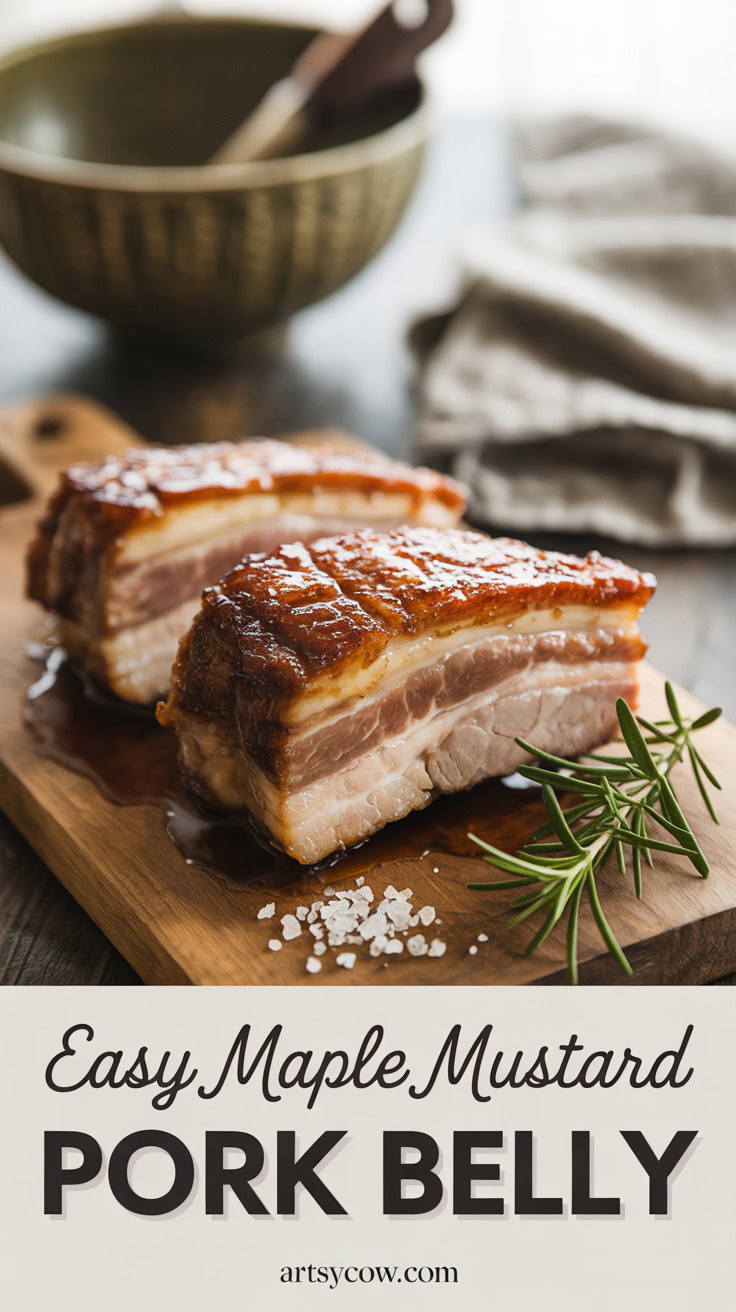
- Serve warm with any pan juices spooned over the top and a little extra maple syrup or mustard on the side for dunking.
What Else You Should Know
Timing tip: Low-and-slow first, then a hot finish is the trick. The long roast renders fat; the high heat crisps skin.
That’s why a two-stage cook is worth the tiny extra effort. Salt trick: Salting the skin early helps dry it out.
Pat it dry again before roasting if it beads with moisture. Variation: Swap Dijon mustard for whole-grain mustard only for a bolder texture, or add a splash of bourbon to the glaze for a boozy wink.
Serving suggestion: Serve slices over mashed root vegetable or on a soft bun with pickled onion for contrast. Acid cuts through the richness like a tiny superhero.
Make-ahead: Roast and slice the pork belly a day ahead, refrigerate, then reheat gently under a broiler to refresh the crisp. Food safety: Use the meat thermometer and check for tenderness.
Fat rendered at higher internal temps gives the best texture for pork belly while still being safe to eat. Leftovers: Store wrapped in the fridge for up to three days.
Reheat in a skillet to keep the skin happy and crunchy. Final thought: This maple mustard pork belly is rich, sticky, and showy without being complicated—so you get applause and minimal kitchen drama.
That’s a win.
