
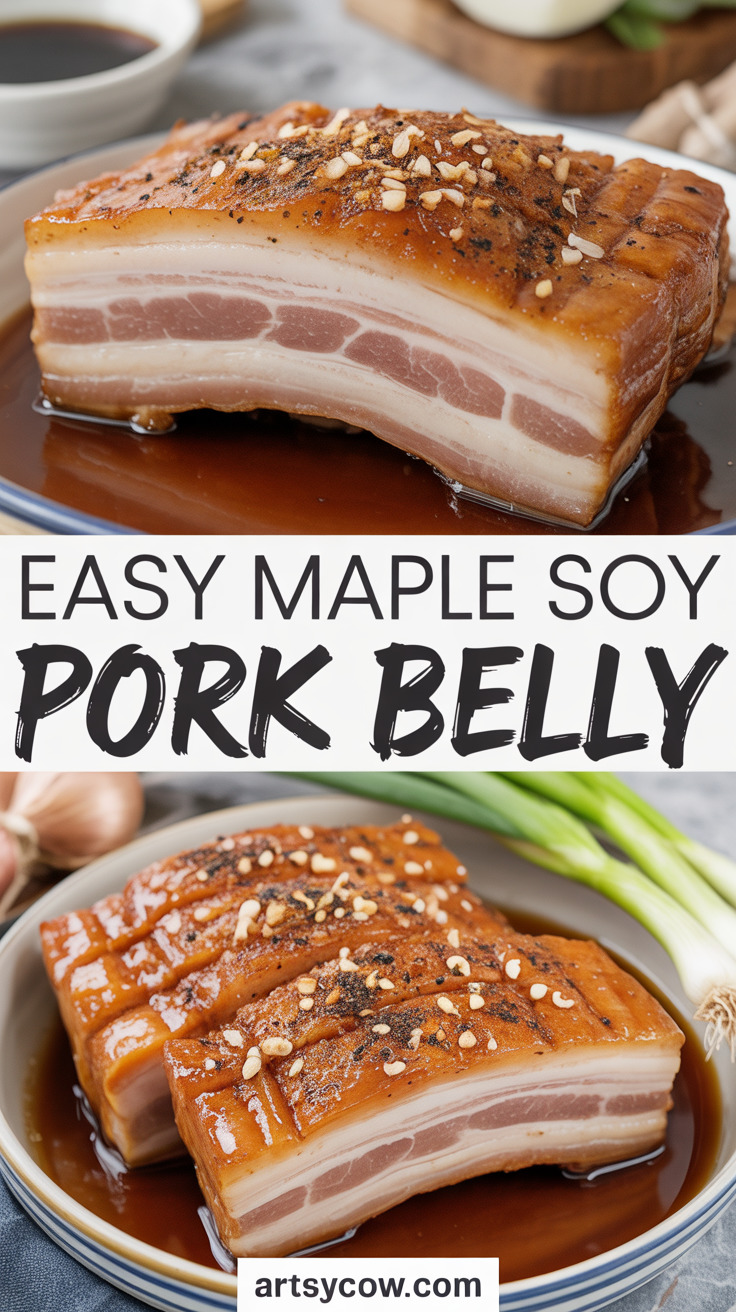
Craving something sticky, sweet, and a little salty that makes you want to high-five your own dinner? Yeah, me too.
This Easy Maple Soy Pork Belly fixes that problem with minimal fuss and maximum drama. No fancy techniques.
No hours of babysitting. Just one glorious piece of pork belly taking center stage.
But here’s the catch! A little patience for slow roasting pays off with crackly skin and melt-in-your-mouth fat.
You’ll be smug—and hungry—in no time.
Contents
Equipment: Must-haves
- Oven
- Heavy skillet (cast-iron preferred)
- Roasting pan or baking dish
- Sharp knife
- Cutting board
- Tongs
- Aluminum foil
- Meat thermometer
Equipment: Nice-to-haves
- Wire rack (for the roasting pan)
- Silicone brush (for glazing)
- Kitchen twine
- Blowtorch (for extra-crisp skin)
- Mandoline (for ultra-even slices)
Ingredients
- 1 1/2 lb pork belly, skin on (single piece; score the skin)
- 2 tbsp maple syrup (pure if you can afford joy)
- 2 tbsp soy sauce (use low-sodium if you like your arteries whispering)
- 1 tbsp rice vinegar (or apple cider vinegar in a pinch)
- 1 tbsp brown sugar (for extra caramel swagger)
- 2 tbsp vegetable oil (or neutral oil)
- 3 clove garlic, minced
- 1 tsp fresh ginger, grated
- 1/2 tsp black pepper, freshly ground
- 1/4 tsp red pepper flakes (optional, for a kick)
- 1 tbsp sesame oil (to finish, optional but fancy)
- 1 green onion, thinly sliced (for garnish)
- 1 tsp flaky salt (for final sprinkle)
Instructions
- Pat the pork belly very dry with paper towel and let it sit at room temperature while you preheat the oven; dryness helps the skin crisp later.
- Score the skin in a crosshatch pattern using a very sharp knife; don’t cut too deep into the meat—just through the skin and fat.
- Rub the skin and sides with oil and a pinch of black pepper; this helps with browning and keeps things from sticking.
- Preheat the oven to 300°F so the pork belly can slowly release fat and become tender while you sip something cold and smug.
- Heat the heavy skillet over medium-high heat until shimmering; sear the pork belly skin-side down until golden and some fat renders out, then flip and brown the sides briefly.
- Place a wire rack in the roasting pan and set the seared pork belly on the rack skin-side up so it doesn’t stew in its own glorious juices.
- Cover the roasting pan loosely with aluminum foil and roast at 300°F until the meat is tender and the internal temperature reaches about 190–195°F or the pork is fork-tender; this usually takes around 2 hours but check early and often because ovens gossip.
- While the pork roasts, whisk together the glaze: combine maple syrup, soy sauce, rice vinegar, brown sugar, minced garlic, grated ginger, and red pepper flakes; stir until the sugar dissolves.
- Once the pork is tender, remove the foil and increase oven temperature to 425°F; this wakes up the skin for caramelization.
- Brush the pork belly generously with the maple-soy glaze and return it to the oven, uncovered, to caramelize; roast at 425°F until the glaze is sticky and the skin is crisping, about 20–30 minutes.
- If the skin needs extra crisp, switch the oven to broil and watch closely for 1–3 minutes until blistered and crackly; do not walk away—this is the edge-of-your-seat part.
- Remove the pork from the oven and let it rest for 10 minutes so the juices relax and the glaze sets; resting is basically the pork’s spa time.
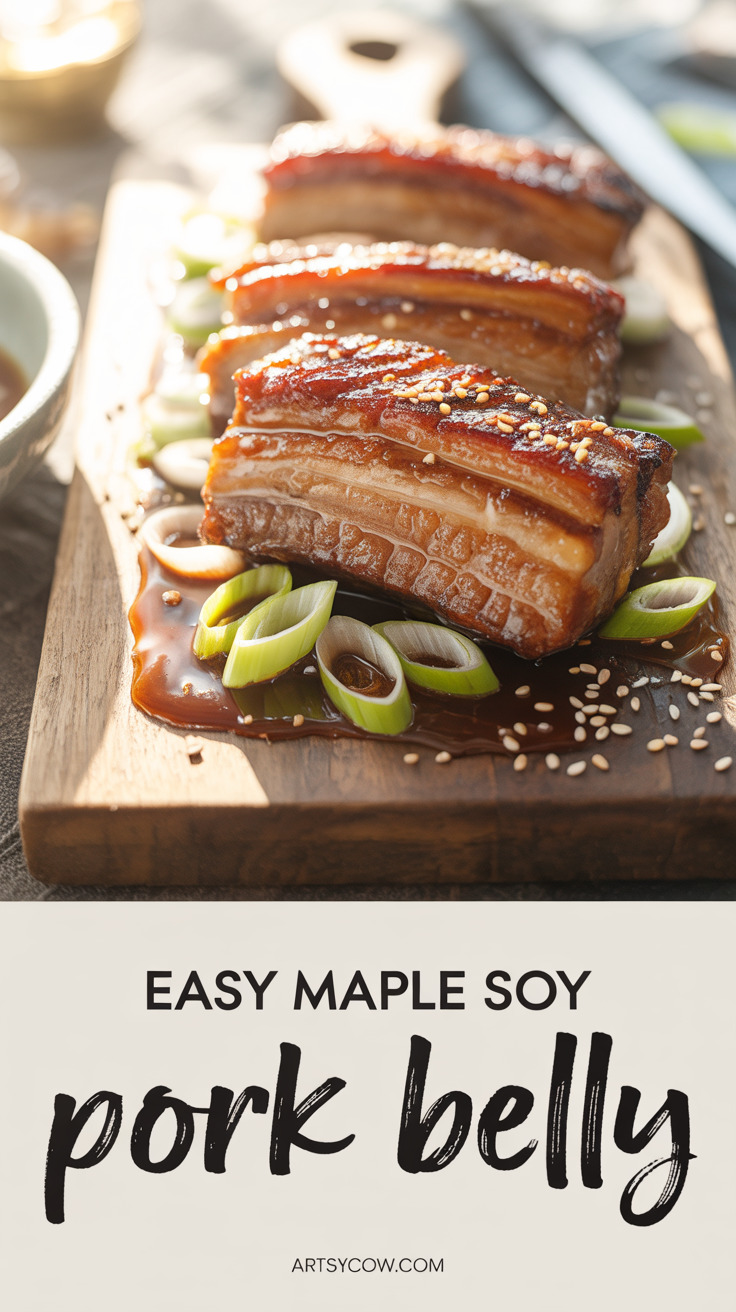
- Finish with a drizzle of sesame oil and a sprinkle of flaky salt for contrast and texture, and scatter sliced green onion on top for brightness.
- Slice the pork belly across the grain into serving pieces using a sharp knife; expect sticky fingers and wide smiles.
What Else You Should Know
Tip: Score the skin shallowly. Deep cuts make the meat sad and dry.
Variation: Swap maple with honey for a different kind of sweet swagger. Add a splash of orange juice in the glaze for citrus brightness.
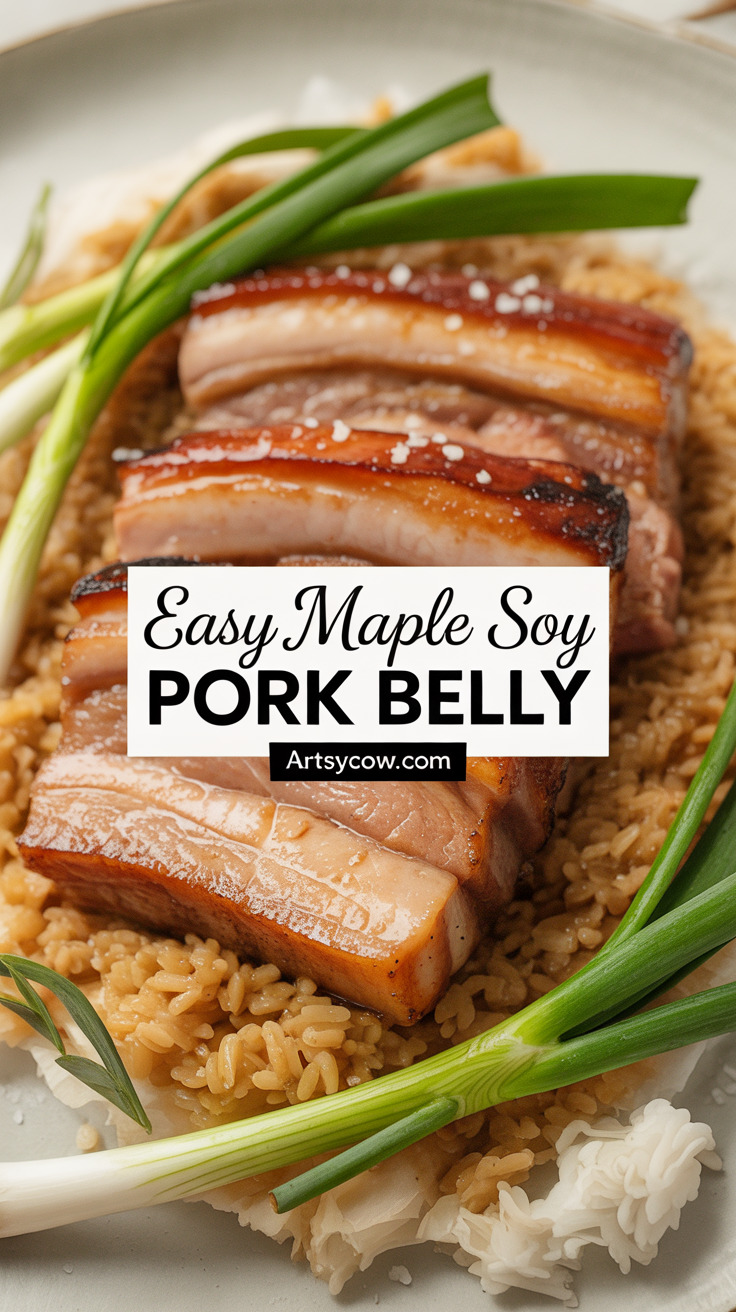
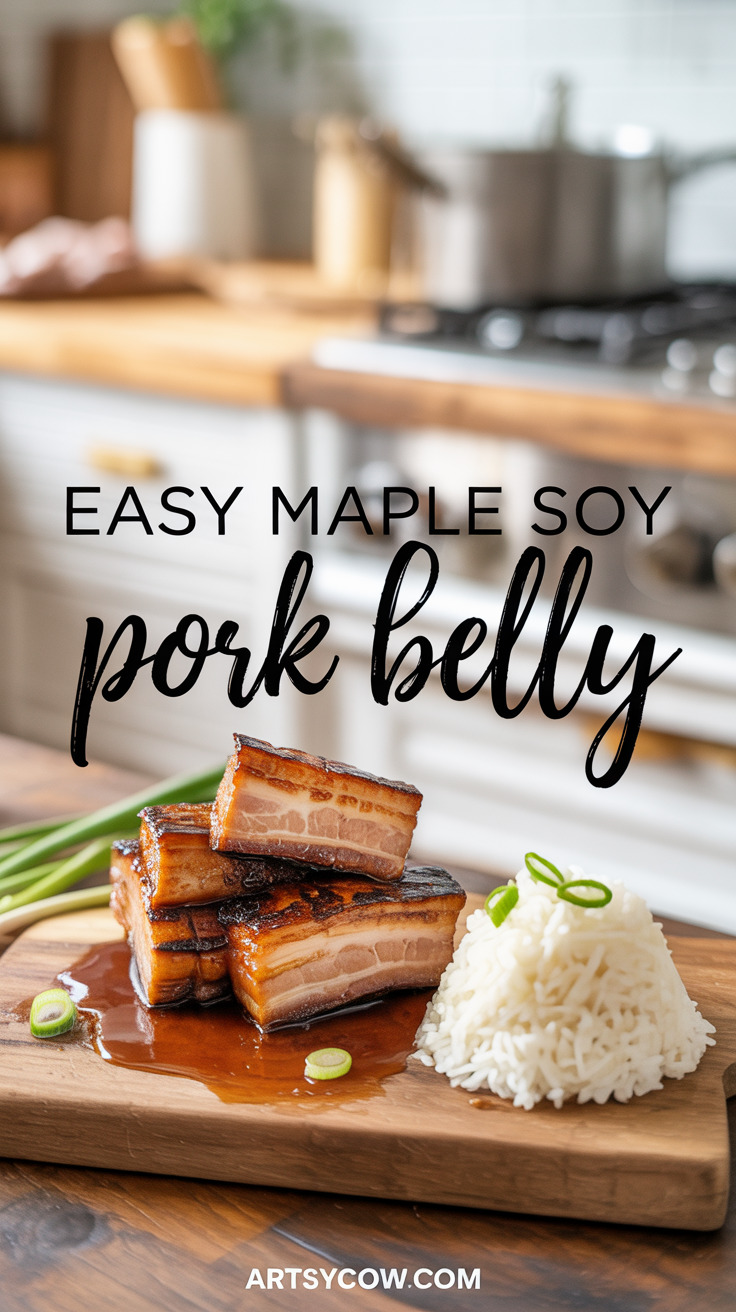
Serving suggestion: Serve the pork belly on steamed rice or in a single lettuce cup for a lighter, fun bite. Add quick-pickled cucumber for crunch and acid.
Make-ahead: You can roast the pork ahead and finish under the broiler just before serving to reclaim the crispness. Leftovers are great chopped into fried rice or tucked into a sandwich.
Safety note: Pork belly becomes most tender at higher internal temps than lean pork; aim for about 190–195°F for that fall-apart texture, but handle with a thermometer so you’re not guessing. Final thought: This recipe keeps things simple but impressive.
The maple gives sweetness, the soy brings umami, and the slow roast does the heavy lifting. That’s why you get restaurant vibes without selling a kidney to buy takeout.
