
Craving a dinner that feels fancy but cooks itself? You’re in the right place.
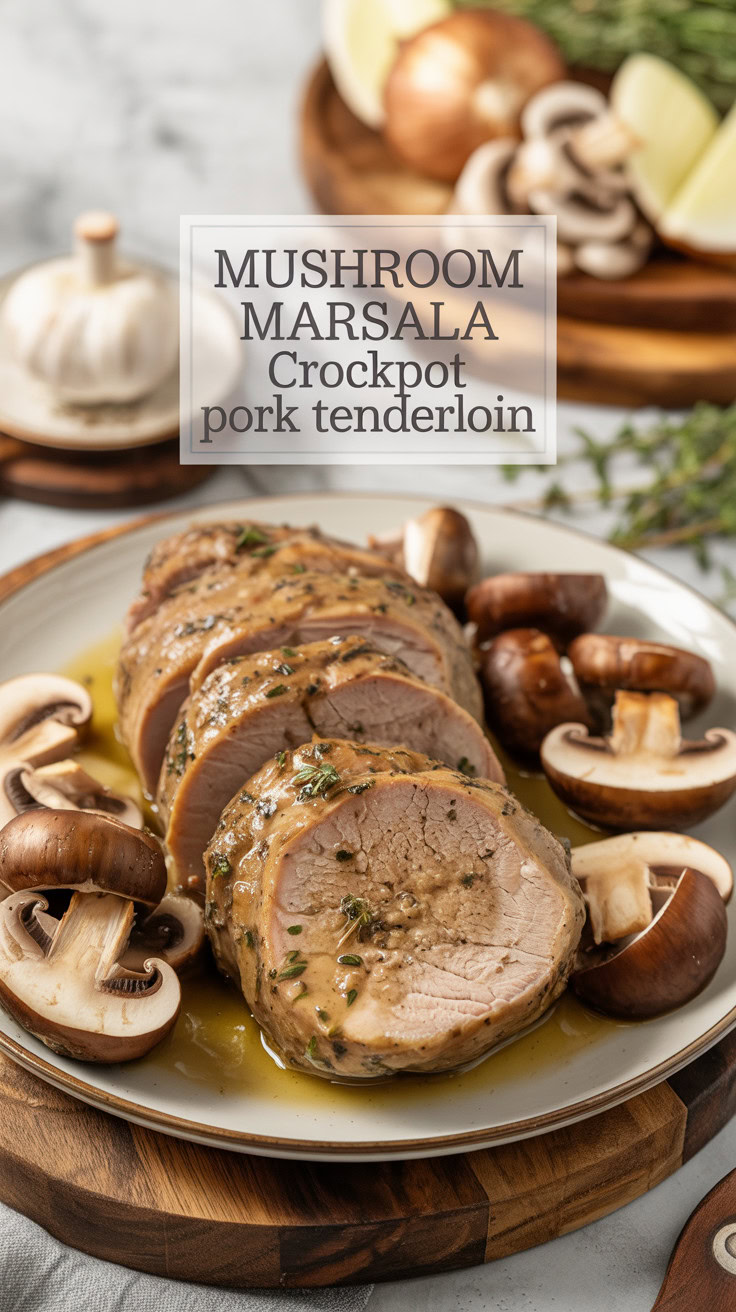
This slow-cooked Mushroom Marsala Crockpot Pork Tenderloin turns a weeknight into a tiny celebration. No babysitting required—just a little prep and the crockpot does the rest.
But here’s the catch! The secret is in the sauce, and yes, it’s glorious.
Contents
Equipment: Must-haves
- Slow cooker (crockpot)
- Skillet or frying pan
- Cutting board
- Sharp knife
- Measuring cup and spoons
- Tongs or large spoon
- Small bowl
Equipment: Nice-to-haves
- Meat thermometer
- Kitchen twine
- Fine-mesh strainer
- Ladle
- Wooden spoon
Ingredients
- 1 pork tenderloin (about 1 to 1.25 lb)
- 2 tbsp olive oil
- 2 tbsp unsalted butter
- 8 oz cremini mushroom, sliced
- 1 small onion, diced
- 3 clove garlic, minced
- 3/4 cup Marsala wine
- 1 cup chicken broth
- 1 tsp Worcestershire sauce
- 2 tbsp all-purpose flour
- 1 tsp salt
- 1/2 tsp black pepper
- 2 sprig fresh thyme
- 1 tbsp balsamic vinegar (optional)
- 1 tbsp cornstarch
- 2 tbsp water
Instructions
- Pat the pork tenderloin dry and season it with salt and pepper.
- Dredge the pork lightly in flour to give it a thin, even coating.
- Heat the olive oil and one tablespoon of butter in the skillet over medium-high heat.
- Sear the pork on all sides until golden brown to build flavor and color, then use tongs to transfer it to the slow cooker.
- Add the remaining butter to the skillet, then sauté the onion until it starts to soften.
- Toss in the sliced mushroom and cook until it releases moisture and begins to brown.
- Stir the garlic into the mushrooms and cook briefly until fragrant, but don’t let it burn.
- Pour the Marsala wine into the skillet to deglaze, scraping up browned bits from the pan with a wooden spoon.
- Add the chicken broth and Worcestershire sauce to the skillet and bring the liquid to a simmer for a minute.
- Pour the wine-and-broth mixture over the pork in the slow cooker, then tuck the thyme sprig beside the pork.
- If using, drizzle the balsamic vinegar into the crockpot for a touch of brightness.
- Close the slow cooker and cook on low until the pork reaches safe doneness and is tender—use the meat thermometer to check.
- When the pork is cooked through, transfer it to a cutting board and tent it loosely with foil to rest.
- Pour the cooking liquid and solids from the slow cooker into the skillet through the fine-mesh strainer, pressing down to extract flavorful juices.
- Set the skillet with strained sauce over medium heat and whisk the cornstarch with water in the small bowl to make a slurry.
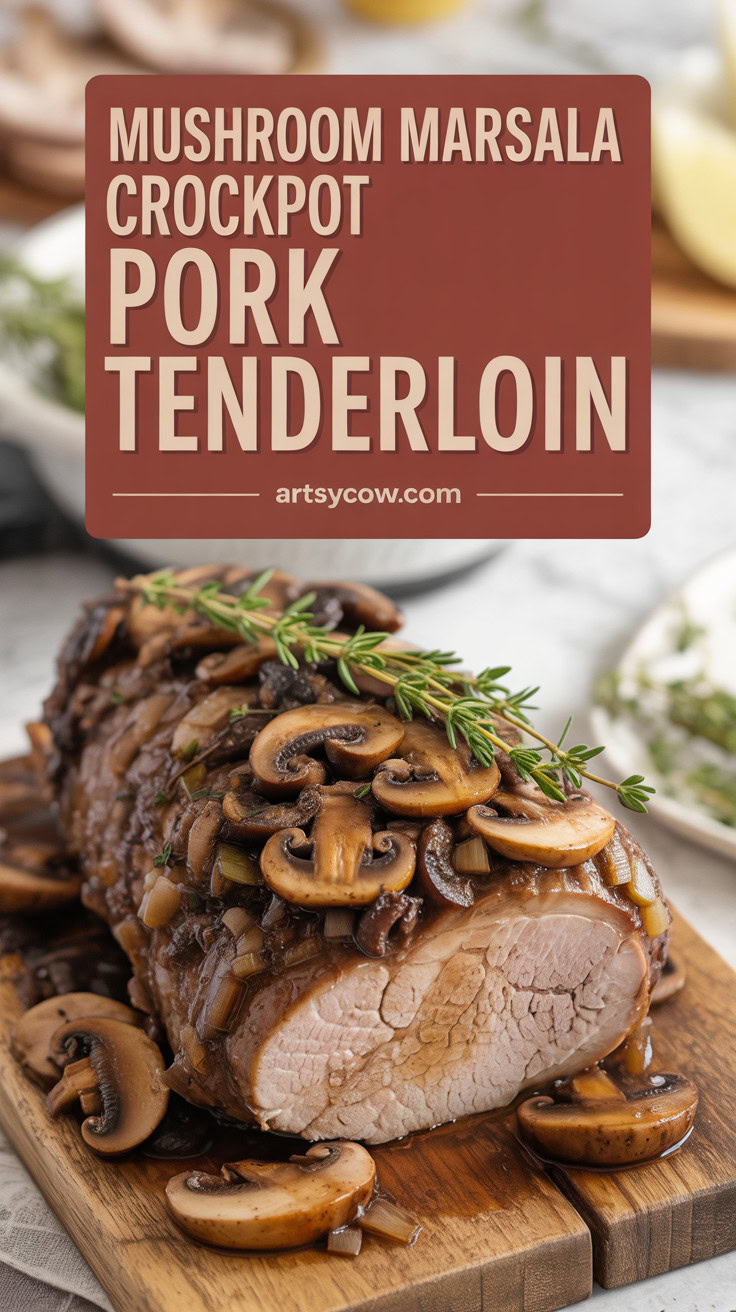
- Slowly whisk the slurry into the sauce and simmer until the sauce thickens to a glossy consistency.
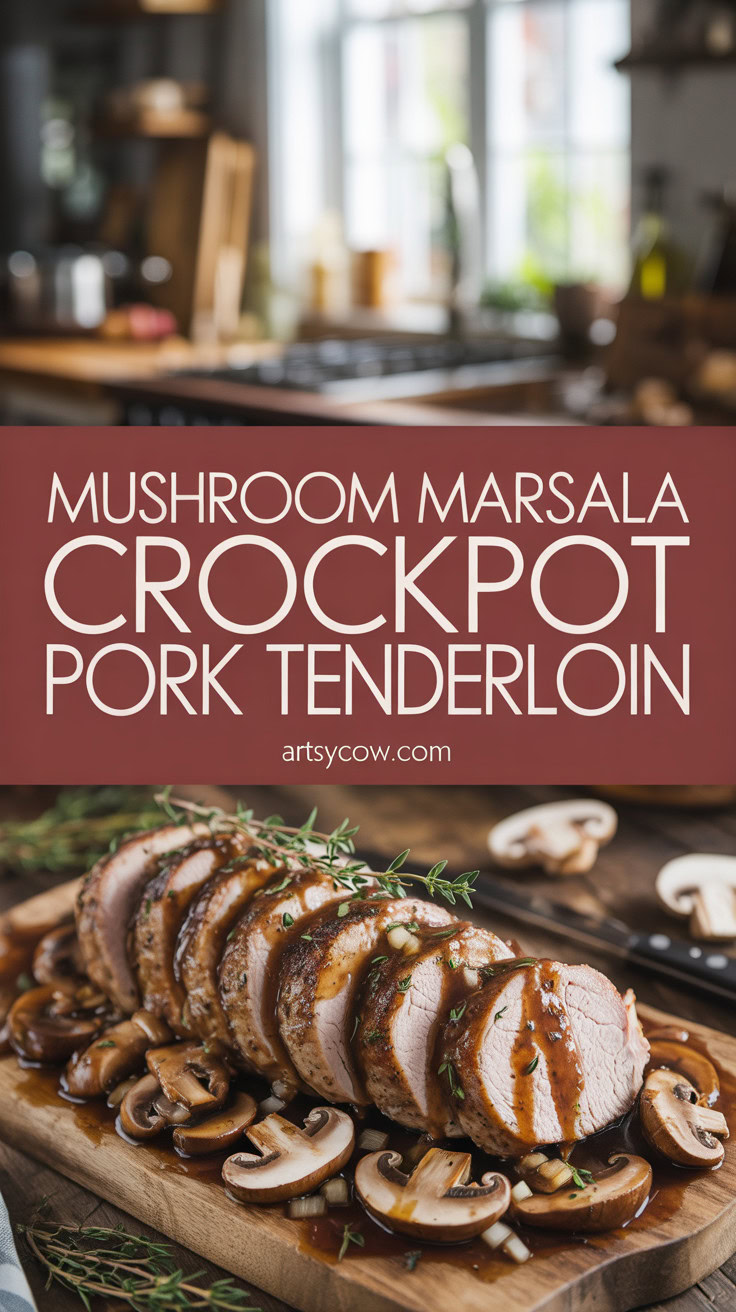
- Slice the pork tenderloin on a slight angle into medallions and return the slices to the skillet to warm briefly in the sauce.
- Use the ladle to spoon extra sauce over each slice when plating for that restaurant-level flourish.
- If you used kitchen twine to tie the pork before cooking, remove it now and discard it.
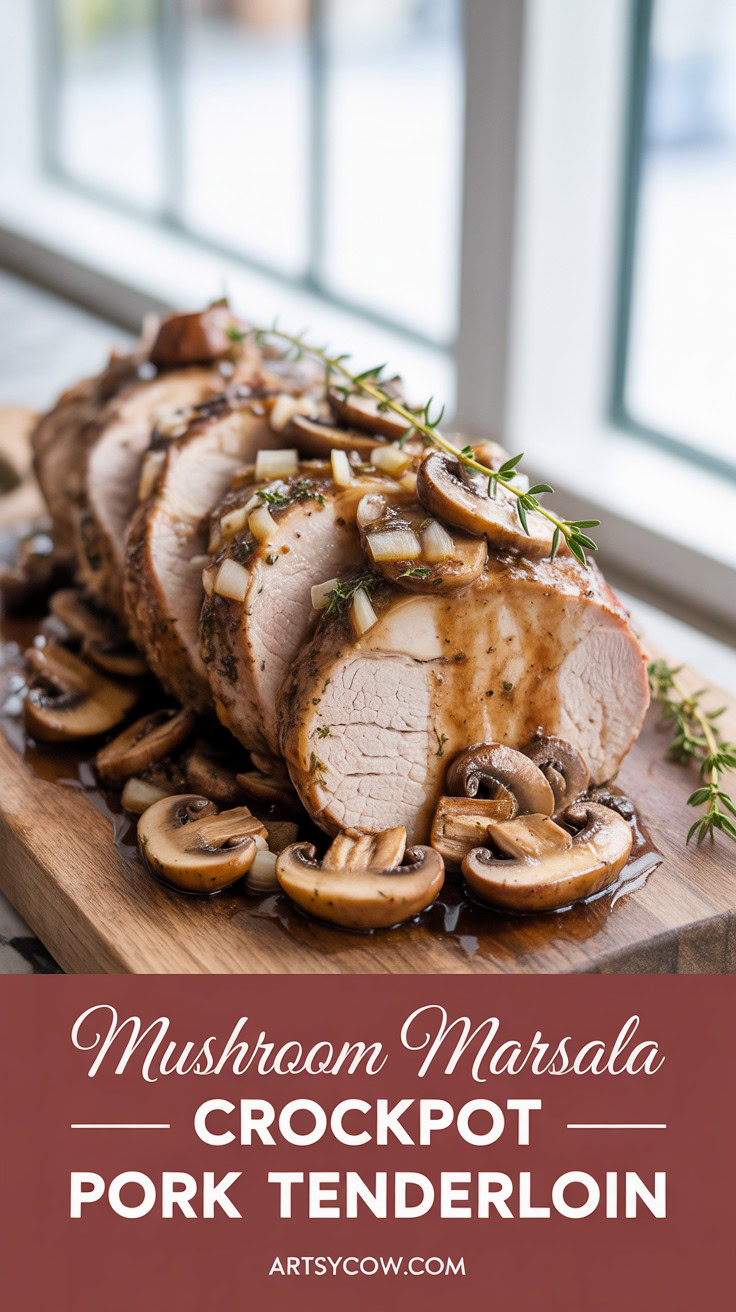
- Serve immediately while the sauce is silky and the pork is tender.
Good to Know
Tips: Always pat the pork dry before searing—dry skin equals better browning. That’s why searing first is worth the extra minute.
Gluten-free option: Skip the flour dredge and swap cornstarch for thickening; use gluten-free Worcestershire if needed. Wine swap: No Marsala?
A dry sherry or a mix of white wine and a splash of brandy will step in nicely. Make-ahead: You can cook the pork a day ahead and keep the sauce separate; rewarm gently and slice before serving.
Variations: Stir a splash of cream into the sauce at the end for a richer, creamy Marsala. Add a chopped herb garnish for freshness.
Serving suggestions: Spoon the pork and sauce over mashed potato, creamy polenta, or buttered egg noodle. Add a simple green veg on the side to keep things balanced.
Timing note: Cook low and slow for the most tender result; overcooking will dry the pork. Use the meat thermometer to pull the pork at the right moment.
Leftovers: Store the sliced pork and sauce in one container for the next-day lunch; it reheats beautifully and makes for an excellent sandwich. Final chew: This recipe leans into current trends—single-pan simplicity, feel-good comfort, and mindful portioning.
It’s protein-forward and can be easily adapted for low-carb or gluten-free diets without losing any of the saucy joy.
