
Craving a dinner that tastes like a restaurant but requires zero small talk? This Peach Mustard crockpot pork tenderloin is your new lazy-weeknight hero.
It’s sweet, tangy, and just fancy enough to impress people who ask if you “catered.”
But here’s the catch! It practically cooks itself.
Contents
Equipment: Must-haves
- Crockpot (slow cooker)
- Cutting board
- Chef’s knife
- Measuring spoons
- Measuring cups
- Mixing bowl
- Tongs
- Meat thermometer
- Wooden spoon or heatproof spoon

Equipment: Nice-to-haves
- Searing pan or skillet (for a golden crust)
- Immersion blender or blender (to puree the peach sauce)
- Silicone brush (for finishing glaze)
- Slow cooker liner (for easy cleanup)
- Kitchen twine (to tie the tenderloin if needed)

Ingredients
- 1 pork tenderloin (about 1 to 1.5 lb)
- 1 ripe peach, peeled and chopped
- 2 teaspoon Dijon mustard
- 1 teaspoon whole grain mustard
- 1 tablespoon honey
- 1 tablespoon apple cider vinegar
- 1 garlic clove, minced
- 1 small onion, thinly sliced
- 1/2 cup chicken broth
- 1 teaspoon soy sauce
- 1 tablespoon olive oil
- 1 teaspoon salt
- 1/2 teaspoon black pepper
- 1/2 teaspoon smoked paprika
- 1/2 teaspoon dried thyme
- 1 bay leaf
- 1 tablespoon cornstarch
- 2 tablespoon water
- 1 tablespoon butter (optional, for gloss)
- 1 tablespoon fresh parsley, chopped (for garnish)
Instructions
- Pat the pork tenderloin dry and season with salt, pepper, smoked paprika, and thyme.
- Heat the searing pan over medium-high heat and add olive oil until shimmering.
- Sear the tenderloin on all sides until a golden crust forms, then transfer to the cutting board and set aside.
- In the mixing bowl combine peach, Dijon mustard, whole grain mustard, honey, apple cider vinegar, minced garlic, soy sauce, and chicken broth.
- Use the immersion blender or blender to puree the peach mixture until mostly smooth but still a little textured.
- Place the sliced onion in the bottom of the crockpot and lay the seared tenderloin on top.
- Pour most of the peach-mustard sauce over the pork, reserving a little for finishing.
- Tuck the bay leaf into the sauce and cover the crockpot.
- Cook on low until the pork reaches safe internal temperature and is tender when probed with the meat thermometer.
- When the pork is done, transfer it to the cutting board and tent with foil to rest while you finish the sauce.
- Pour the cooking liquid into the searing pan or a small saucepan and bring to a simmer over medium heat.
- Make a slurry by stirring cornstarch into water until smooth, then whisk the slurry into the simmering sauce.
- Simmer until the sauce thickens to a glaze-like consistency, stirring with the wooden spoon.
- Swirl butter into the sauce off the heat for a shiny finish if using, and adjust seasoning with salt and pepper.
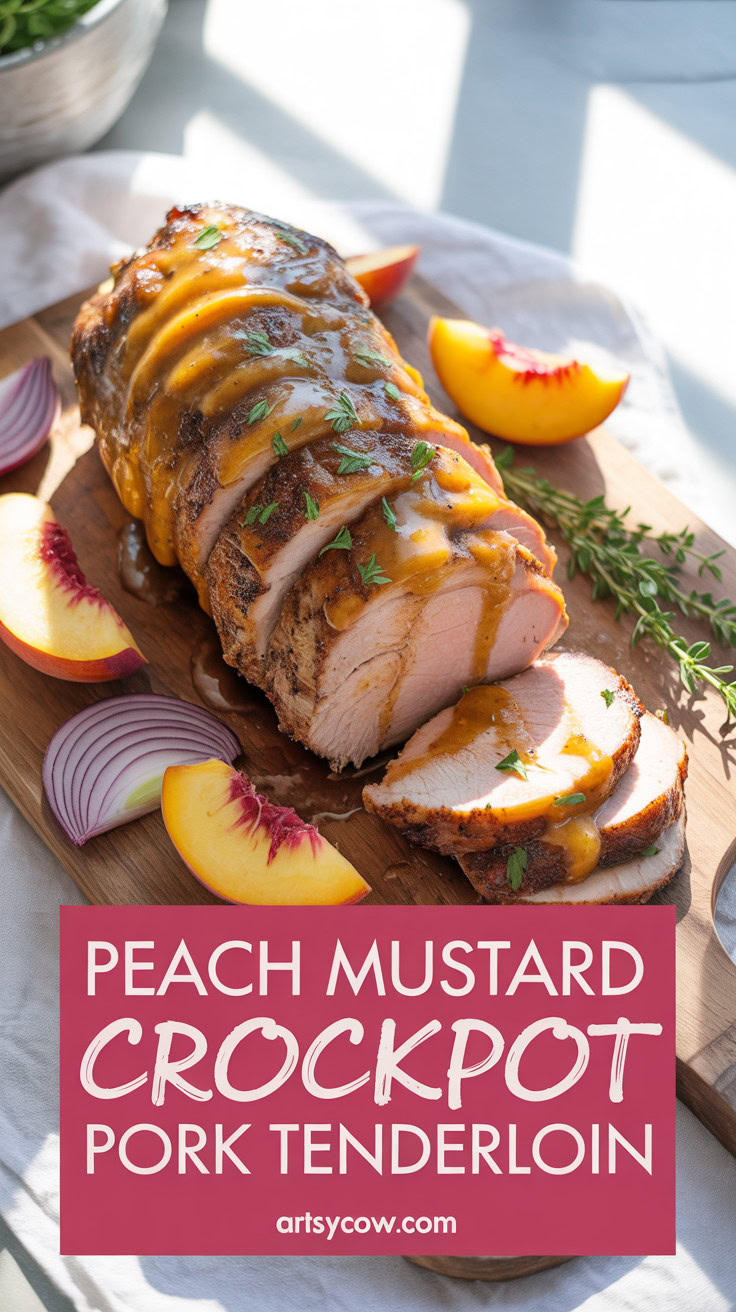
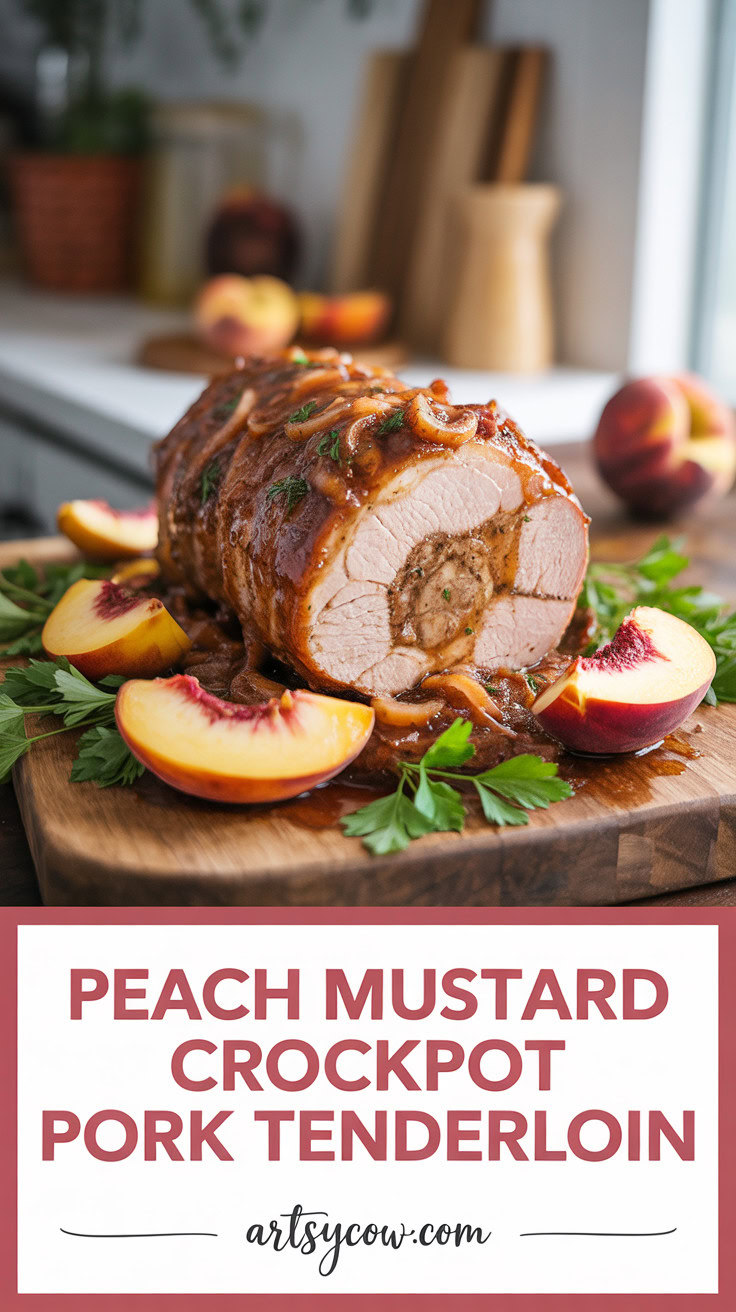
- Slice the rested pork tenderloin into medallions using the chef’s knife and arrange on a serving plate.
- Brush or spoon the thickened peach-mustard sauce over the pork medallions and sprinkle with fresh parsley.
- Serve immediately with your favorite side—rice, mashed potato, or a simple green salad.
Good to Know
Tip: Searing the pork first creates a beautiful crust and adds depth to the sauce. That’s why the searing pan is worth the extra step.
Variation: Swap the fresh peach for a frozen peach if that’s what you have. It will still be delicious.
Thickening hint: If the sauce is too thin straight from the crockpot, the cornstarch slurry will rescue it. If it’s too thick, stir in a splash of chicken broth.
Make-ahead: You can prepare the peach-mustard sauce a day ahead and refrigerate it. Reheat gently and pour over the seared pork before slow cooking.
Serving suggestion: Spoon extra sauce over rice or mashed potato to soak up every glorious drop. Leftovers: Slice cold pork for sandwiches with a smear of extra mustard sauce.
Your lunchbox will thank you. Food safety: Pork is done when the internal temperature reaches the safe range on your meat thermometer.
Resting the meat lets juices redistribute so it stays juicy. Final chef-level wink: If you want a hint of smoke, add a tiny pinch of smoked paprika to the sauce.
It plays very nicely with peach and mustard—like a culinary rom-com.
