
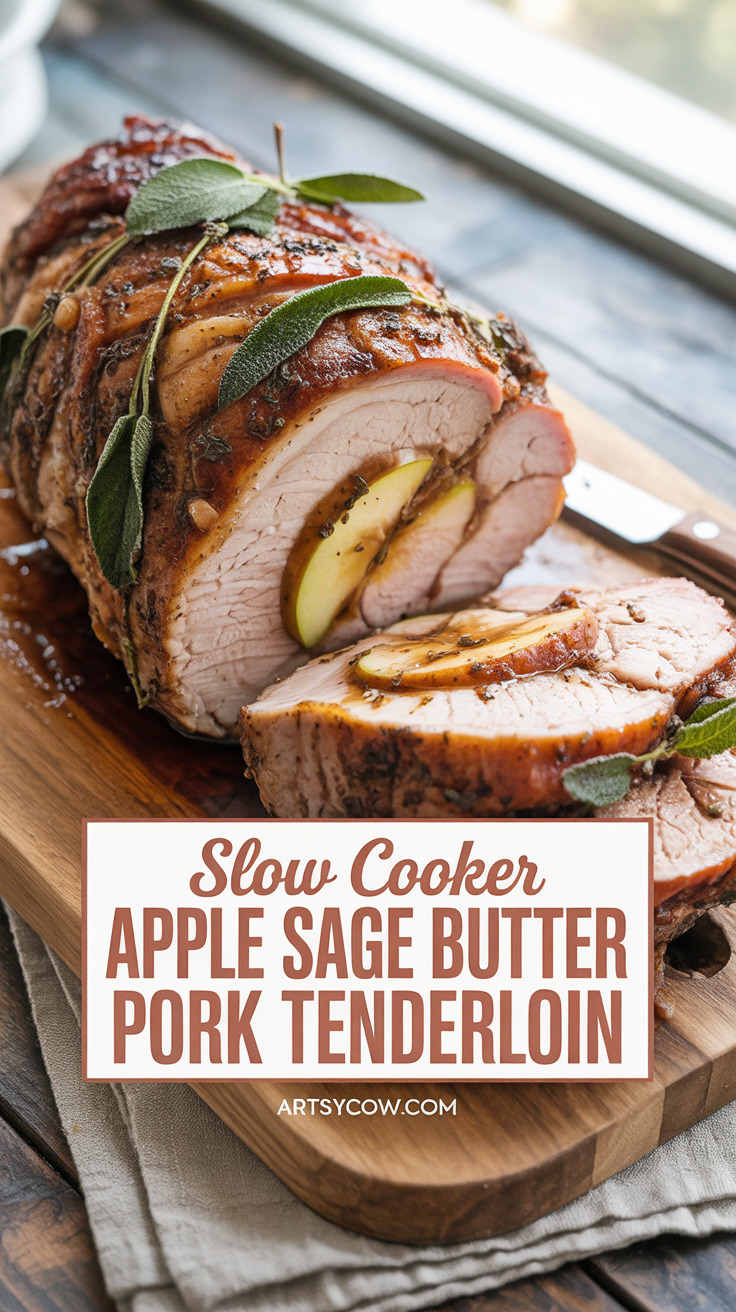
Craving a weeknight dinner that smells like fall and requires almost zero babysitting? You’re in the right place.
Slow cooker magic meets cozy apple sage butter vibes. But here’s the catch!
You still get a crisp exterior because we give the pork a little pan action first. That’s why this recipe feels fancy without the effort.
Contents
Equipment: Must-haves
- Slow cooker
- Sharp knife
- Cutting board
- Measuring spoons
- Tongs
- Mixing spoon
Equipment: Nice-to-haves
- Heavy skillet (cast iron or stainless steel) – used for searing and deglazing
- Meat thermometer – used to check doneness
- Small bowl for mixing a slurry
Ingredients
- 1 pork tenderloin (about 1 to 1.5 lb), trimmed
- 1 tablespoon olive oil
- 1 clove garlic, minced
- 1 small shallot, minced
- 1 apple, peeled and thinly sliced (a tart-sweet variety works best)
- 2 tablespoons brown sugar
- 2 tablespoons Dijon mustard
- 1 tablespoon apple cider vinegar
- 1/4 cup chicken broth
- 2 tablespoons unsalted butter
- 1 tablespoon fresh sage, chopped
- 1 teaspoon fresh thyme leaves, chopped
- 1 teaspoon cornstarch (optional, for thickening)
- Salt, to taste
- Black pepper, freshly ground, to taste
- Extra sage leaf for garnish (optional)
Instructions
- Pat the pork tenderloin dry with paper towels and season it all over with salt and black pepper.
- Heat a heavy skillet over medium-high heat and add the olive oil until it shimmers.
- Sear the pork on all sides until golden brown to develop flavor and texture.
- Transfer the seared pork to the slow cooker and set it aside while you make the apple sage butter base.
- Lower the skillet heat and add butter; melt it and then sauté the shallot and garlic until fragrant and softened.
- Add the apple slices to the skillet and cook briefly until they begin to soften and caramelize around the edges.
- Stir in the brown sugar, Dijon mustard, apple cider vinegar, chicken broth, chopped sage, and thyme, scraping up any browned bits from the pan to deglaze it.
- Let the skillet mixture simmer for a minute so flavors marry, then spoon the apple sage butter mixture over the pork in the slow cooker.
- Cover and cook on low until the pork reaches a safe internal temperature, checking with the meat thermometer for doneness.
- Remove the pork to a cutting board and tent loosely with foil to rest while you finish the sauce.
- Pour the cooking liquid from the slow cooker back into the skillet and simmer to concentrate the flavor.
- If you want a thicker glaze, whisk the cornstarch with a little cold water in a small bowl then stir it into the simmering sauce until it thickens.
- Finish the sauce by stirring in a small pat of butter for shine and a final hit of richness, and adjust seasoning with salt and pepper as needed.
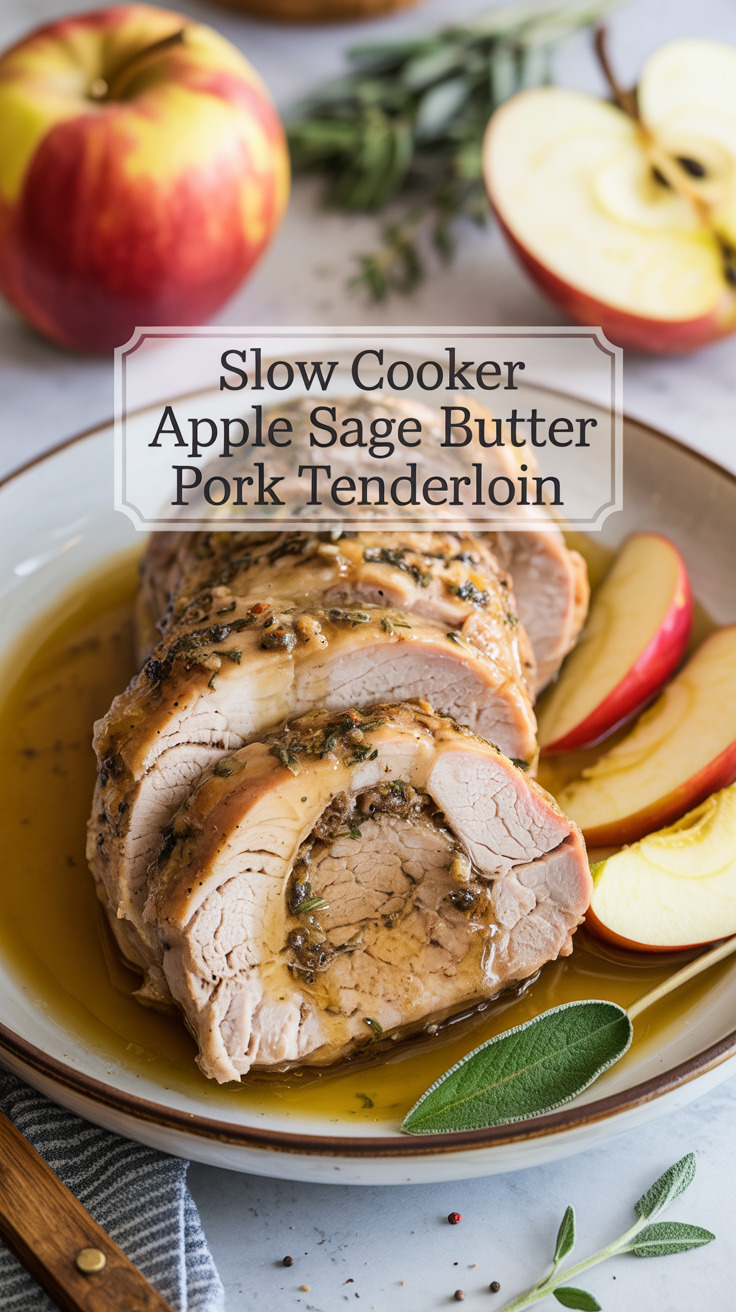
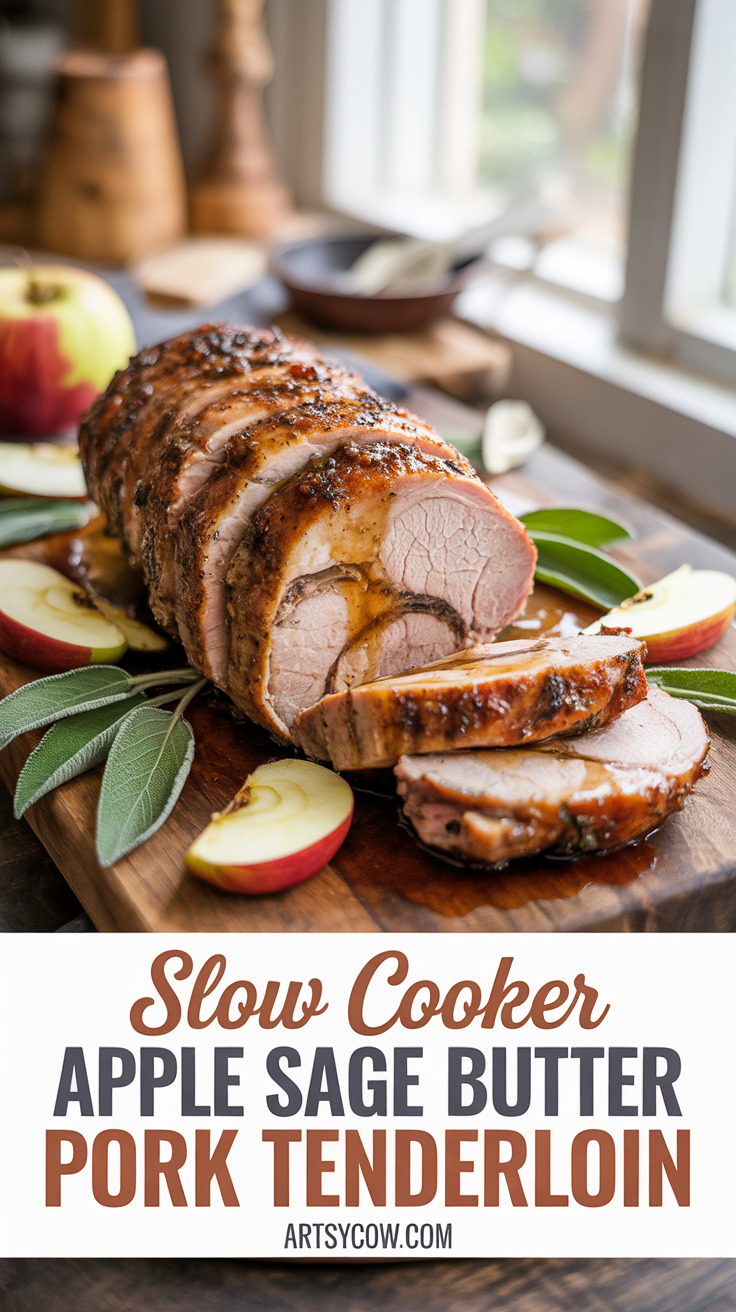
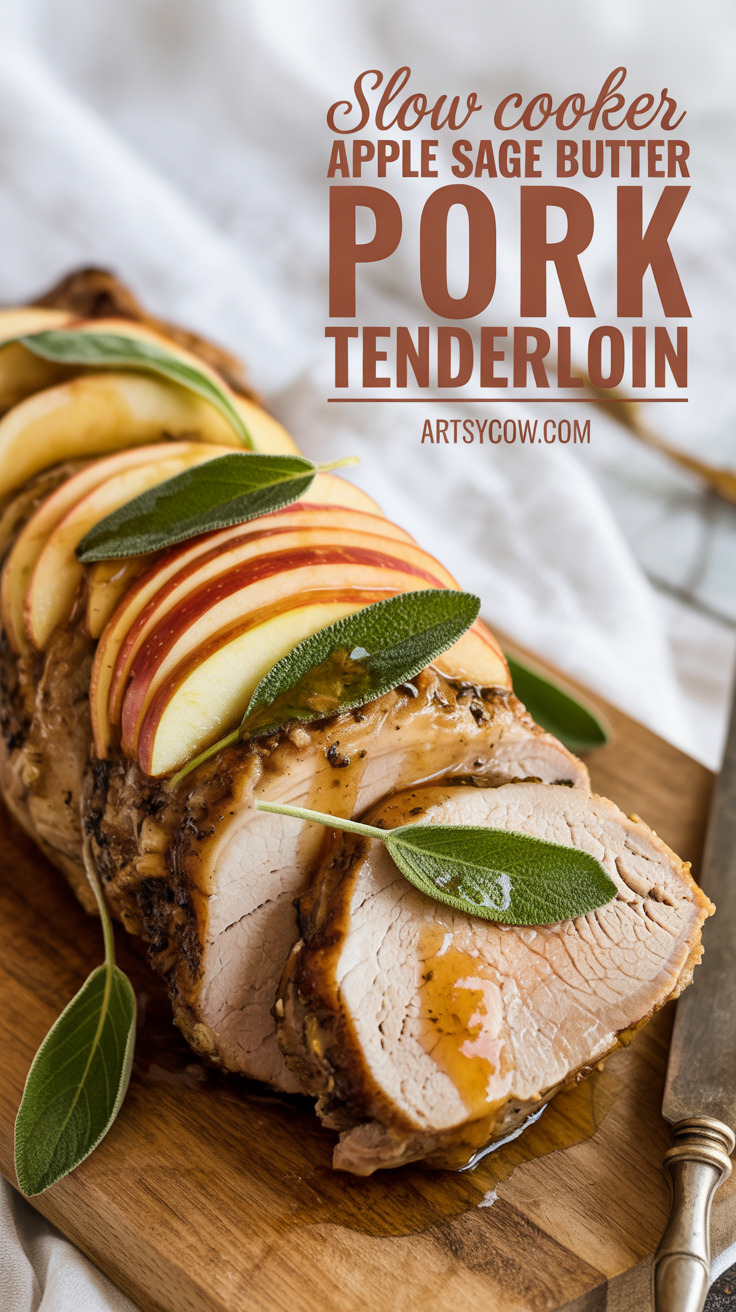
- Slice the pork against the grain into medallions, arrange on a platter, and spoon the apple sage butter sauce over the top.
- Garnish with an extra sage leaf if you’re feeling fancy and serve immediately.
What Else You Should Know
Timing: Plan for several hours of hands-off cooking—this recipe prefers a slow, gentle heat to keep the pork tender and juicy. Low and slow is your friend.
Internal temperature: Pork is safe when it reaches the correct internal temperature, so use your meat thermometer to check for doneness. That’s why a thermometer is on the nice-to-haves list.
Substitutions: No fresh sage? Use a touch of dried sage or swap with fresh rosemary for a different but tasty herbal note.
No chicken broth? Water plus a splash of soy sauce or a bouillon cube will do.
Variations: Add a splash of apple brandy or bourbon to the skillet for a boozy, caramelized twist. Toss in a small diced carrot for extra sweetness and body if you like.
Serving suggestions: Serve with creamy mashed potato, buttered noodles, or roasted root vegetable to soak up that apple sage butter. A crisp green salad provides a bright contrast.
Make-ahead and storage: Cooked pork keeps well in the fridge for a couple of days and tastes great cold the next day. Store sauce separately if you want to reheat without overcooking the pork.
But here’s the catch! Don’t skip the sear.
It adds flavor and prevents the pork from looking like it swam in the slow cooker for too long. That’s why the skillet step matters.
Small tip: If you want an extra glossy finish, brush the sliced pork with a little of the warmed sauce right before serving. Your dinner guests will think you spent all day fussing—no one needs to know it was mostly hands-off.
