
Burned dinner again? Don’t worry — slow cooker to the rescue with a recipe that practically cooks itself while you pretend to be busy.
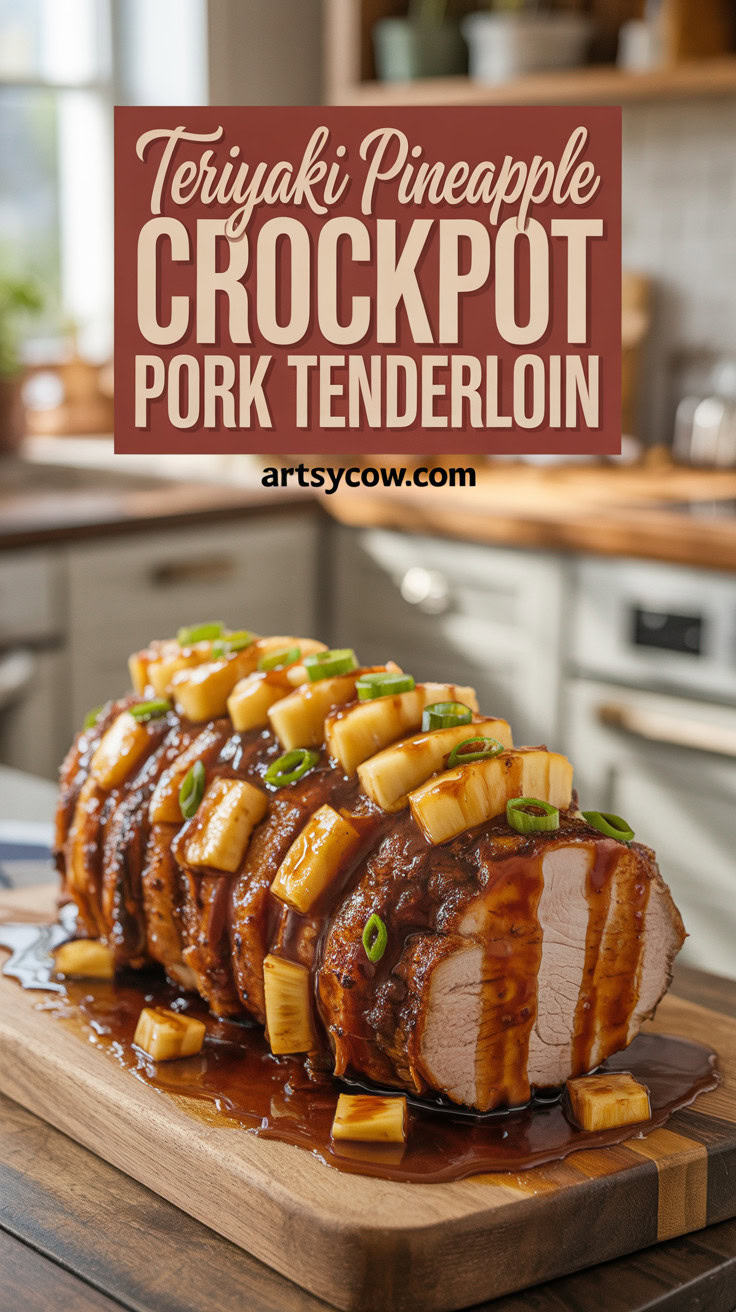
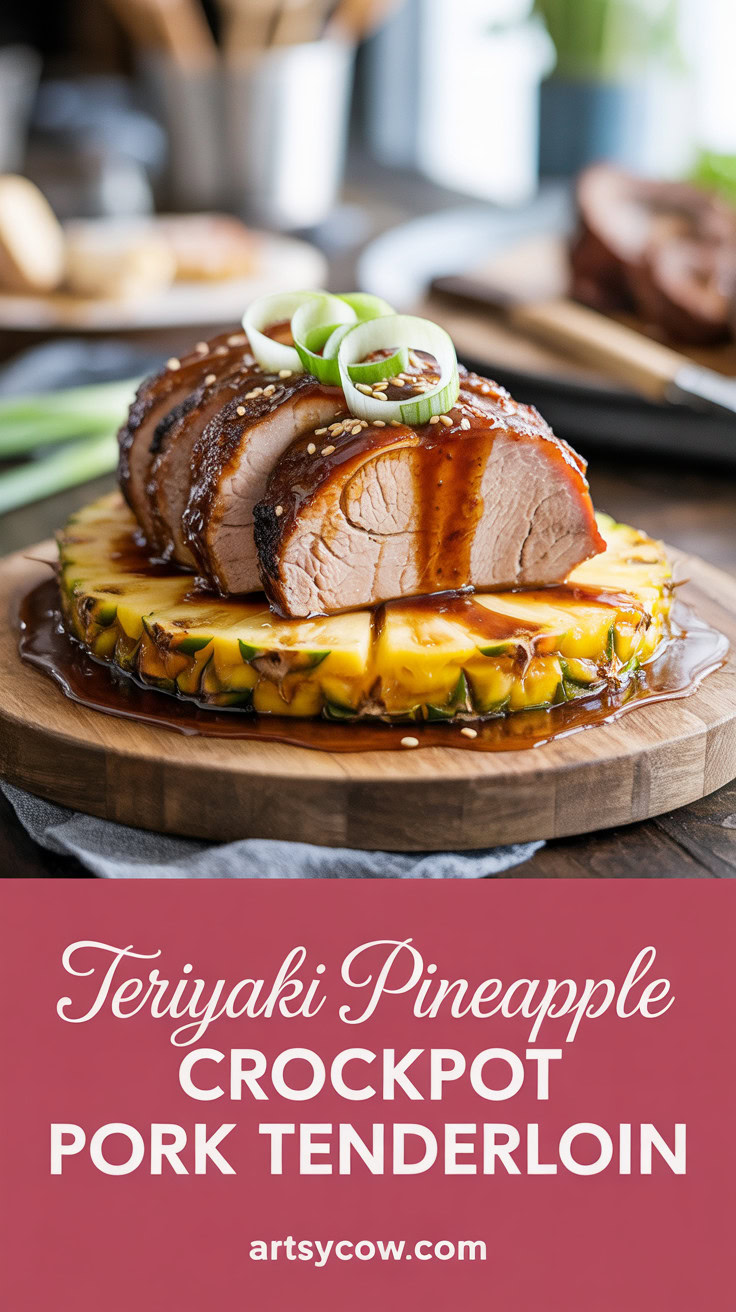
This Teriyaki pineapple crockpot pork tenderloin turns pantry staples into a sticky, sweet, and savory dinner that makes people forgive you for microwaving yesterday’s container. It’s simple, hands-off, and oddly impressive—like you planned this all along.
That’s why this is the dinner you bring to a weeknight that needs saving.
Contents
Equipment: Must-haves
- Crockpot (slow cooker)
- Cutting board
- Sharp knife
- Measuring spoon
- Mixing bowl
- Tongs
Equipment: Nice-to-haves
- Skillet (for optional browning)
- Meat thermometer
- Basting brush
- Serving platter
- Small whisk
Ingredients
- 1 pork tenderloin (about 1 to 1.25 lb), trimmed
- 1/2 cup pineapple juice
- 1/3 cup soy sauce
- 2 tablespoon brown sugar
- 1 tablespoon rice vinegar
- 1 clove garlic, minced
- 1 teaspoon fresh ginger, grated
- 1 pineapple ring, chopped
- 1 tablespoon cornstarch
- 2 tablespoon water
- 1/2 teaspoon salt
- 1/4 teaspoon black pepper
- 1 green onion, thinly sliced (for garnish)
- 1 teaspoon sesame seed (for garnish, optional)
- 1 tablespoon olive oil (if browning in skillet)
Instructions
- Pat the pork tenderloin dry and season it with salt and black pepper.
- If using a skillet, heat the olive oil over medium-high heat and brown the pork briefly on all sides to build flavor, then transfer the pork to the crockpot.
- In a mixing bowl combine pineapple juice, soy sauce, brown sugar, rice vinegar, minced garlic, and grated ginger and whisk until the sugar starts to dissolve.
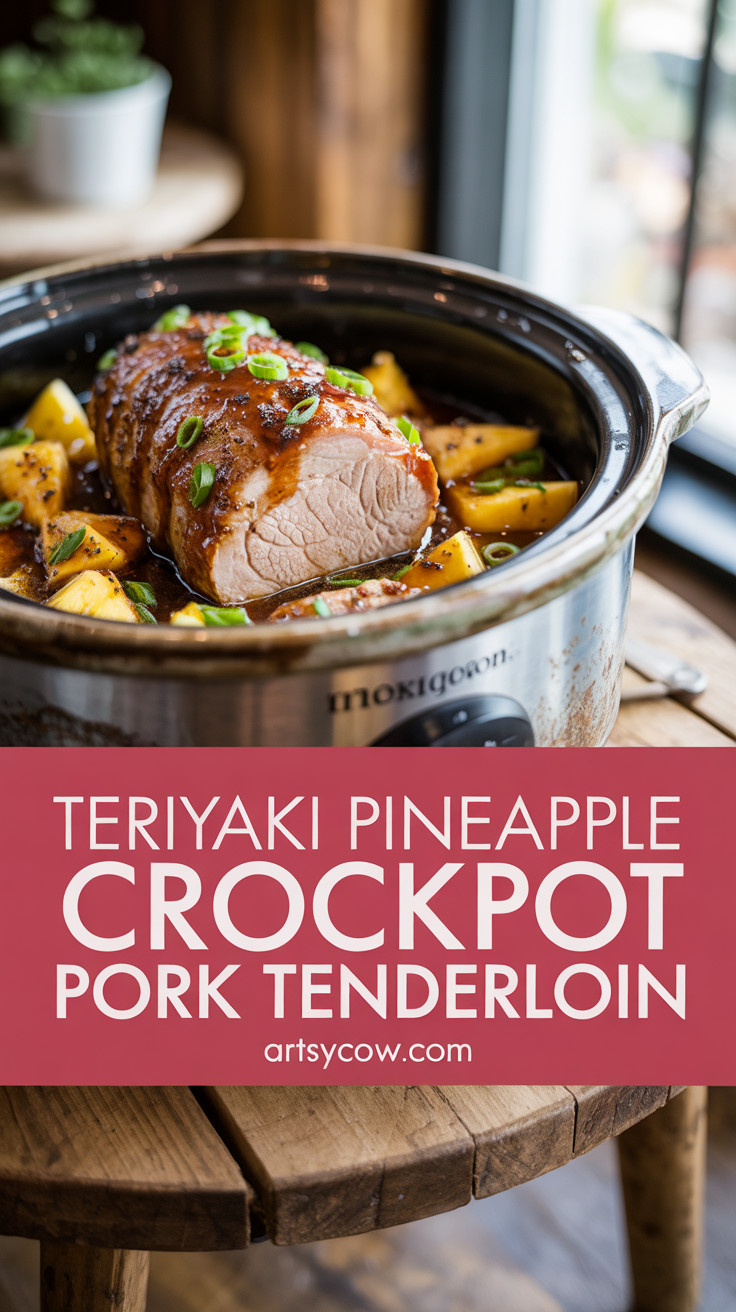
- Pour the teriyaki pineapple mixture over the pork in the crockpot.
- Scatter the chopped pineapple ring around and on top of the pork so every bite gets a little sunshine.
- Cover and cook on low until the pork is fork-tender and an instant-read thermometer reads the safe internal temperature, checking with the meat thermometer toward the end of cooking.
- About thirty minutes before the end of cooking, remove the pork to a plate and tent it so it can rest while you thicken the sauce.
- In a small bowl whisk the cornstarch with the water to make a smooth slurry using the small whisk.
- Pour the crockpot juices into a skillet and bring to a simmer on the stove, then whisk in the cornstarch slurry until the sauce becomes glossy and slightly thickened.
- If you have a basting brush, brush some of the thickened glaze over the pork for an extra sticky finish.
- Return the glazed pork to the crockpot briefly or place it on the serving platter and spoon extra sauce over the top.
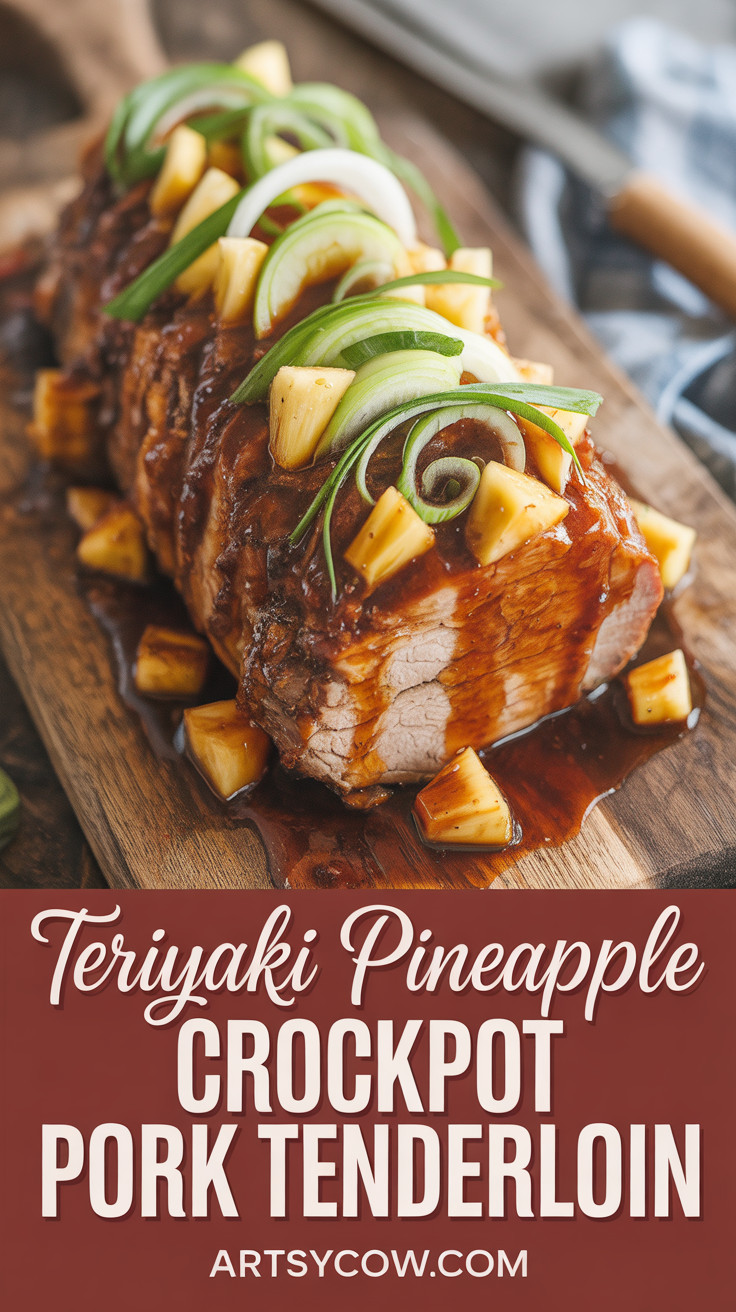
- Garnish with the thinly sliced green onion and sprinkle the sesame seed for a finishing touch.
- Slice the pork tenderloin against the grain and serve with extra sauce on the side so everyone gets a second swipe.
Good to Know
Tip: Browning the pork in a skillet first is optional, but it adds a deep caramelized flavor that makes the final dish feel restaurant-level without extra effort. Variation: Swap the rice vinegar for apple cider vinegar if you like a fruitier tang.
Serving suggestion: Serve the sliced pork over steamed rice, or tuck it into a soft bun for a teriyaki sandwich—either way, use the extra sauce like it owes you money. Storage: Keep leftovers in an airtight container and refrigerate for up to three days; reheat gently so the pork stays tender.
Diet note: This recipe is naturally gluten-free if you use gluten-free soy sauce or tamari — that’s an easy swap for a big win. Quick trick: If your sauce is too thin after thickening, simmer it a little longer uncovered to reduce and concentrate the flavor.
Final fun fact: Pineapple contains an enzyme that helps tenderize meat, so pairing it with pork tenderloin is basically science doing the heavy lifting. Remember: Slow cooking is forgiving, so check once and then let the crockpot do its magic while you pretend you weren’t watching the clock the whole time.
