
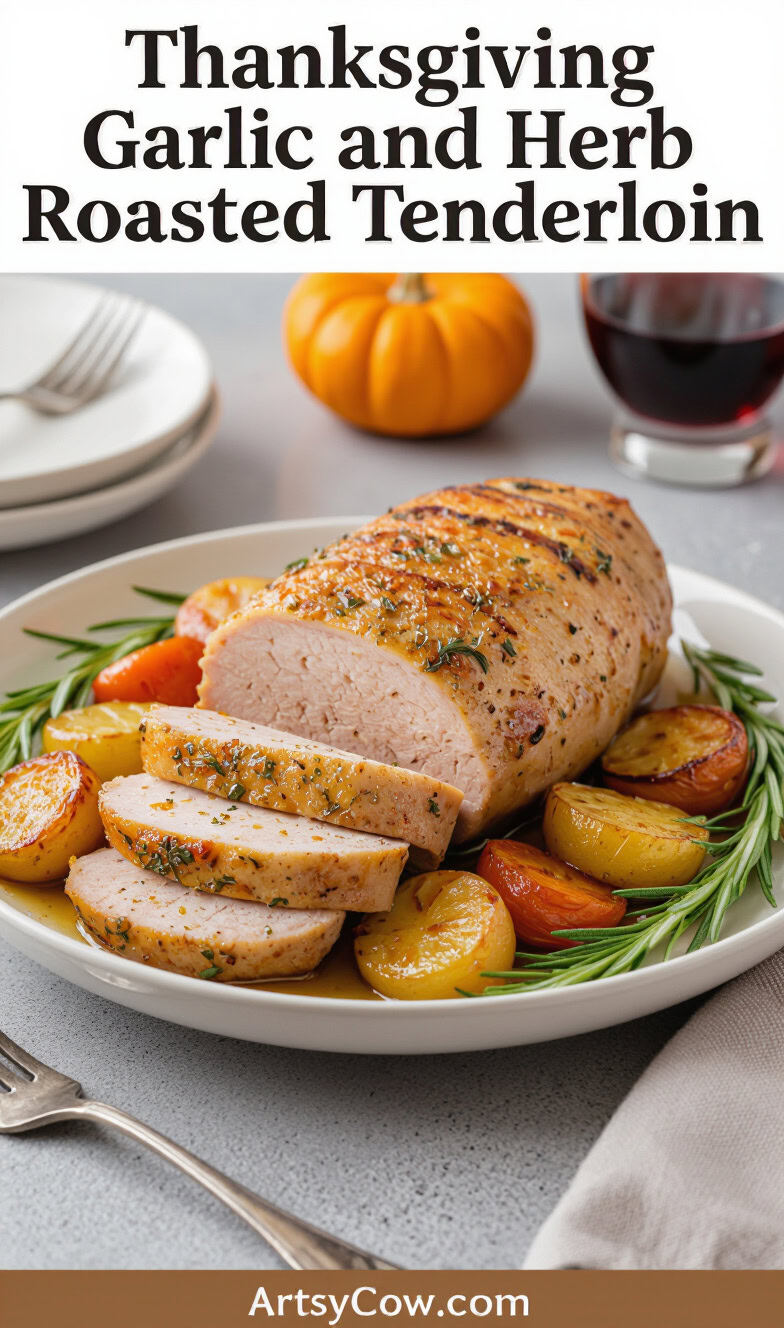
If you want Thanksgiving dinner guests to forget about turkey, this Garlic and Herb Roasted Pork Tenderloin will do the trick. It’s juicy, full of flavor, and might just make you the family legend who flipped the script on old traditions.
After all, who says only turkey can steal the spotlight?
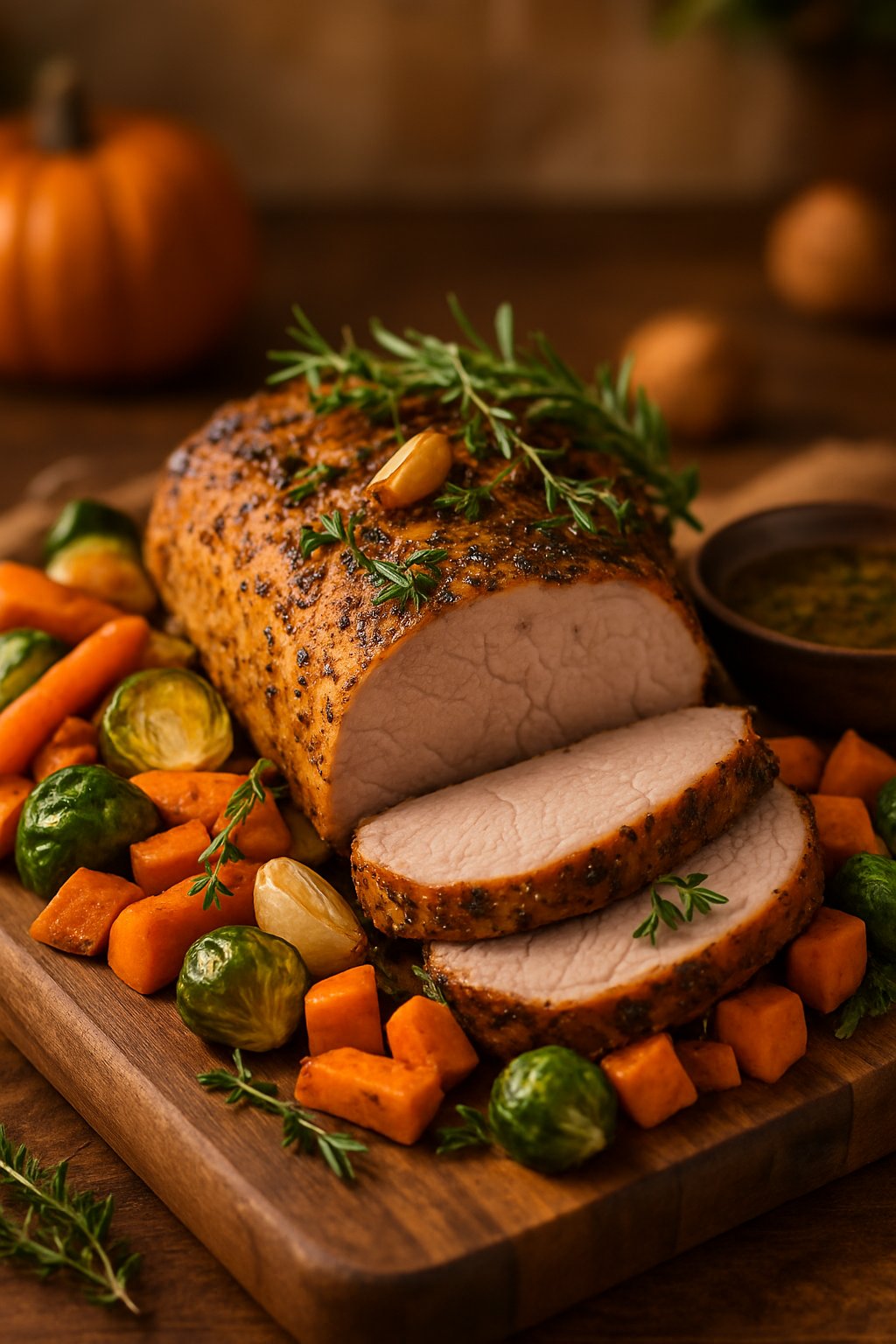
Imagine your house filled with the smells of roasting garlic, fresh herbs, and sizzling pork. It’s the kind of aroma that makes you wish Thanksgiving came twice a year.
This easy pork tenderloin recipe is perfect if you want something a little different and way more exciting than the usual fare.
Ready to wow both the die-hard turkey lovers and the rebels at your table?
Grab your apron and keep reading—serious taste bud happiness is just a few steps away.
Contents
- 1 Equipment
- 2 Ingredients
- 3 Instructions
- 4 What You Need To Know
- 5 Frequently Asked Questions
- 5.1 What’s the secret to not turning that pork tenderloin into a chewy pair of slippers?
- 5.2 Does the garlic in this recipe mean I’ll be vampire-proof for the evening?
- 5.3 Herbs are confusing—will using dried instead of fresh make me a culinary outlaw?
- 5.4 How do I avoid playing ‘hide and seek’ with the correct inner temperature of my pork tenderloin?
- 5.5 Can someone tell me why my smoke alarm is so into this recipe every time I try it?
- 5.6 Leftovers again? How do I make this pork tenderloin encore as applause-worthy as its debut?
- 6 Author
Equipment
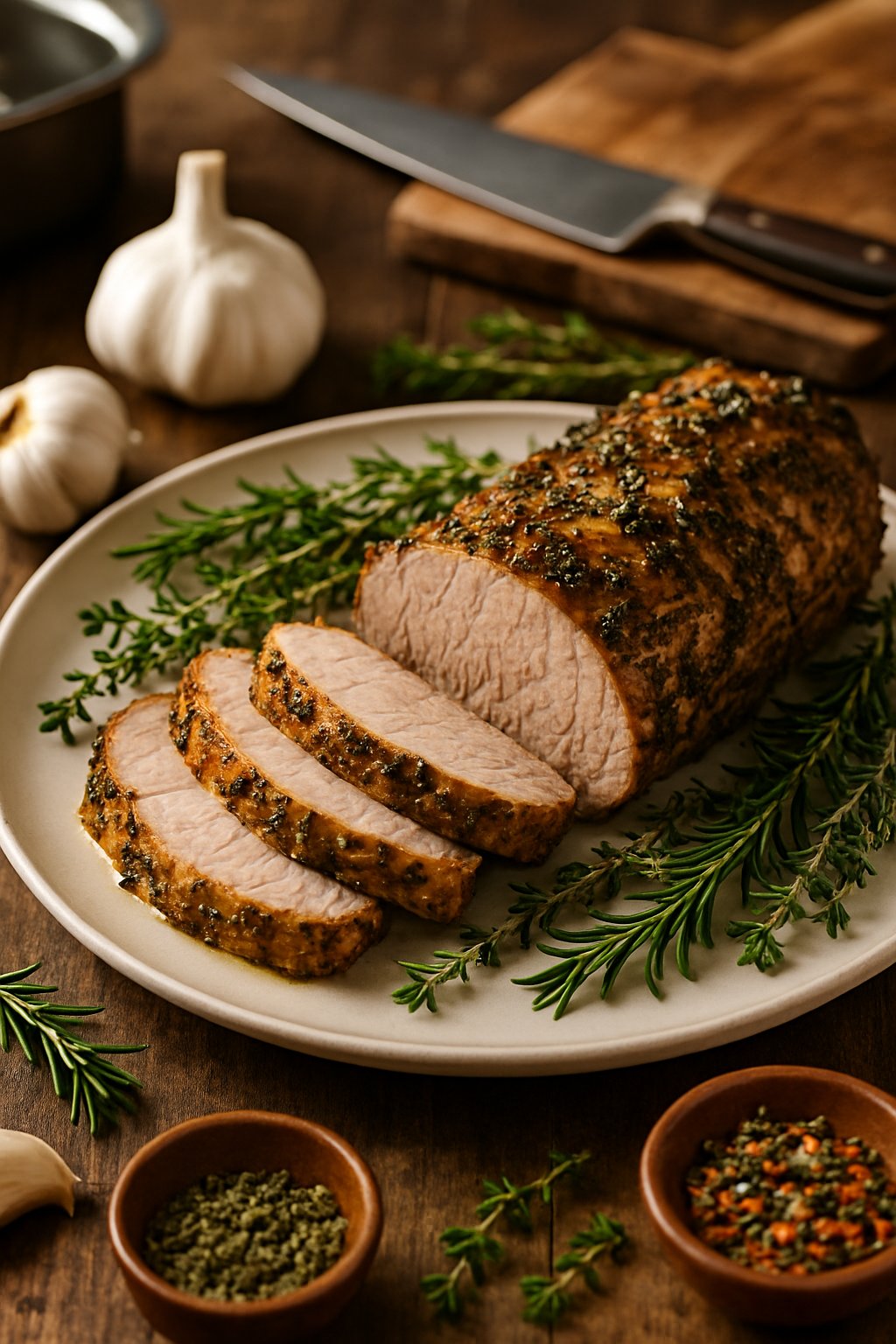
Before you leap into chef mode, make sure you have the right tools. Unless you think cooking pork with just your bare hands is a good idea. Spoiler: it’s not.
Here’s what you’ll need for your Thanksgiving garlic and herb roasted pork tenderloin.
Must-Have Tools
- Roasting pan or sheet pan: Nothing fancy, just big enough to fit your pork and let it roast without crowding.
- Oven-safe thermometer: Because guessing if meat is done is a gamble, and nobody wants to lose Thanksgiving dinner.
- Sharp knife: For trimming fat, slicing pork, and making you feel like a pro.
- Cutting board: For all the chopping, slashing, and general mayhem.
- Mixing bowl: Toss your herbs, spices, and personal flair without making a kitchen disaster.
- Tongs: To flip the tenderloin like a pro (and keep your fingers nice and un-burnt).
- Small saucepan (optional): If you want to make a quick pan sauce and impress your guests with “gravy.”
Handy Extras
If you love less cleanup and more free time, line your pan with aluminum foil or parchment paper. Trust me, your future self doing dishes will thank you.
Want the pork to look extra golden? Use a meat brush to spread on oil or extra herbs—there are points for style!
Ingredients
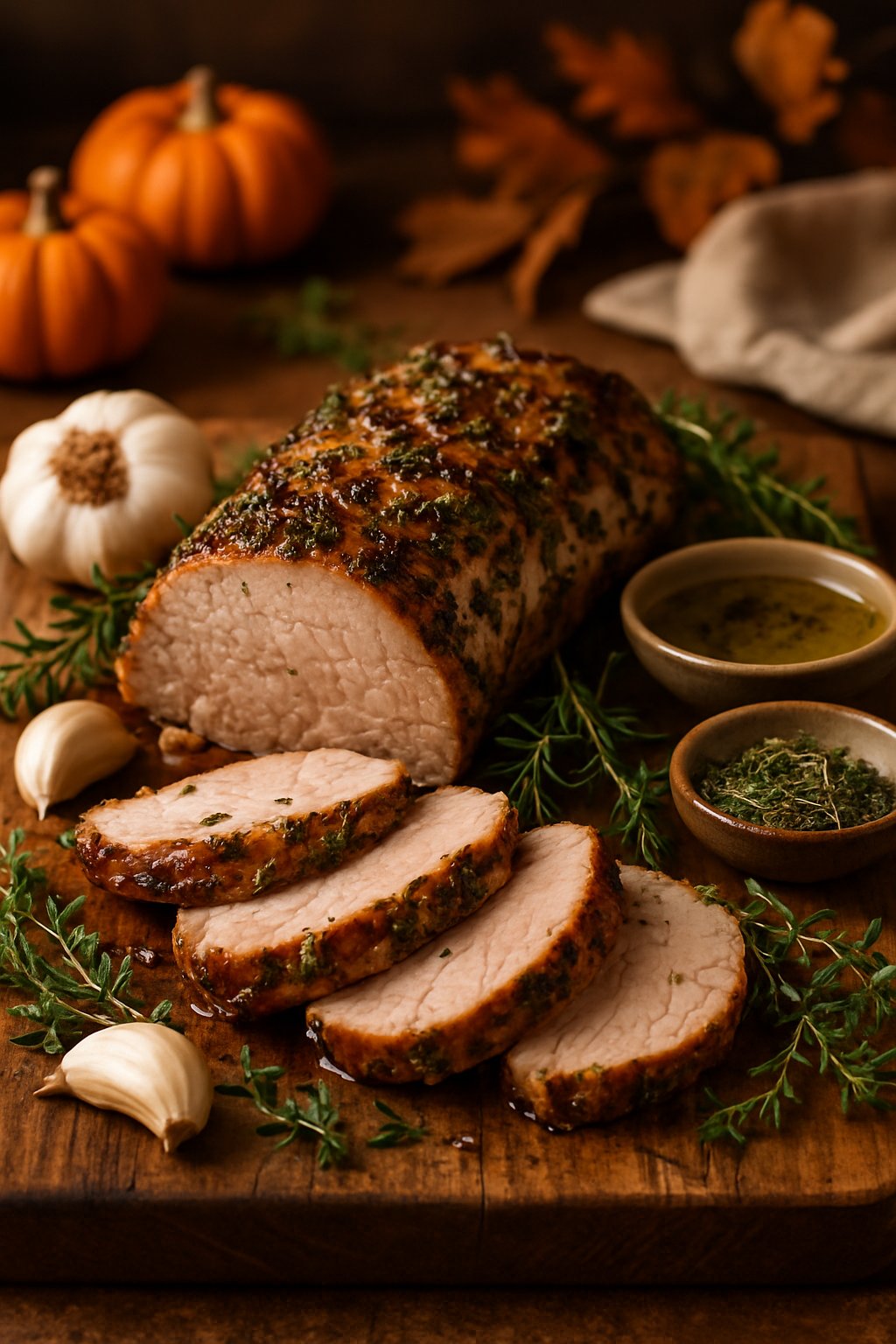
Let’s talk ingredients. You won’t need a magic wand or a chef’s hat, just a few things you likely already have in your kitchen.
Here’s your shopping list:
| Ingredient | Amount |
|---|---|
| Pork tenderloin | 2 pounds |
| Fresh garlic (minced) | 4 cloves |
| Fresh rosemary (chopped) | 1 tablespoon |
| Fresh thyme (chopped) | 1 tablespoon |
| Fresh sage (chopped) | 1 tablespoon |
| Olive oil | 2 tablespoons |
| Salt | 1 teaspoon |
| Black pepper | 1/2 teaspoon |
| Dijon mustard | 1 tablespoon |
| Lemon zest | 1 teaspoon |
You can swap out fresh herbs for dried ones if you must, but don’t blame me if your pork is a little less “Thanksgiving in your mouth” and a bit more “Tuesday night in a hurry.”
Feel free to get wild with extra herbs if you love a flavor explosion, but this list covers the basics for a classic garlic and herb roasted pork tenderloin.
Try not to drop the lemon zest on the floor. The dog might get there first.
Instructions
- First, preheat your oven. Make it nice and hot—think “summer in Arizona,” not “warm bathwater.”
- Grab a large oven-safe skillet or roasting pan. You don’t want to play musical chairs with cookware mid-recipe.
- Pat your pork tenderloin dry with paper towels. This step is important for maximum browning and boosting your chef confidence.
- Rub the pork all over with the olive oil, then sprinkle on the garlic, rosemary, thyme, sage, salt, and pepper. Pretend your pork is heading out for a fancy Thanksgiving party and needs to look its best.
- Sear the tenderloin in the pan over medium-high heat until brown on all sides. Keep turning it until it gets a golden-brown tan—think “day at the beach” instead of “forgot to wear sunscreen.”
- Toss it in the oven and roast until the pork reaches a safe internal temperature. Trust your trusty thermometer more than your Uncle Bob’s guesswork.
- Let the pork rest before slicing. Resting isn’t just for you after a big meal—it helps keep those juices in the meat.
Now, slice and serve. Enjoy being the person who made everyone say, “Wait, why aren’t we having turkey again?”
For more detail on preparation, check out this herb roasted pork tenderloin guide.
What You Need To Know
Cooking pork tenderloin for Thanksgiving is a game-changer if you want something that’s not turkey and cooks faster than your family finds the dessert table.
Pork tenderloin is lean, tender, and friendly for both tight budgets and ovens that would rather nap.
It’s a solid option when you want to keep things simple but still impress the crowd. Plus, it’s a relief not having to wrangle a giant bird for hours.
There’s a certain satisfaction in serving something that surprises people in the best way. If you’re not convinced yet, just wait until the aroma hits the kitchen.
You can find more tips in some roasted pork tenderloin ideas.
Frequently Asked Questions
Cooking pork tenderloin can turn into an action movie—there’s timing, temperature, and a little bit of drama.
Garlic, herbs, and the battle against your smoke alarm all play their parts.
What’s the secret to not turning that pork tenderloin into a chewy pair of slippers?
You need juicy, tender pork, not something that bites back. Start by not overcooking it.
Pork is safe to eat at 145°F, so get yourself a reliable meat thermometer and check temperature early and often. Resting your tenderloin for 5–10 minutes is like letting it chill after a workout—it locks in the juices.
If you want to see step-by-step help, try this roasted pork tenderloin guide.
Does the garlic in this recipe mean I’ll be vampire-proof for the evening?
Short answer: Yes, if a bloodsucker shows up at Thanksgiving, you’ll be ready. You’ll also keep everyone in the room very aware of your presence.
The amount of garlic used is enough for big flavor, not horror movie status, but don’t invite any vampires just in case.
Herbs are confusing—will using dried instead of fresh make me a culinary outlaw?
You can swap fresh for dried herbs and keep your good standing in the kitchen. Use one-third the amount of dried herbs, since they pack a stronger punch.
So if your fresh rosemary ran off, dried will have your back. No culinary police will burst in—promise.
How do I avoid playing ‘hide and seek’ with the correct inner temperature of my pork tenderloin?
No one wants to guess if dinner is done. Use an instant-read thermometer for your pork tenderloin’s center.
Stick it in the thickest part and look for 145°F. Take it out of the oven then, even if the outside looks barely ready.
Rest it under loose foil for a juicy finish. Dinner, not guessing game.
Can someone tell me why my smoke alarm is so into this recipe every time I try it?
If your kitchen turns into a fire drill, your pan’s probably too hot or your oil’s getting smoky. Try roasting at a lower temp, like 400°F, and keep your pork dry before searing.
Use an oil with a high smoke point. Also, give that smoke alarm a pep talk, or at least move it further from the oven.
Leftovers again? How do I make this pork tenderloin encore as applause-worthy as its debut?
Slice leftover pork thin and layer it into sandwiches with some mustard or cranberry sauce. That’s honestly one of the easiest ways to make it feel brand new.
Or, heat up a few chunks with a splash of broth and pile them onto salads or grain bowls. Why not try something offbeat—leftovers are just pork waiting for its sequel, and you’re the director.
If you’re stuck, there’s always more inspiration in this idea-packed garlic herb pork tenderloin post.
