
Craving a weeknight hero that tastes like takeout but doesn’t require selling your soul to the sink? Meet this soy and ginger pork shoulder that basically cooks itself while you practice your chopstick skills on air.
But here’s the catch! It’s so tender you might need to remind it who’s boss.
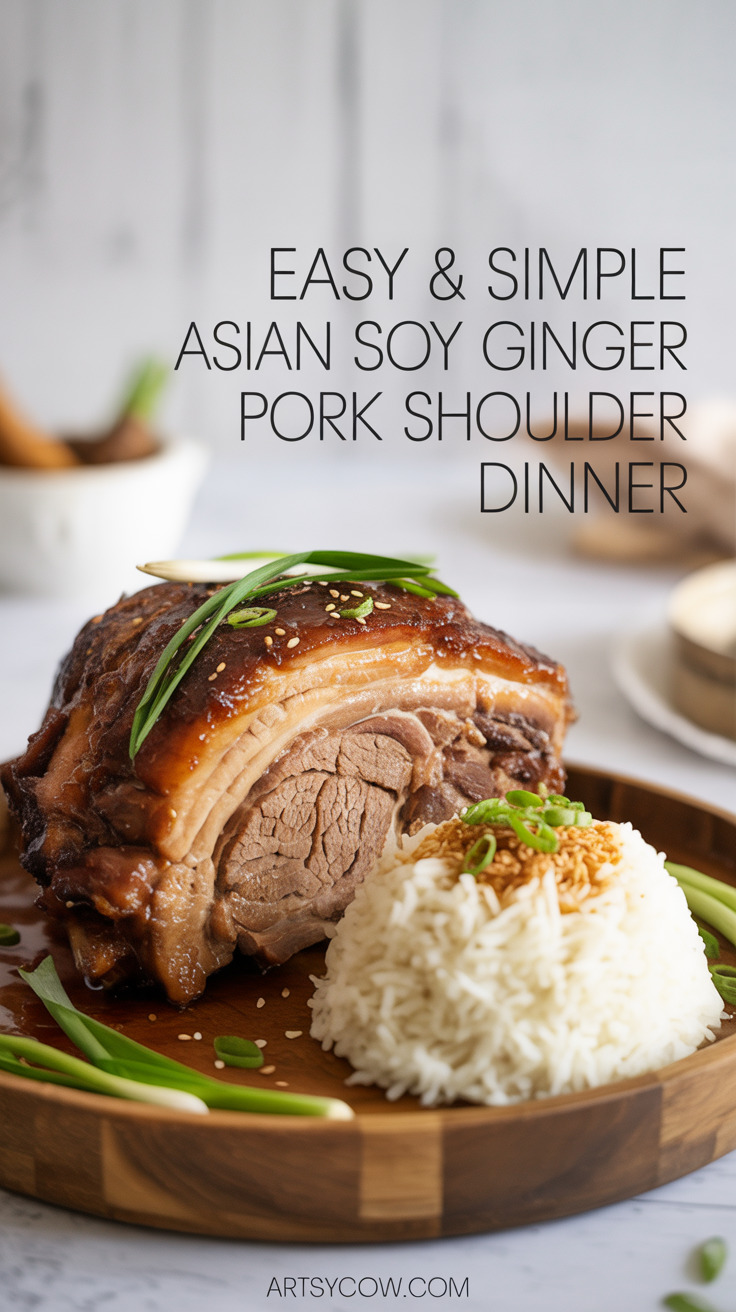
You get deep, savory flavor, sticky edges, and a glossy sauce that makes rice weep with joy. That’s why this easy and simple dinner turns one humble shoulder into a victory parade.
Contents
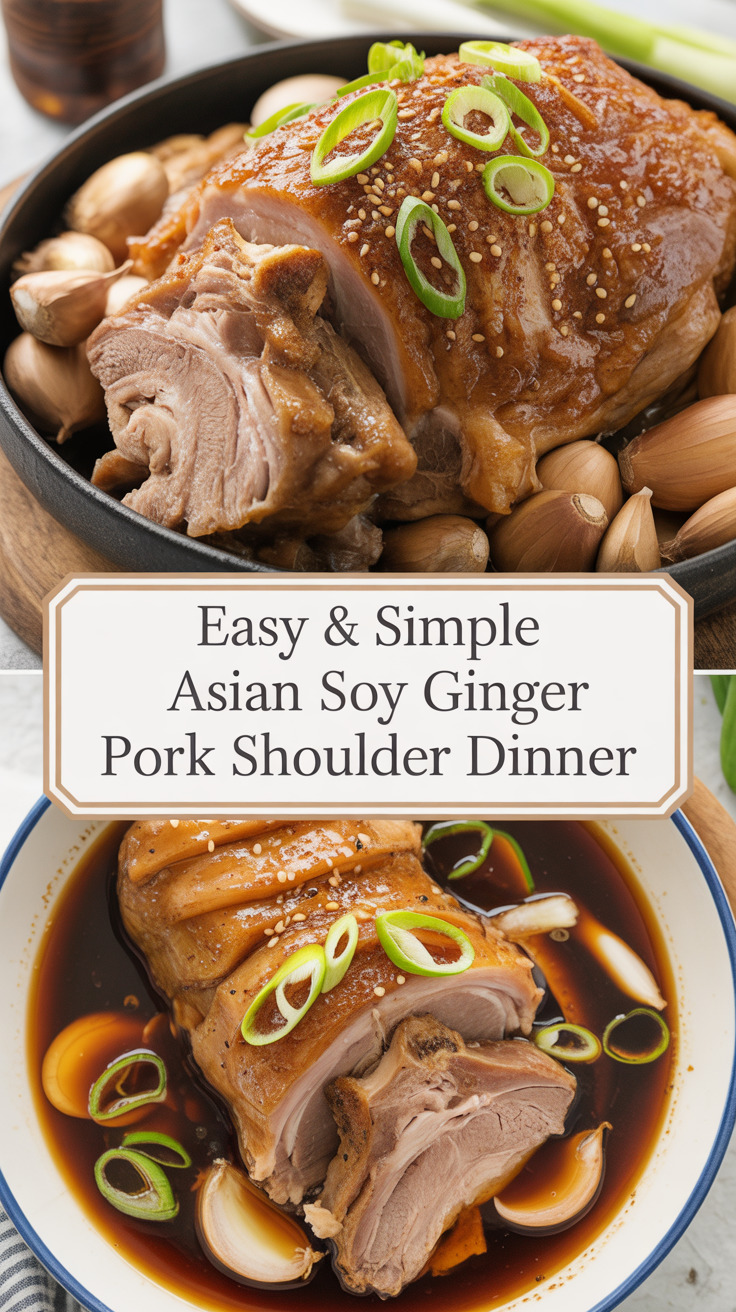
Easy & Simple Asian Soy Ginger Pork Shoulder Dinner Recipe – At a Glance
- Ready in: about 3 1/2 to 4 hours total, including prep and resting
- Skill level: beginner-friendly, mostly hands-off once it’s in the oven
- Serves: 6–8 people with sides, from a single pork shoulder
- Method: oven-braised in a Dutch oven, finished with a quick stovetop glaze
- Great for: cozy weekends, meal prep, or an impressive yet low-effort dinner
Equipment: Must-haves
- Dutch oven with lid
- Cutting board
- Sharp knife
- Tongs
- Measuring cups and spoons
- Mixing bowl
- Wooden spoon
Equipment: Nice-to-haves
- Meat thermometer
- Microplane zester
- Fat separator
- Basting brush
- Aluminum foil
Ingredients
- 1 pork shoulder, about 3–4 lb, boneless or bone-in
- 1/2 cup soy sauce, low-sodium recommended
- 1/4 cup brown sugar, packed
- 2 tbsp rice vinegar
- 2 tbsp toasted sesame oil
- 1 tbsp neutral oil, for searing
- 1 1/2 cups low-sodium chicken broth
- 5 garlic cloves, minced
- 2 tbsp fresh ginger, finely grated
- 1 tsp crushed red pepper flakes, optional heat
- 1/2 tsp black pepper, freshly ground
- 1 lime, juiced
- 2 tsp cornstarch
- 2 tbsp water, for slurry
- 2 scallion, thinly sliced, for garnish
- 1 tbsp toasted sesame seed, for garnish
- 1 small pinch kosher salt, for searing only

Instructions
- Set the oven to 325°F and position a rack in the center so your pot has room to strut.
- Pat the pork shoulder dry on the cutting board and season the surface with a light pinch of salt and pepper. Keep it modest; the soy sauce brings serious salt.
- In a mixing bowl, whisk soy sauce, brown sugar, rice vinegar, sesame oil, garlic, ginger, and red pepper flakes until glossy. If using a Microplane, grate ginger over the bowl like a flavor snowstorm.
- Heat neutral oil in the Dutch oven over medium-high until it shimmers. Use tongs to place the shoulder in and sear each side until bronzed, about 3–4 minutes per side. If the fond gets too dark, lower the heat.
- Transfer the shoulder to a plate. Pour a splash of broth into the pot to deglaze, scraping up the tasty bits with a wooden spoon. No burnt bits, just flavor.
- Return the shoulder to the Dutch oven. Pour in the marinade and the remaining broth so liquid comes about halfway up the side of the meat. Don’t drown the star.
- Cover with the lid and slide the pot into the oven. Braise for 2 hours, checking halfway to be sure it’s gently bubbling, not throwing a rave.
- After 2 hours, flip the shoulder with tongs for even cooking. Cover again and continue braising 45–60 minutes, until fork-tender. A meat thermometer should read around 195°F for shreddy joy.
- Remove the lid and cook 20–30 minutes more to let the top caramelize slightly. This is the crispy edge chapter of our novel.
- Lift the shoulder to a board and tent loosely with foil so the juices relax. No cardio for the meat right now.
- Skim fat from the pot juices with a spoon or pour through a fat separator. Return the liquid to the pot and bring to a simmer on the stove over medium heat.
- Stir cornstarch with water to make a slurry. Whisk it into the simmering sauce and cook 2–3 minutes until glossy and slightly thick. Be careful not to boil furiously or it can turn clumpy.
- Squeeze in lime juice and taste. Adjust seasoning with a pinch of salt or more vinegar if you like a brighter vibe.
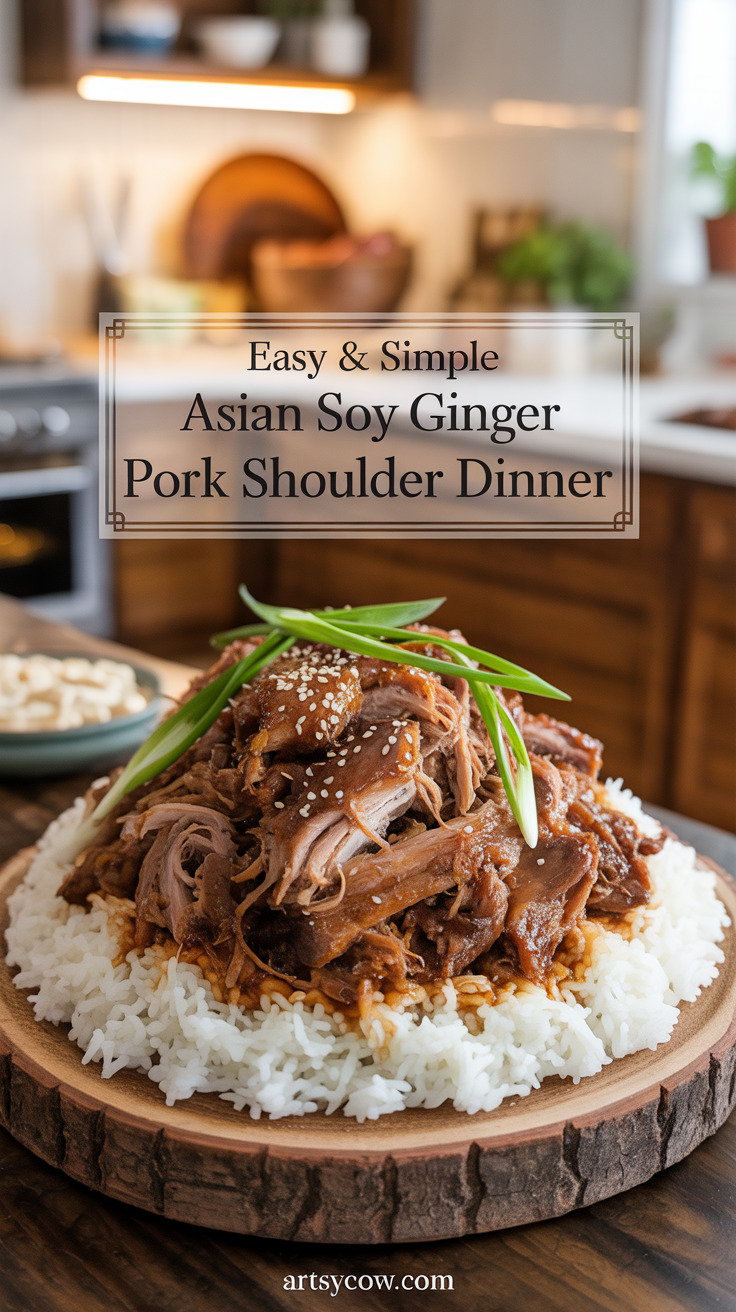
- Shred or slice the shoulder on the board. Toss the meat with enough sauce to coat like a shiny jacket. Use a basting brush to paint on extra sauce if you want a runway finish.
- Shower with scallion and sesame seed. Serve hot with extra sauce on the side, then pretend you planned this all week.
Substitutions
If your pantry pulls a prank, here are smart swaps to keep dinner on track without losing the soy ginger magic.
- Use tamari for a gluten-free swap in place of soy sauce.
- Swap honey or coconut sugar for brown sugar if you prefer a different sweetness.
- Try apple cider vinegar or lemon juice for rice vinegar in a pinch.
- Sub in pork butt for shoulder; it behaves the same and stays tender.
- Use bottled ginger paste if fresh is unavailable; add a touch more for punch.
- Replace red pepper flakes with a small spoon of chili paste for heat and depth.
- Choose vegetable broth or water if chicken broth is out of reach.
- Use arrowroot instead of cornstarch for a corn-free thickener; add off heat to avoid stringiness.
- Skip sesame oil and sesame seed if there’s a sesame allergy; a little avocado oil at the end adds body.
- No lime? A splash of extra vinegar brightens the sauce at the finish.
What to Serve With It
This loves a bowl of fluffy rice that soaks up every drop of sauce. Jasmine is classic, but basmati also gets along great.
Add something crisp for contrast. A quick cucumber salad with rice vinegar and a whisper of sesame oil cuts through the richness like a hero cape.
For greens, try steamed bok choy or a simple sautéed spinach with garlic. Keep it light and your plate will sing.
Sip on cold tea or a light lager. If you’re fancy, a zingy Riesling high-fives the ginger like they went to school together.
What Else You Should Know
For make-ahead, braise the pork shoulder a day early and chill it in its sauce. Reheat gently on the stove and finish with lime for a fresh pop.
Keep the same amount and you’ll still get that deep, savory backbone. Watching sugar?
Cut the brown sugar slightly and lean on extra ginger and lime for balance. The sauce still turns silky with the slurry.
Store leftovers in a sealed container for 4 days or freeze for 2 months. Reheat with a splash of broth so the meat stays cuddly, not dry.
