
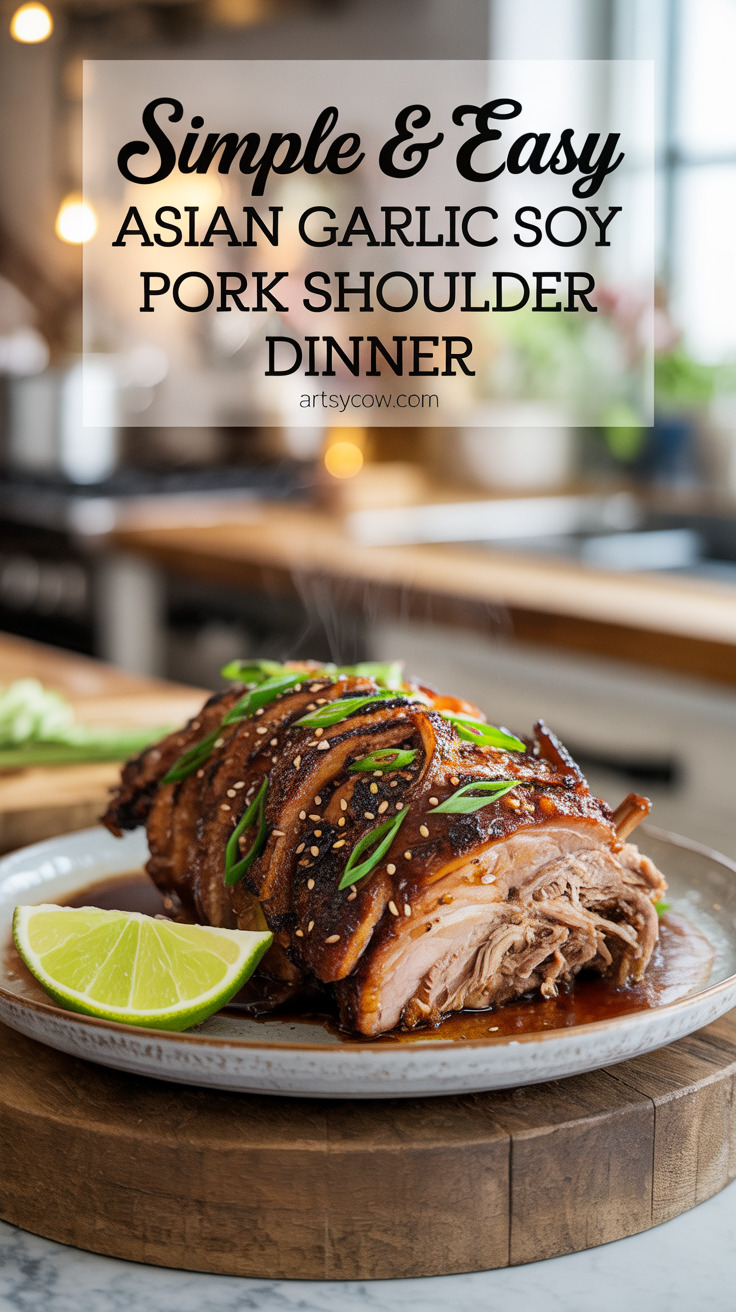
Got a pork shoulder giving you the “cook me” stare, but your energy level is at “meh”? This recipe turns it into a sticky, savory, fall-apart dinner with minimal fuss.
But here’s the catch! You only need a few pantry stars like soy, garlic, and ginger to make it sing.
The oven does the heavy lifting while you pretend you’re marinating like a pro. That’s why this is your new low-stress, high-flavor move.
Expect glossy umami, tender slices, and the kind of sauce that makes rice disappear faster than your resolve to share.
Contents
Simple & Easy Asian Garlic Soy Pork Shoulder Dinner Recipe – At a Glance
- Ready in: about 3 1/2 to 4 hours total, most of it hands-off
- Skill level: beginner-friendly with a tiny bit of sear-and-braise confidence
- Serves: about 6 serving, depending on side and appetite
- Method: oven braised in a Dutch oven, then briefly broiled for caramelization
- Great for: cozy weekend dinner, impressive but easy company meal, or meal prep magic
Equipment: Must-haves
- Chef knife
- Cutting board
- Mixing bowl
- Measuring spoon
- Measuring cup
- Whisk
- Dutch oven with lid or heavy pot with lid
- Wooden spoon
- Tongs
- Sheet pan with wire rack
- Aluminum foil

Equipment: Nice-to-haves
- Instant-read thermometer
- Silicone basting brush
- Fat separator
- Rice cooker
- Microplane zester
- Fine-mesh strainer

Ingredients
- 3 lb pork shoulder, boneless, trimmed of excess fat
- 1 tbsp neutral oil, for searing
- 1/2 cup low-sodium soy sauce
- 1/3 cup brown sugar, packed
- 1/4 cup rice vinegar
- 2 tbsp toasted sesame oil
- 6 clove garlic, minced finely
- 1 tbsp fresh ginger, grated
- 1 tsp chili flake or 1 tsp chili-garlic paste, to taste
- 1 cup water or chicken stock, for braising
- 1 tbsp cornstarch
- 1 tbsp water, for slurry
- 2 green onion, thinly sliced, for garnish
- 1 tsp sesame seed, toasted, for garnish
- 1 lime, cut into wedge, for serving (optional)
Instructions
- Stir the soy, brown sugar, rice vinegar, sesame oil, garlic, ginger, and chili in a mixing bowl with a whisk until the sugar dissolves and the marinade smells boldly garlicky and umami.
- Trim the pork shoulder on a cutting board with a chef knife, then pat it dry like you mean it. Dry meat browns better and makes future you proud.
- Drop the pork into the bowl and coat well, or use a bag if you like less cleanup. Cover and chill for at least 30 minutes, or up to overnight if patience is your superpower.
- Set an oven rack in the lower-middle position and heat the oven to 325°F. Place a Dutch oven over medium-high heat and add neutral oil until it shimmers.
- Lift the pork with tongs, let excess marinade drip back into the bowl, and sear each side in the pot until deep brown. Searing equals flavor, like a delicious first impression.
- Pour the remaining marinade and the water or stock into the pot and scrape the bottom with a wooden spoon to free the tasty brown bits. Bring it to a lively simmer.
- Cover with the lid and move the pot to the oven. Braise until the pork is fork-tender and an instant-read thermometer slides in around 195°F, about 2 1/2 to 3 hours. If it smells amazing, that’s normal.
- Transfer the pork to a sheet pan fitted with a wire rack. Tent loosely with aluminum foil and let it rest while you finish the sauce. Resting is like a spa moment for meat.
- Skim the fat from the braising liquid with a fat separator if you have one. If not, use a spoon and channel your inner ninja.
- Return the liquid to a simmer on the stove and, if you want silky smoothness, pour it through a fine-mesh strainer back into the pot. Keep it simple if you’re feeling rustic.
- Whisk the cornstarch with cold water to make a slurry, then stream it into the simmering liquid. Stir until it thickens to a glossy, spoon-coating sauce. Be patient; it blooms quickly.
- Brush the sauce all over the rested pork with a silicone brush. Slide the pan under the broiler on high for 2 to 4 minutes until it caramelizes. Watch closely so you get “sticky” not “smoky”.
- Slice or gently shred the pork on the cutting board. Toss with extra sauce in the pan so every bite gets a shiny jacket.
- Shower with green onion and sesame seed. Squeeze a little lime if you like bright contrast. Serve over hot rice, and if you own a rice cooker, this is its moment to shine.
Substitutions
Need a swap to match your pantry or diet? Here are some easy substitutions to keep this garlic soy magic rolling without stress.
- Use tamari for a gluten-free option in place of soy sauce.
- Swap pork butt for pork shoulder if that’s what you find; it behaves the same when braised.
- Trade honey for brown sugar for a rounder sweetness and extra gloss.
- Use apple cider vinegar or white vinegar with a pinch of sugar if rice vinegar is out of reach.
- If fresh ginger is missing, use 1/2 the amount of ground ginger for a similar vibe.
- No heat tolerance? Replace chili with extra garlic and a crack of black pepper for warmth minus the fire.
- Sub arrowroot for cornstarch if you prefer grain-free thickening. Add it off heat to avoid gumminess.
- Use chicken stock or even water in place of stock; the sear still brings big flavor.
- If sesame oil is not your thing, use neutral oil plus a sprinkle of toasted sesame seed at the end for aroma.
- Add a spoon of hoisin or a splash of mirin if you crave sweeter, stickier sauce.
What to Serve With It
A bowl of steamy jasmine rice soaks up every drop of that glossy sauce. Brown rice also plays nice if you want extra fiber without losing the fun.
Add a crisp side like quick sesame cucumber or a flash-steamed bok choy with a whisper of garlic. The cool crunch and greens balance the rich pork perfectly.
Want extra oomph? Try a simple cabbage slaw with rice vinegar and a pinch of sugar.
It’s like a fresh reset button between bites. Sip hot green tea or a light beer to keep the savory notes singing.
Sparkling water with lime is an A-plus nonalcoholic pairing.

What Else You Should Know
For deeper flavor, marinate the pork shoulder overnight. The salt in the soy gently seasons the meat and the ginger keeps things lively.
If your sauce gets too thick, whisk in a splash of water. If it’s thin, simmer a minute longer.
Thick and glossy is the sweet spot. Leftover pork keeps well in the fridge for 4 days.
Reheat gently in a skillet, then hit it under the broiler for 1 minute to re-crisp the edges. Use low-sodium soy to keep salt balanced.
A small drizzle of sesame oil at the end perks up aroma like a last-minute mic drop.
